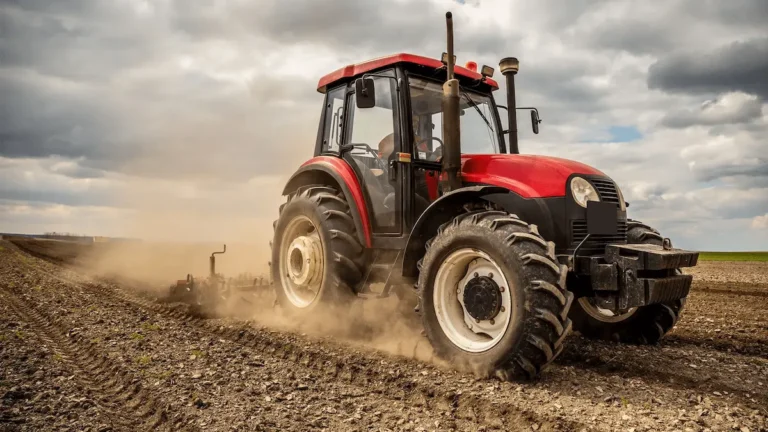
Agricultural machinery manufacturers use a wide range of metal tubes and profiles for frames, chassis, supports, guards, and other structural components. These parts often require more than simple tube cutting. Holes, slots, notches, angled cuts, and precise joints may all need to be produced before welding and assembly. Tube laser cutting combines these operations into a flexible and highly automated process, helping manufacturers produce accurate tubular components with fewer secondary operations.
Applications of Tube Laser Cutting in Agricultural Machinery
Tube laser cutting is used to produce many of the tubular components found in tractors, harvesters, seeders, sprayers, and other agricultural equipment.
Typical applications include tractor frames and chassis, harvester and combine components, seeder and cultivator structures, spray boom assemblies, equipment supports, protective guards, and other welded tubular structures.
Depending on the machine and configuration, round, square, rectangular, and structural profiles can be cut to length and machined with holes, slots, contours, and other connection features in the same setup. This makes tube laser cutting suitable for both individual components and repeated production of complete frame assemblies.
What Can a Tube Laser Cutting Machine Do for Agricultural Machinery?
Agricultural machinery components often require complex features that would traditionally involve several separate processes.
A tube laser cutting machine can cut tubes and profiles to precise lengths while also producing holes, slots, notches, and connection contours. Angled and 3D cuts can be used to prepare tube ends for welded joints and improve the fit between structural components.
For manufacturers working with frequently changing designs, laser cutting also makes it easier to move from one component to another without dedicated tooling. CAD-based programming allows different tube geometries and cutting patterns to be prepared for production without changing the basic machine setup.
Where additional processing functions are available, tube cutting can also be combined with operations such as drilling, tapping, or marking, reducing material handling and the need to move parts between different machines.
Why Use Tube Laser Cutting for Agricultural Machinery?
Reduce Secondary Operations
Agricultural machinery frames and supports often require drilling, notching, trimming, and other preparation before welding. Producing these features directly during tube laser cutting can reduce the number of separate operations and simplify production.
Improve Accuracy and Welding Fit-Up
Accurate holes, contours, and angled tube ends help components fit together more consistently during welding and assembly. This is particularly useful for frames and structural parts where multiple tubes must be joined at specific positions and angles.
Increase Production Efficiency
Laser cutting can combine multiple cutting features in a single setup and reduce manual handling between processes. Automated loading and material handling can further improve productivity for manufacturers processing repeated batches of tube components.
Reduce Material Waste
Agricultural machinery can involve relatively expensive thick-wall tubes and structural profiles. Efficient nesting and improved control of the cutting process can help manufacturers make better use of each tube and reduce unnecessary material waste.
Tube and Profile Types Used in Agricultural Machinery
The right tube laser cutting machine depends mainly on the size, wall thickness, material, and length of the tubes or profiles being processed.
Common materials include carbon steel, stainless steel, and aluminum. Depending on the application, manufacturers may work with round tubes, square tubes, rectangular tubes, and structural profiles such as angle, channel, or H-shaped sections.
Tube dimensions can vary significantly between different agricultural machinery components. Smaller tubes may be used for guards and supports, while larger tubes and profiles are more common in heavy frames and chassis structures. Long raw tubes are also useful for improving material utilization, provided the cutting system can maintain stable positioning and accuracy over the required length.
How to Choose a Tube Laser Cutting Machine for Agricultural Machinery?
The machine should be selected according to the actual tube sizes and production requirements rather than laser power alone.
Start with the maximum and minimum tube diameter or profile size you need to process. Then consider wall thickness, tube length, material type, and the types of cutting features required.
For agricultural machinery frames and structural components, 3D or bevel cutting can be particularly useful when tube ends need to be prepared for welding. For higher-volume production, automatic loading and stable multi-chuck handling can help reduce manual intervention and improve material utilization.
Recommended LONX Tube Laser Cutting Machines
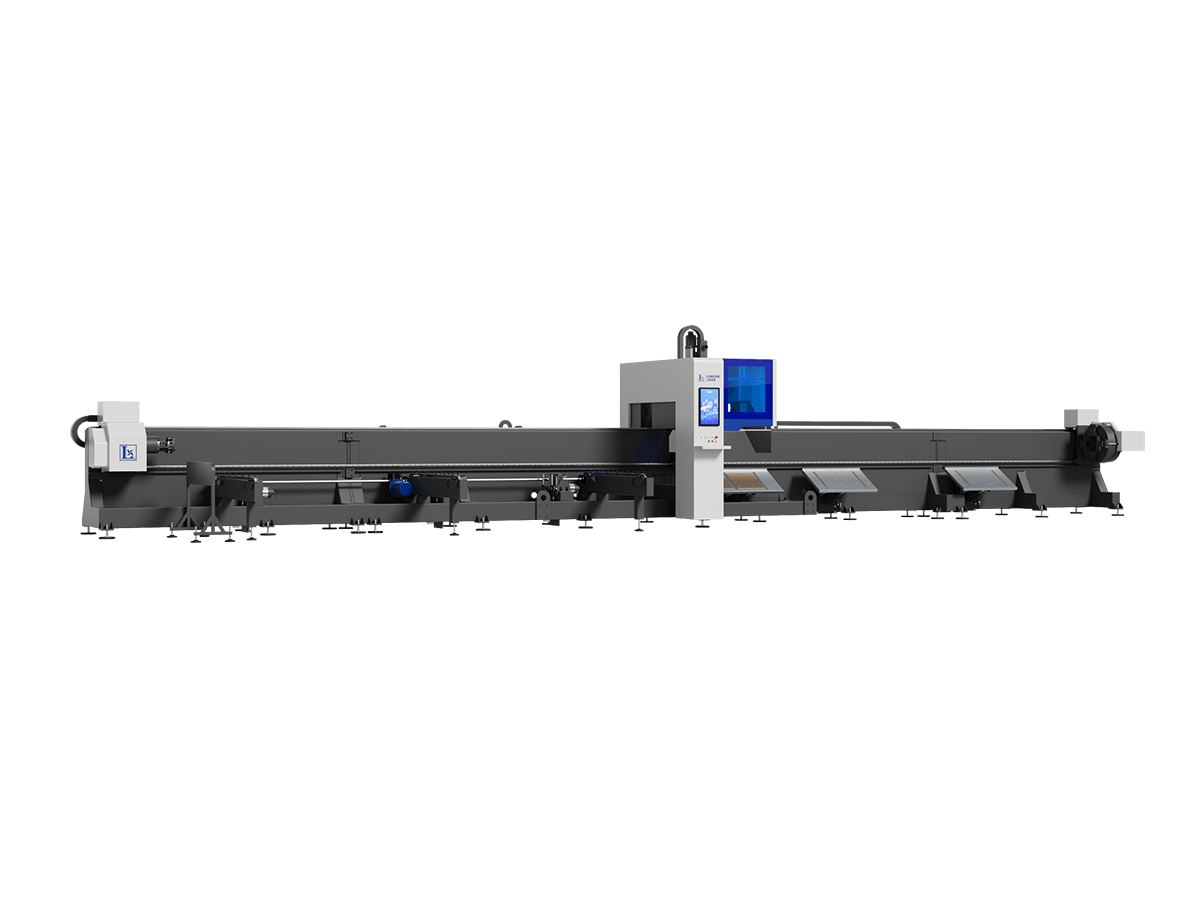
LX-K24-3
A 3-chuck tube laser cutting machine for round tubes from Ø15–230 mm and square tubes from 15×15 to 230×230 mm. It is suitable for medium-size agricultural machinery frames, chassis components, supports, and other tubular structures. Tube lengths up to 12,000 mm can be processed.
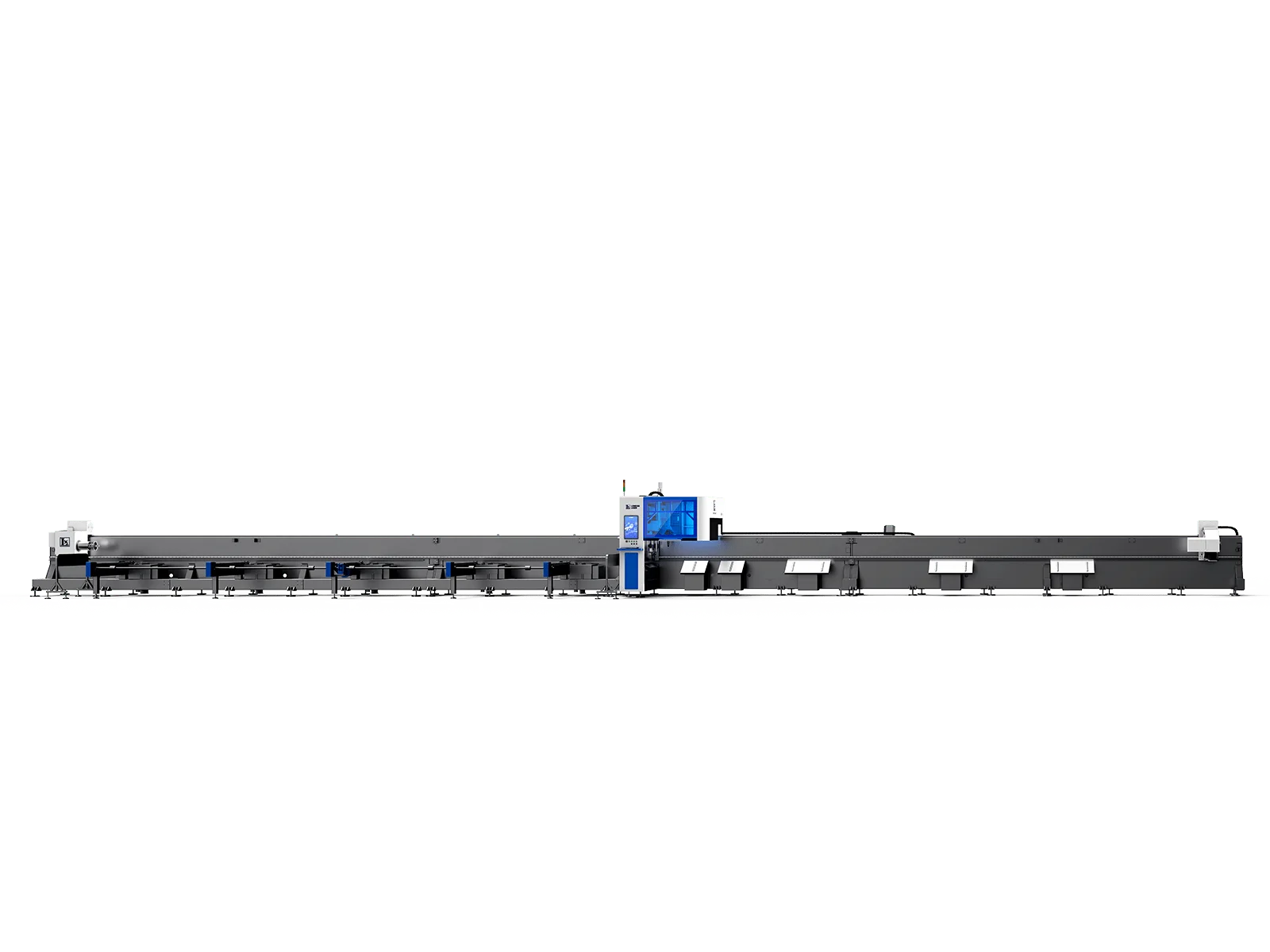
LX-K28-3
Designed for larger tubes and profiles from Ø20–280 mm, with square tube sizes from 20×20 to 280×280 mm. Its 3-chuck configuration and automatic loading make it suitable for larger agricultural machinery components and repeated production. Tube lengths up to 12,000 mm can be processed.
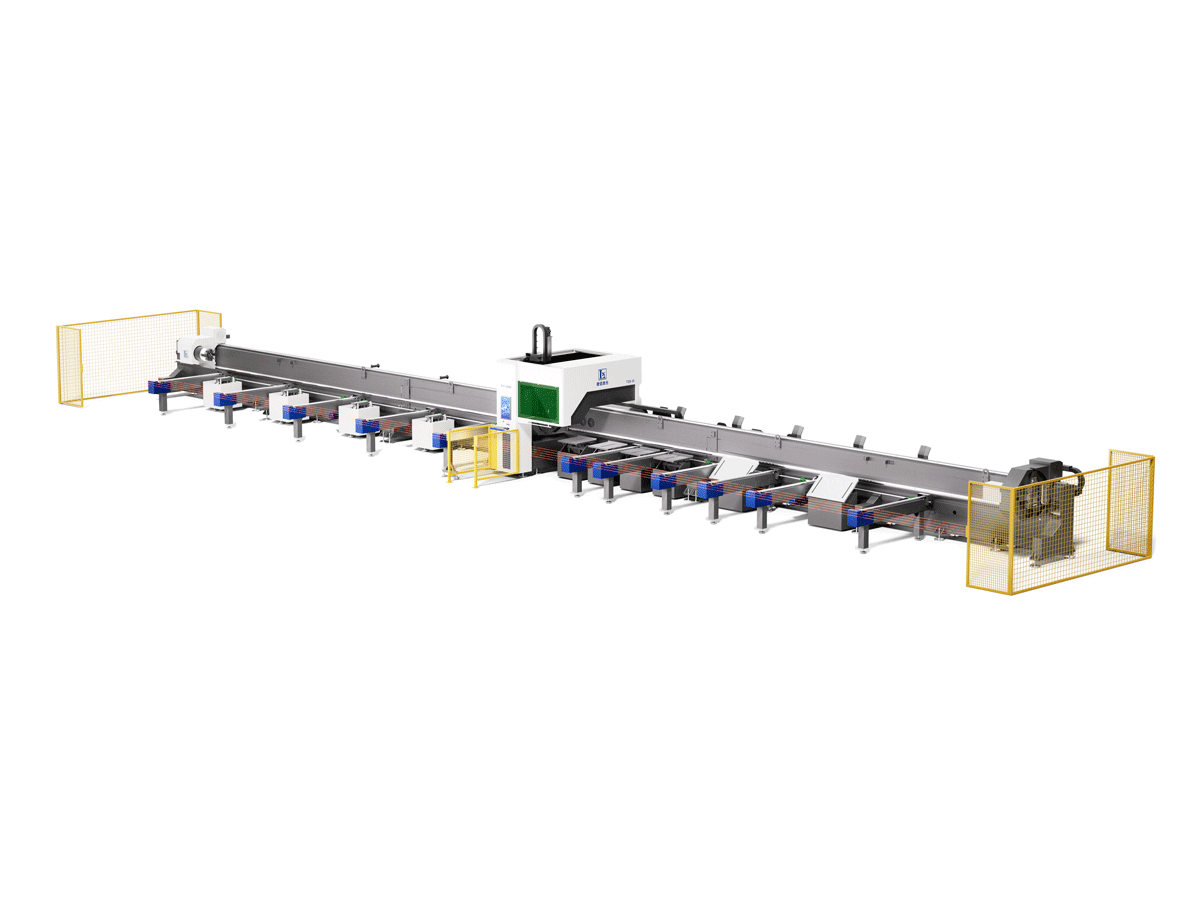
LX-T35-3
A heavy-duty 3-chuck bevel tube laser cutter for tubes up to Ø350 mm and square tubes up to 350×350 mm. With 45° bevel cutting and support for large, heavy tubes, it is suited to heavy agricultural machinery frames and structural components where precise welded joints are required.