Agricultural equipment manufacturing involves a wide range of metal components, from flat mounting plates and protective covers to tubular structures and welded assemblies. Each component has different cutting, dimensional, and production requirements.
Laser cutting for agricultural equipment can help manufacturers produce complex metal profiles, holes, slots, and contours with a flexible, programmable process. It is particularly useful when component designs change, multiple part variations are required, or manufacturers want to reduce the number of separate cutting operations.
However, not every agricultural component requires the same cutting method. Choosing the right equipment starts with understanding the parts being manufactured, the materials involved, and the processes that follow cutting.
This guide explains where laser cutting may fit into agricultural equipment production, how to compare sheet and tube processing, and what manufacturers should evaluate before investing in a machine.
Which Agricultural Equipment Parts Are Suitable for Laser Cutting?
The suitability of laser cutting depends on the component’s geometry, material, thickness, tolerances, and downstream manufacturing requirements. Three broad categories are worth evaluating.
Sheet-Metal Parts
Flat metal components are common in equipment housings, protective covers, mounting plates, brackets, reinforcement panels, and similar assemblies.
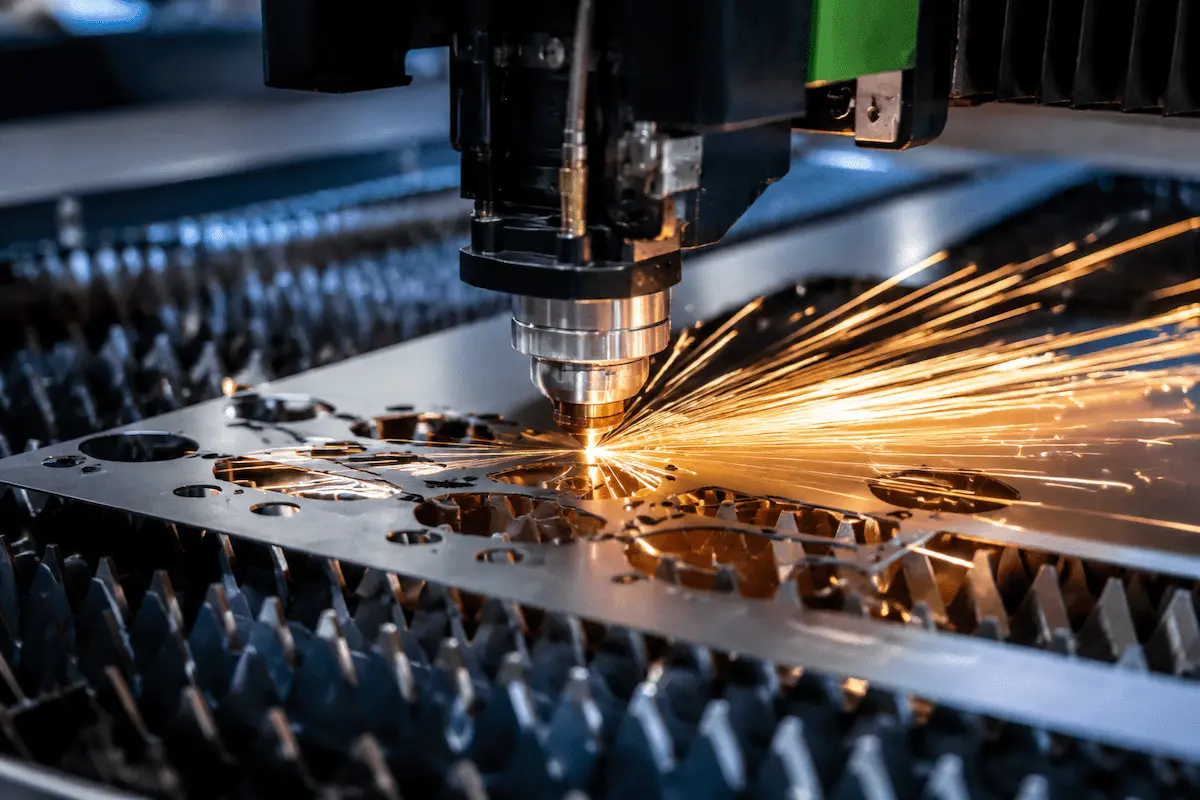
Fiber laser cutting can produce external contours and internal features directly from programmed designs. For manufacturers producing multiple component variations, this flexibility can simplify design changes without requiring a dedicated cutting die for every new shape.
Before selecting a sheet laser cutting machine, consider the maximum sheet dimensions, material grades, thickness range, required edge quality, and expected production volume.
Tubes and Structural Profiles
Some agricultural equipment incorporates tubular frames, supports, and structural profiles that require accurate cutting before welding and assembly.
Depending on the part geometry and machine configuration, tube laser cutting can produce cut-to-length profiles, holes, slots, notches, and connection contours. These operations may reduce the need for separate processing steps.
The appropriate machine depends on the actual tube dimensions, wall thickness, profile shapes, required cutting features, and material-handling requirements.
For a more detailed discussion of tubular structures and relevant machine configurations, see Laserové řezání trubek pro zemědělské stroje.
Components with Specialized Requirements
Some agricultural components have additional requirements, such as wear resistance, hardened surfaces, tightly controlled mating features, or extensive finishing after cutting.
Laser cutting may be suitable for some stages of manufacturing, but it should not automatically replace machining, stamping, sawing, or other established processes.
Manufacturers should evaluate representative parts before deciding which operations can be performed by laser cutting and which should remain part of the existing production workflow.
Applications of Laser Cutting in Agricultural Manufacturing
Agricultural machinery manufacturers produce a wide variety of metal components, from structural frames and mounting brackets to protective panels and equipment supports. These parts often require accurate profiles, holes, slots, and connection features before they can be assembled into finished machines.
Laser cutting can support the production of many of these components. The most suitable applications depend on the part design, material specifications, required tolerances, and whether the workpiece is made from sheet metal, tubing, or a structural profile.
1. Tractor Frames and Structural Components
Tractors and other heavy agricultural machines use metal structures to support equipment, connect assemblies, and withstand demanding operating conditions.
Depending on the design, these structures may incorporate tubular members, brackets, mounting plates, reinforcement components, and other fabricated parts. Tube laser cutting can produce holes, slots, notches, and connection contours in suitable profiles, while sheet laser cutting can process corresponding flat components.
Accurately positioned cutting features can help prepare parts for subsequent welding and assembly. The required structural strength, fatigue performance, and dimensional tolerances must still be verified through the appropriate engineering and manufacturing processes.
2. Harvesters and Crop-Harvesting Equipment
Harvesters and related agricultural machines contain a combination of structural components, guards, covers, mounting brackets, and other fabricated metal parts.
Sheet laser cutting can be used for suitable panels, protective covers, and mounting components. Tube laser cutting may be appropriate for tubular supports and structural members that require holes, slots, or shaped ends.
The cutting process should be selected according to each component’s function. Parts exposed to abrasion, impact, or demanding wear conditions may require specialized materials, heat treatment, machining, or additional finishing operations.
3. Seeders, Planters, and Cultivators
Seeding and soil-cultivation equipment often incorporates frames, supports, brackets, mounting plates, and connections for different mechanical assemblies.
These components may require repeated holes, accurately positioned mounting features, or profiles that fit together during welding and assembly. Laser cutting can help manufacturers produce these features directly from programmed designs.
For manufacturers producing different equipment configurations, programmable cutting can also simplify changes to suitable component designs without requiring a dedicated cutting die for every variation.
4. Spraying and Irrigation Equipment
Agricultural spraying and irrigation systems may include tubular structures, boom supports, mounting brackets, protective covers, and other metal components.
Tube laser cutting can be considered for suitable tubular supports and structural profiles, particularly when parts require multiple holes, slots, or connection features. Sheet laser cutting may be appropriate for flat brackets, mounting plates, and protective panels.
Components that carry liquids require additional consideration. Pressure-bearing parts, fluid passages, corrosion resistance, sealing surfaces, and applicable safety requirements must be evaluated separately. Laser cutting a component does not, by itself, establish its suitability for pressure or fluid-handling service.
5. Grain Handling and Agricultural Processing Equipment
Grain handling, storage, and agricultural processing systems may incorporate frames, supports, guards, access panels, brackets, and fabricated sheet-metal or tubular components.
Laser cutting can be suitable for producing many of these parts when their material and geometry meet the process requirements. For example, sheet cutting may be used for suitable panels and brackets, while tube cutting can process compatible structural profiles.
For components exposed to dust, abrasion, corrosion, or continuous operation, manufacturers should also consider material selection, surface treatment, maintenance requirements, and the conditions under which the finished equipment will operate.
Choosing the Right Cutting Process for Each Application
These applications demonstrate why agricultural machinery manufacturing cannot be treated as a single cutting task. Some components are best evaluated for sheet laser cutting, others for tube laser cutting, and some production environments may benefit from access to both processes.
The decision should be based on actual component drawings, material grades, thicknesses, workpiece dimensions, cutting features, production volume, and downstream assembly requirements.
For tubular structures and profiles, explore LONX tube laser cutting solutions for agricultural machinery. For flat metal components, see LONX sheet metal laser cutting machines.
Sheet Laser vs. Tube Laser: Which Process Should You Choose?
The most useful starting point is the type of workpiece rather than the agricultural equipment category.
| Production requirement | Process to evaluate | Key considerations |
|---|---|---|
| Flat panels, covers, brackets, and mounting plates | Sheet metal laser cutting | Sheet dimensions, material thickness, nesting, edge quality |
| Tubes and structural profiles requiring holes or connection features | Tube laser cutting | Profile geometry, wall thickness, cutting features, loading method |
| Significant quantities of both sheet metal and tubes | Separate machines or combined sheet-and-tube processing | Production mix, capacity, changeovers, investment, flexibility |
When a Sheet Laser Makes Sense
A sheet laser is worth evaluating when flat metal parts account for most of your cutting workload.
Important considerations include the largest workpiece, material and thickness range, expected output, sheet utilization, and whether automatic loading or an exchange table would benefit the production process.
Explore LONX Sheet Metal Laser Cutting Machines to review the available equipment categories.
When a Tube Laser Makes Sense
A tube laser is more relevant when production involves tubular components or structural profiles with features that are difficult to produce efficiently through separate cutting, drilling, and notching operations.
The machine must support the required workpiece dimensions and cutting geometry. Loading and unloading requirements also matter, particularly when handling long or heavy profiles.
For tube-specific applications and machine options, refer to the LONX agricultural machinery tube laser cutting guide.
When Both Processes Are Important
Manufacturers processing substantial quantities of both sheet metal and tubes should compare separate machines with combined sheet-and-tube laser cutting systems.
A combined machine may reduce the need for separate equipment in suitable production environments. However, it is not automatically the most economical or productive option.
The decision should account for the workload of each process, required working dimensions, output targets, changeover requirements, and the performance expected from each machine.
See LONX Sheet and Tube Laser Cutting Machines for the combined-processing option.
What Can Laser Cutting Improve in Agricultural Manufacturing?
Laser cutting can offer several potential benefits, but the results depend on the part design, process settings, machine configuration, and existing production workflow.
Flexibility When Designs Change
Agricultural equipment manufacturers may need to produce different component designs or adjust parts for different equipment configurations.
For suitable components, CAD-based programming makes it possible to change cutting patterns without manufacturing a dedicated cutting die for each variation. This can be valuable when product designs change frequently or production involves many different parts.
Fewer Separate Cutting Operations
Some components require several operations before they are ready for assembly. Depending on the geometry and machine capabilities, laser cutting may combine contour cutting, hole cutting, and notching in one setup.
This can reduce material handling and the need to move parts between separate cutting operations. The actual benefit should be evaluated against the manufacturer’s existing process.
More Consistent Component Geometry
Repeatable cutting programs can help manufacturers maintain consistent component geometry across production batches.
Where parts must fit together during welding or assembly, accurate cutting features may also help simplify fit-up. The achievable result depends on machine capability, material behavior, tolerances, fixturing, and subsequent manufacturing operations.
Better Control of Material Utilization
Cutting-path planning and nesting can help manufacturers reduce unnecessary material waste.
For sheet metal, the result depends on part geometry, nesting efficiency, sheet size, and production planning. For tubes and profiles, material utilization also depends on part lengths, cutting sequences, remnant management, and machine capabilities.
Actual savings should be assessed using representative parts and production data rather than assumed from a general percentage.
Where Laser Cutting May Not Be Enough
Laser cutting is not necessarily the best standalone process for every agricultural component.
Parts requiring specialized gear geometry, hardened wear surfaces, particular heat-treatment conditions, or tightly controlled finished surfaces may require additional processes. Material type and component specifications must also be considered.
The objective is to identify where laser cutting improves the overall manufacturing workflow, not to replace every existing production method regardless of suitability.
How to Choose a Laser Cutting Machine for Agricultural Equipment
Choosing a machine based only on laser power can overlook important production requirements. A more reliable assessment starts with actual components and works backward from the finished part.
1. Prepare Representative Part Drawings
Select several components that represent your normal production workload.
Drawings or CAD files can help establish the required contours, holes, slots, dimensions, tolerances, and any special cutting features. If components are welded together, also consider the fit-up requirements of the completed assembly.
2. Confirm Materials and Dimensions
For sheet metal, record material grades, thicknesses, maximum sheet dimensions, and required cutting quality.
For tubes and profiles, record cross-sectional shapes, minimum and maximum dimensions, wall thicknesses, raw material lengths, and any angled or bevelled cutting requirements.
These details help determine which machine categories and configurations are suitable.
3. Assess Production Volume and Part Variety
A factory producing large batches of a few components may have different needs from one producing many designs in smaller quantities.
Evaluate expected daily output, batch sizes, design-change frequency, manual handling, and whether automated loading or unloading would address a genuine production constraint.
Automation should be selected according to the workload and operating requirements rather than treated as a necessary feature for every factory.
4. Consider the Complete Manufacturing Workflow
Cutting is only one stage of agricultural equipment production.
Review the subsequent operations, including bending, welding, drilling, machining, and assembly. If a downstream process is the main production bottleneck, improving cutting speed alone may not significantly increase total factory output.
A useful evaluation should consider the time, labor, material handling, and finishing required across the complete workflow.
5. Test the Proposed Solution with Actual Parts
Before committing to a machine configuration, ask the supplier to evaluate representative drawings or samples where possible.
Review the resulting cutting quality, dimensions, edge condition, processing requirements, and suitability for the next manufacturing stage.
For manufacturers considering precision laser cutting for farming equipment, this practical assessment is more useful than relying on a general claim about accuracy or productivity.
A LONX Application Example: Heavy Square Tube Processing
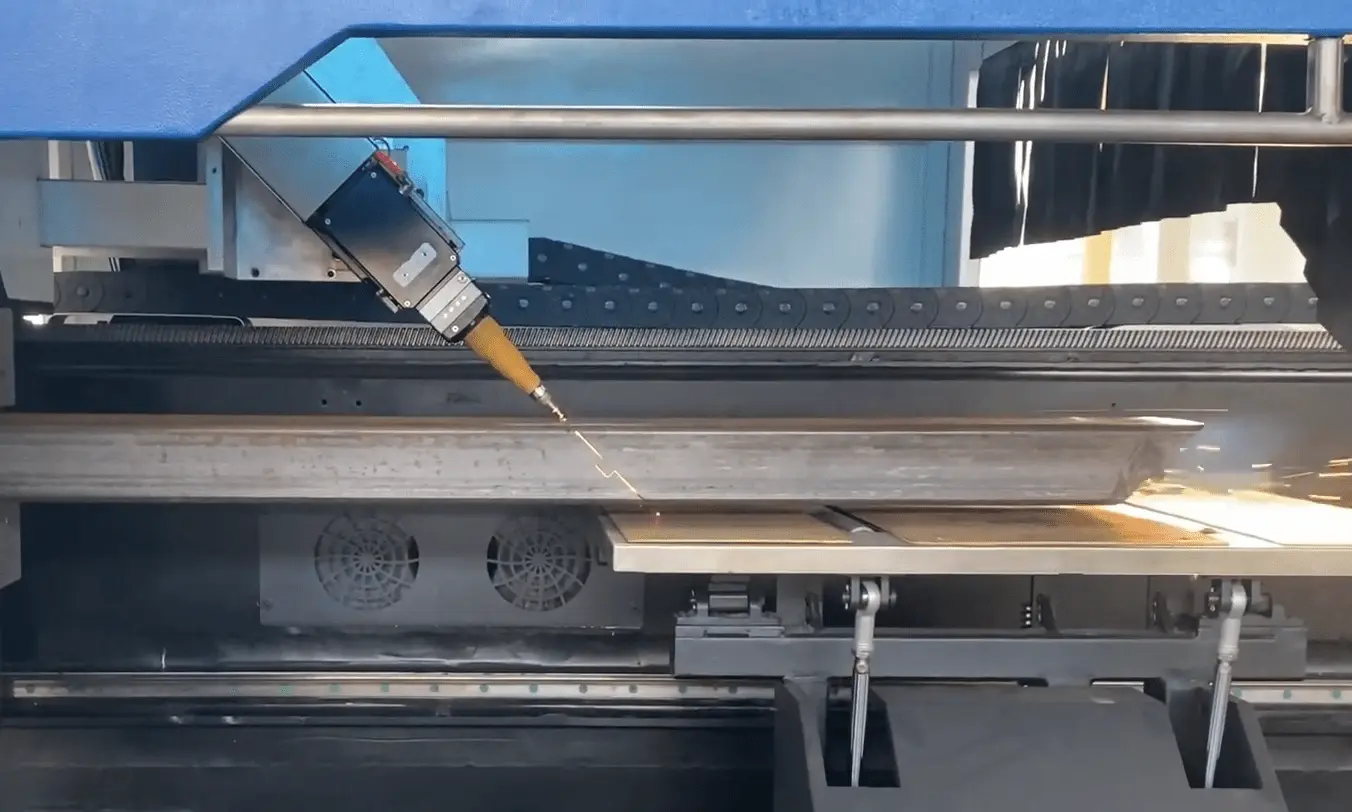
LONX has published an application example involving the LX-T35 tube laser cutting machine processing 140 × 140 × 7 mm square tube for agricultural equipment manufacturing.
The example illustrates how tube laser cutting can be evaluated for heavy structural components where cutting geometry and subsequent welding and assembly requirements matter.
Rather than assuming the same configuration suits every agricultural manufacturer, the appropriate machine should be assessed against the dimensions, material, cutting features, and production requirements of the actual workpieces.
See the LONX heavy square tube cutting application example for further details.
Často kladené dotazy
What agricultural equipment parts can be laser cut?
Depending on their material and design, suitable components may include sheet-metal covers, mounting plates, brackets, reinforcement panels, tubular structures, and selected welded components.
Suitability should be confirmed against the part’s dimensions, tolerances, material properties, and downstream processing requirements.
How do I choose a laser cutting machine for farm equipment?
Start with representative part drawings, material specifications, sheet dimensions or tube sizes, production volume, and required cutting features. Then evaluate the machine configuration, material handling, edge quality, and subsequent manufacturing operations.
Should I choose a sheet laser or a tube laser?
Choose according to your main workpiece types. A sheet laser is designed for flat sheet-metal components, while a tube laser is intended for tubes and structural profiles. If both represent a substantial share of production, compare separate machines with a combined system.
Can laser cutting reduce agricultural component manufacturing costs?
It may reduce some separate cutting operations, manual handling, or material waste for suitable parts. However, the result depends on the current production process, equipment configuration, part design, labor requirements, and production volume.
A realistic assessment should compare total manufacturing costs rather than cutting time alone.
What should I send a supplier before requesting a quotation?
Provide representative drawings or samples, material grades and thicknesses, sheet dimensions or tube sizes, required tolerances, estimated output, and any special requirements such as bevel cutting or automated material handling.
This information helps the supplier assess the application and recommend an appropriate machine configuration.