Construction machinery manufacturers work with heavy steel tubes and structural profiles for machine frames, support structures, boom and arm components, access structures, guards, and other fabricated assemblies. These parts often require more than simple cutting to length. Holes, slots, notches, angled ends, and welded joints may all need to be produced accurately before assembly.
For these tubular and profile components, laser cutting can combine several preparation operations into one CNC-controlled process, reducing manual layout and secondary machining. Construction machinery is also a common application for heavy-duty tube laser systems, particularly where large sections, long workpieces, and complex joint geometries are involved.
Where Tube Laser Cutting Is Used in Construction Machinery
Tube laser cutting is mainly used for the tubular and structural parts of construction equipment rather than the complete machine.
代表的な用途としては、次のようなものがあります:
- Excavator and loader frame components
- Structural supports and reinforcement members
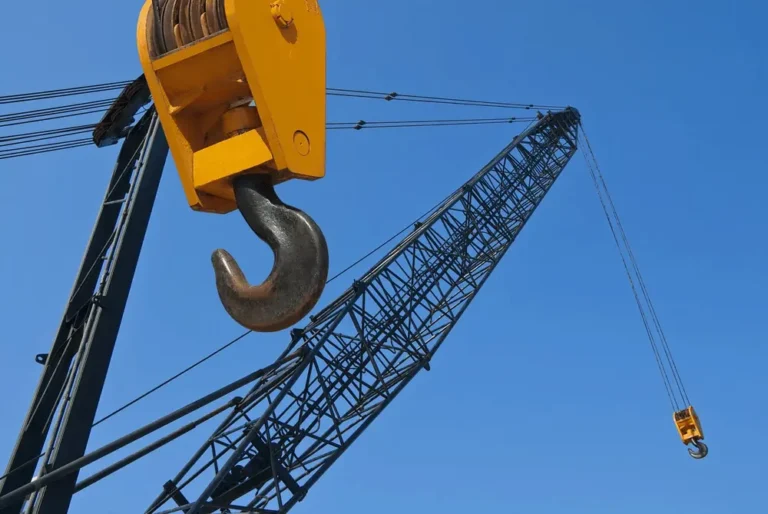
- Crane and lifting equipment components
- Operator protection structures and guards
- Access steps, platforms, and handrail structures
- Tubular brackets and mounting structures
- Other welded assemblies made from steel tubes and profiles
The required processing varies significantly between components. A support tube may only need accurate length cutting and mounting holes, while a structural member may require notches, intersecting cuts, or angled ends to create a precise welded connection.
Cutting the Joints That Make Structural Parts Fit
One of the more demanding operations in construction machinery fabrication is preparing tube and profile joints.
Structural members rarely meet at simple right angles. A brace may intersect a main tube at an angle, or two sections may need shaped ends to create a close-fitting connection before welding.
A tube laser can cut these joint geometries directly from the programmed design. Depending on the machine configuration, this can include intersecting holes, notches, oblique ends, and other 3D cutting features.
The benefit is not simply a more complex cut. Accurate joint preparation can reduce manual fitting and grinding before welding, making the assembly process more consistent. Modern tube laser systems are specifically used for complex structural tube joints in construction equipment and heavy fabrication.
Long and Heavy Tubes Require Stable Processing
Construction machinery components are often larger and heavier than the tubes used in furniture, bicycles, or small automotive parts.
Long structural tubes can sag or vibrate during cutting, while heavy sections place greater demands on the chuck and support system. If the workpiece moves during rotation, cutting accuracy and edge quality can be affected.
For this type of production, machine design becomes particularly important. Multiple chucks, follow-up supports, adequate loading capacity, and stable material handling help maintain the position of long or heavy tubes throughout the cutting process.
This is one reason three-chuck and heavy-duty tube laser systems are commonly positioned for construction and heavy machinery applications.
Round Tubes, Square Tubes and Structural Profiles
Construction machinery is not limited to conventional round or square tubes.
Depending on the component, manufacturers may process:
- 丸管
- Square tubes
- Rectangular tubes
- Channel steel
- Angle steel
- I-beams and H-beams
The machine should therefore be selected according to the actual profiles used in production.
For standard tubular components, the main considerations are tube diameter, wall thickness, length, and joint geometry. For larger construction equipment structures, the ability to process structural profiles can become equally important.
LONX’s product range includes tube systems for round and square tubes as well as dedicated profile cutting systems for H-beams, I-beams, channels, and angle steel.
From Structural Drawing to Weld-Ready Components
Construction machinery fabrication often involves many individually designed structural members. A single machine assembly may contain parts with different lengths, hole positions, and joint angles.
Tube laser cutting connects these parts more directly to the digital design. Once the geometry has been programmed, the machine can cut the required length and additional features without separate templates or dedicated drilling fixtures for every part.
This is particularly useful when manufacturers produce different equipment models or frequently modify structural designs. Instead of creating a separate mechanical process for every new component, the cutting program can be updated digitally.
The finished tube or profile can then move to the next stage, such as bending, welding, machining, or assembly, depending on the component design.
Reduce Cutting, Drilling and Manual Preparation
For construction machinery manufacturers, the biggest production benefit may come from combining several preparation operations.
A conventional workflow might involve:
Sawing → Marking → Drilling → Notching → Grinding → Welding Preparation
With a suitable tube laser, many of these operations can be performed during the same cutting process.
This can reduce repeated positioning of heavy workpieces and simplify material flow through the workshop. For batch production, automatic loading and material handling can further reduce operator intervention. Construction-equipment laser solutions increasingly emphasize this combination of tube processing, automation, and structural-part fabrication.
How to Choose a Tube Laser Cutting Machine for Construction Machinery
The correct machine depends primarily on the size and type of structural components being produced.
For smaller and medium-sized tubular components, consider:
- Tube diameter and profile size
- Wall thickness
- Required tube length
- Hole, slot, and notch requirements
- 生産量
For heavy construction machinery components, also consider:
- Maximum tube weight
- Long-tube support
- Number of chucks
- Structural profile compatibility
- 3D or bevel cutting requirements
- 自動ローディングおよびアンローディング
For manufacturers working with both conventional tubes and large structural profiles, a wider-capability system may be more practical than a machine designed only for standard round and square tubes.
Recommended LONX Tube Laser Cutting Machines
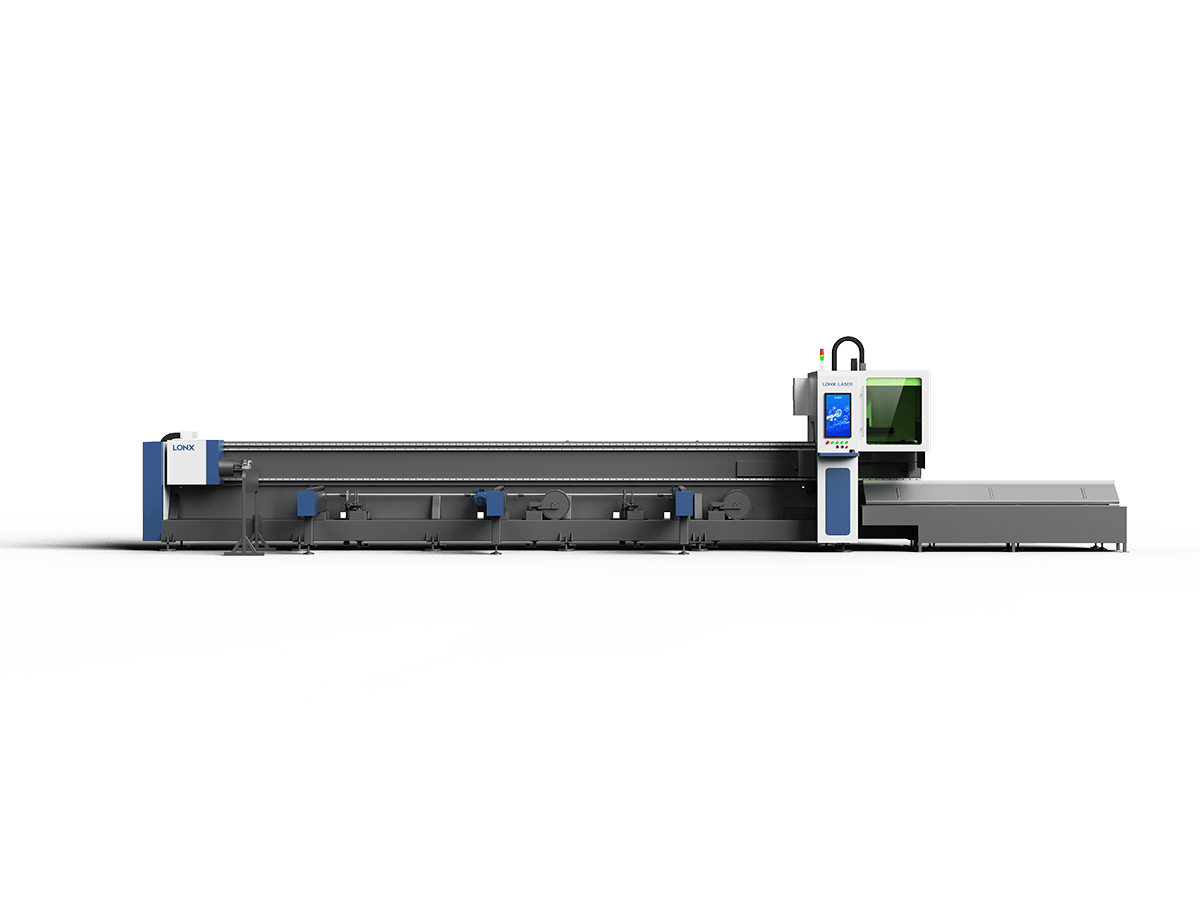
LX-K26
A large-diameter tube laser cutting machine for round tubes from Ø15–250 mm and square tubes from 15×15 to 250×250 mm, with support for channel steel, angle steel, I-beams, and H-beams. Its 300 kg loading capacity and servo follow-up support make it suitable for medium-to-large structural components used in construction machinery.

LX-K35-3
Designed for heavier structural tubes, the LX-K35-3 processes round and square tubes from 40–350 mm, with a single-tube loading capacity of up to 1,000 kg and tube lengths up to 12,000 mm. Its three-chuck configuration and follow-up support are suited to long, heavy components that require stable cutting.
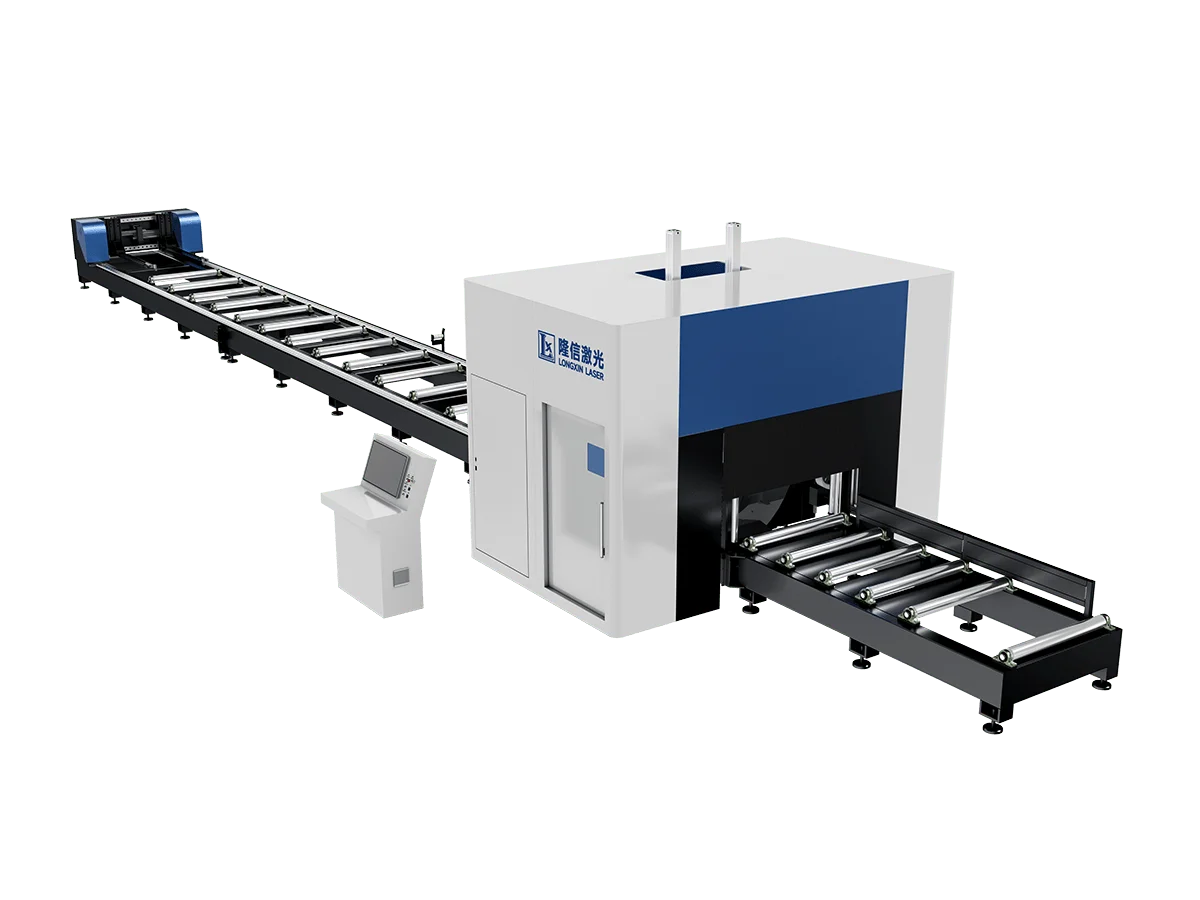
LX-H100
For very large tubular and structural sections, the LX-H100 covers round tubes from Ø150–1,000 mm and square tubes from 150×150 to 850×850 mm. It can also process H-beams, I-beams, channels, and angle steel, with 3D five-axis cutting for large structural components. LONX lists engineering machinery among its target applications.