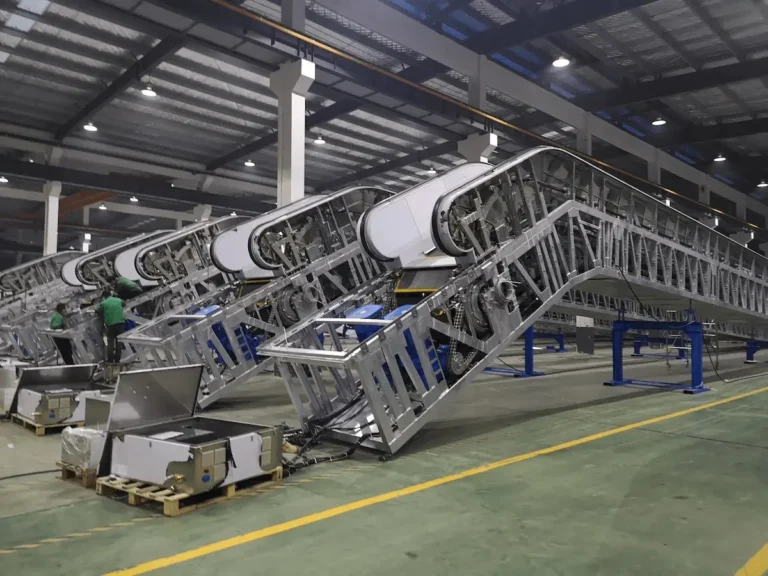
Elevator manufacturing involves many metal parts that must be cut and assembled accurately, from car frames and structural supports to handrails, brackets, and tubular door structures. While sheet metal is used extensively for cabins, doors, and panels, tube and profile processing is particularly relevant to the structural components that need precise holes, connection points, and cut-to-length preparation.
For elevator manufacturers, the challenge is often not simply cutting a tube. Different components may require accurately positioned holes, slots, angled ends, or intersecting joints before welding and assembly. Tube laser cutting can bring several of these operations into one CNC-controlled process, helping reduce manual positioning and secondary machining.
Which Elevator Components Can Be Cut with a Tube Laser?
Tube laser cutting is mainly suited to the tubular and structural components within an elevator assembly.
Typowe zastosowania obejmują:
- Elevator car and counterweight frames
- Structural supports and reinforcement members
- Guide rail support structures
- Handrails and tubular safety structures
- Door and enclosure structures
- Machine-room and equipment supports
- Brackets and mounting components
The exact combination depends on the elevator design and manufacturing process. Some components, such as elevator cabin panels and conventional guide rails, are primarily produced from sheet or specialized structural profiles rather than standard tubes. Tube laser cutting is most useful where the design uses round, square, rectangular, or other machinable profiles. LONX specifically lists elevator car frames, guide supports, door structures, handrails, and other tubular components as elevator applications for its profile cutting systems.
Complex Holes and Connections for Elevator Frames
Elevator frames and support structures often contain multiple connection points that must remain accurately positioned during assembly.
Instead of cutting a tube to length and drilling each hole separately, a tube laser can produce mounting holes, slots, notches, and other connection features directly from the programmed geometry. This is especially useful when several members must be joined at specific positions.
For welded frame assemblies, shaped tube ends can also be used to create closer-fitting joints. This can reduce manual fitting and make the welding process more consistent.
This becomes particularly valuable when an elevator manufacturer produces different frame dimensions or customized configurations. The cutting program can be changed digitally without producing a new mechanical drilling or notching tool for every variation.
Improve Fit-Up Before Welding and Assembly
The accuracy of the components before welding has a direct effect on the assembly process.
When tube lengths and connection features are produced consistently, structural members can be positioned more easily in welding fixtures. Accurate holes and joint contours can also reduce the amount of manual adjustment, grinding, and rework required before welding.
For elevator component manufacturers, this is one of the practical reasons to replace separate sawing, drilling, and manual profiling operations with a CNC tube cutting process. An elevator manufacturing case reported problems with hole alignment and welding consistency when conventional plasma cutting and drilling were used, while automated tube processing was introduced to improve production efficiency and consistency.
From Elevator Design to Finished Structural Components
Elevator projects can involve many different component dimensions, particularly when manufacturers supply different cabin sizes, building configurations, or customized systems.
Tube laser cutting fits well with this type of production because the part geometry can be generated from digital drawings. The same machine can then produce different tube lengths and connection features without changing physical tooling.
A typical production flow can therefore be simplified to:
Digital Drawing → Tube Cutting → Welding / Forming → Assembly
For larger profile-based elevator structures, modern systems can also process structural sections such as H-beams, I-beams, channels, and angle steel. LONX’s LX-H65, for example, is designed for these profiles and lists elevator manufacturing among its application industries.
When Elevator Manufacturing Requires Larger Profiles
Not every elevator structural component can be handled by a conventional small or medium tube cutter.
Larger elevator frames, machine-room structures, heavy supports, and other load-bearing assemblies may require larger tubes or structural profiles. In these cases, the machine needs sufficient processing range and stable support for long and heavy workpieces.
Three-chuck systems can help maintain stability when processing large tubes, while follow-up supports are useful for reducing sag and vibration on long workpieces. LONX’s LX-K35-3, for example, handles round and square tubes from Ø40–350 mm, supports tube lengths up to 12,000 mm, and has a single-tube loading capacity of up to 1,000 kg.
For still larger structural sections, a dedicated profile cutting system may be more appropriate than a conventional tube laser.
Choosing a Tube Laser Cutting Machine for Elevator Components
The right machine depends on which elevator components you manufacture.
For smaller tubular parts such as handrails, supports, brackets, and lightweight frames, the key considerations are tube size, wall thickness, cutting accuracy, and production volume.
For car frames and larger structural members, tube diameter, profile type, tube length, weight capacity, and support stability become more important.
If your production includes structural profiles rather than only round and square tubes, also consider whether the machine can process channel steel, angle steel, I-beams, or H-beams and whether 3D cutting is required.
Recommended LONX Tube and Profile Laser Cutting Machines
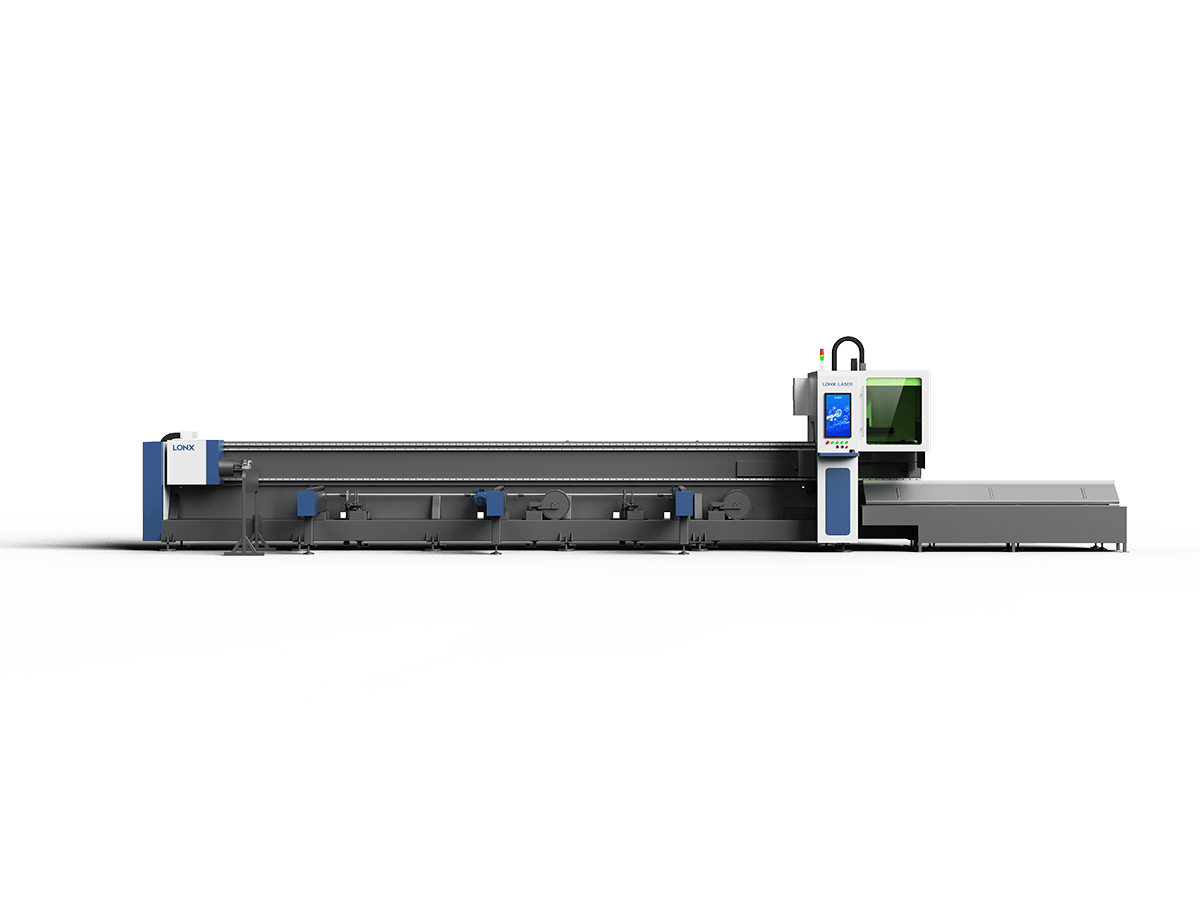
LX-K26
A large-diameter tube laser cutting machine covering round and square tubes from Ø15–250 mm, with support for channel steel, angle steel, I-beams, and H-beams. It is suitable for medium-to-large tubular and structural elevator components.

LX-K35-3
Designed for larger and heavier tubular components, the LX-K35-3 processes Ø40–350 mm round tubes and 40×40–350×350 mm square tubes, with tube lengths up to 12,000 mm and a loading capacity of up to 1,000 kg per tube.
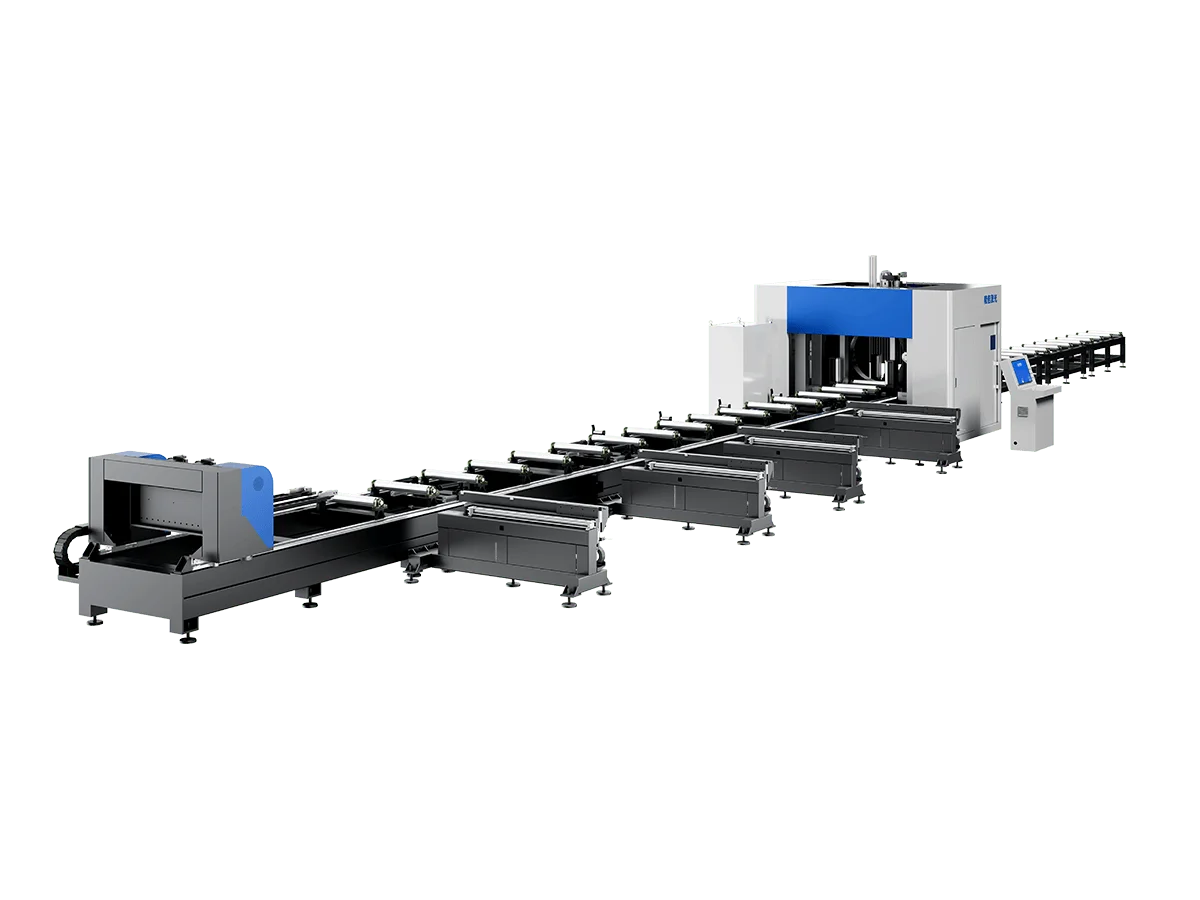
LX-H65
For elevator manufacturers working with large structural profiles, the LX-H65 processes round tubes from Ø100–650 mm as well as H-beams, I-beams, channels, and angle steel. It provides five-axis 3D cutting and is specifically listed by LONX for elevator manufacturing.