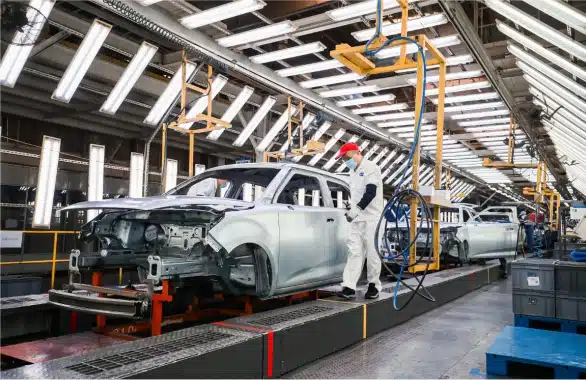
Automotive parts manufacturing often involves tubes that need to be cut, drilled, notched, or prepared for welding before they can be assembled into a finished component. Exhaust pipes, shock absorber tubes, seat structures, chassis components, and various brackets are typical examples.
When these operations are handled separately, manufacturers may need multiple machines and repeated positioning of the same workpiece. Tube laser cutting brings many of these cutting operations into one CNC-controlled process, making it easier to produce accurate tubular components with consistent geometry.
Which Auto Parts Can Be Made with Tube Laser Cutting?
Tube laser cutting is particularly suitable for automotive components made from round, square, rectangular, and other applicable profiles.
Entre as aplicações mais comuns estão:
- Exhaust pipes and exhaust system components
- Shock absorber tubes
- Seat frames and tubular supports
- Chassis and structural tubes
- Mounting brackets and supports
- Roll bars and protective structures
- Other tubular components used in vehicle assemblies
Among these applications, exhaust components and shock absorber tubes often involve large quantities of relatively small-diameter tubes. Structural parts such as chassis and seat frames may require a wider range of tube sizes and more complex connection features.
The production requirements also vary from one component to another. A simple exhaust tube may mainly require accurate cutting to length and connection holes, while a structural frame component may require notches, angled ends, or other geometries to create a proper welded joint.
Where Does Laser Cutting Make a Difference?
The main advantage of tube laser cutting is that the tube does not have to be treated as a simple piece of material that only needs to be cut to length.
A laser tube cutter can process the features that are needed for the next manufacturing stage.
Holes and Slots
Mounting holes, positioning holes, slots, and other openings can be cut directly into the tube according to the CAD design. This can reduce the need for separate drilling or punching operations.
Tube End Notching
For tubular structures, one tube often needs to fit against another before welding. Laser cutting can create notches and shaped tube ends directly, helping components fit together more accurately.
Angled and 3D Cuts
Some automotive parts require angled tube ends or more complex geometries at the joint. With suitable machine capabilities, these features can be produced during tube cutting rather than through separate machining or manual preparation.
Cutting to Length
The same setup can cut the tube to its required length while producing the additional features required for assembly. This reduces the number of times the workpiece needs to be repositioned during production.
From Tube Cutting to Welding
For many automotive tubular components, cutting is only the first stage. The quality of the cut directly affects what happens afterward.
When tube ends, holes, and connection features are produced consistently, the parts can be positioned more easily in welding fixtures. Properly prepared joints can also reduce manual fitting, grinding, and adjustment before welding.
This is particularly important for components that are produced repeatedly. If every tube is cut slightly differently, errors can accumulate during assembly. Consistent CNC processing helps maintain the same geometry across a batch, supporting more stable welding and downstream assembly.
Tube laser cutting therefore works best as part of the wider production process:
Tube preparation → Laser cutting → Bending / Forming → Welding → Assembly
The exact sequence depends on the component design and manufacturing method.
Why Is Tube Laser Cutting Suitable for Automotive Production?
High Repeatability for Batch Production
Automotive components are often produced in repeated batches, so consistent dimensions and feature positions are critical. CNC-controlled tube cutting allows the same program to be used across production runs with repeatable results.
Fewer Separate Operations
A conventional process may involve sawing first, followed by drilling, punching, notching, and deburring. Combining several of these operations into one laser cutting process can reduce handling and simplify the production flow.
Easier Product Changes
Automotive suppliers may produce different component versions for different vehicle models. Because tube cutting programs are generated digitally, changing a part design usually does not require a completely new physical cutting tool.
Melhor utilização de material
For high-volume production, even small amounts of wasted tube material can add up. Optimized cutting and nesting can help manufacturers make better use of each raw tube.
Automation for High-Volume Production
Automatic loading and feeding systems can reduce manual tube handling and support more continuous production. This is especially relevant for manufacturers producing large quantities of exhaust tubes, shock absorber components, and other standard tubular parts. Current automotive tube-cutting solutions commonly emphasize automatic feeding, repeatability, and integration of multiple tube-processing operations for this reason.
What Should You Consider When Choosing a Tube Laser Cutter for Auto Parts?
Machine selection should start with the actual components you need to produce.
The first consideration is tube size. Small-diameter automotive tubes require a different machine range from larger structural tubes.
Next, look at wall thickness and material. Exhaust systems, structural components, and lightweight parts may use different combinations of carbon steel, stainless steel, or aluminum.
You should also consider the required cutting features. If your parts only require straight cutting, a high-speed automatic tube cutter may be sufficient. If they require holes, notches, angled joints, or bevels for welding, the machine should support the corresponding processing capabilities.
Finally, consider production volume and automation. For high-volume automotive parts, automatic loading, fast feeding, stable chucking, and efficient material utilization can have a greater impact on production efficiency than simply increasing laser power.
Recommended LONX Tube Laser Cutting Machines
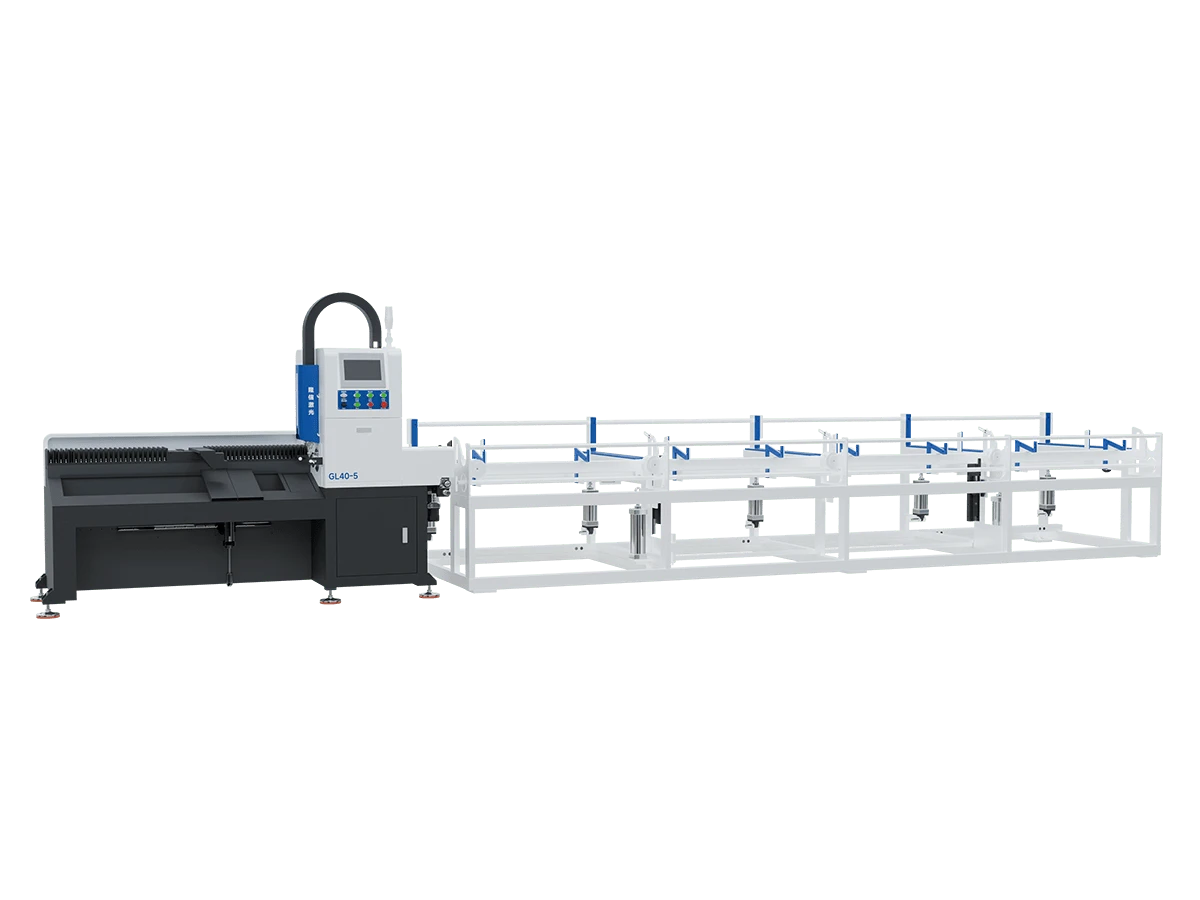
LX-GL40/70/90
Designed for high-speed automatic cutting of small-diameter round tubes, with models covering Ø10–40 mm, Ø10–65 mm, and Ø10–85 mm. It is particularly suitable for high-volume processing of small round tubes such as exhaust and other automotive tubular components. Maximum tube length is 6,200 mm, with processing accuracy specified at ±0.03 mm.
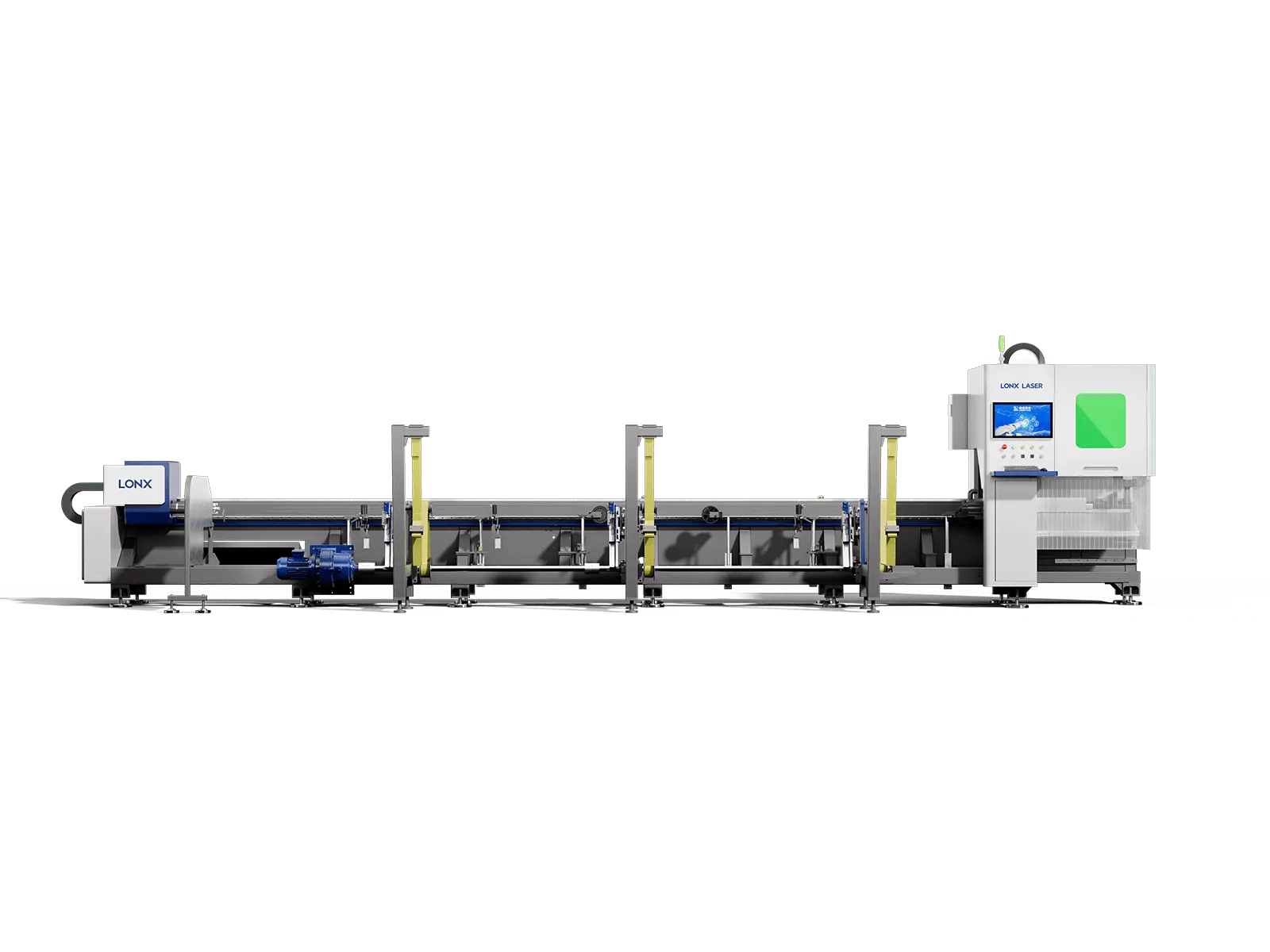
LX-K9
A high-speed tube laser cutting machine covering round tubes from Ø10–90 mm and square tubes from 10×10 to 90×90 mm. With up to 3.0G acceleration, automatic loading options, and near-zero tail material features, it is suitable for high-volume production where cutting speed and material utilization are important.
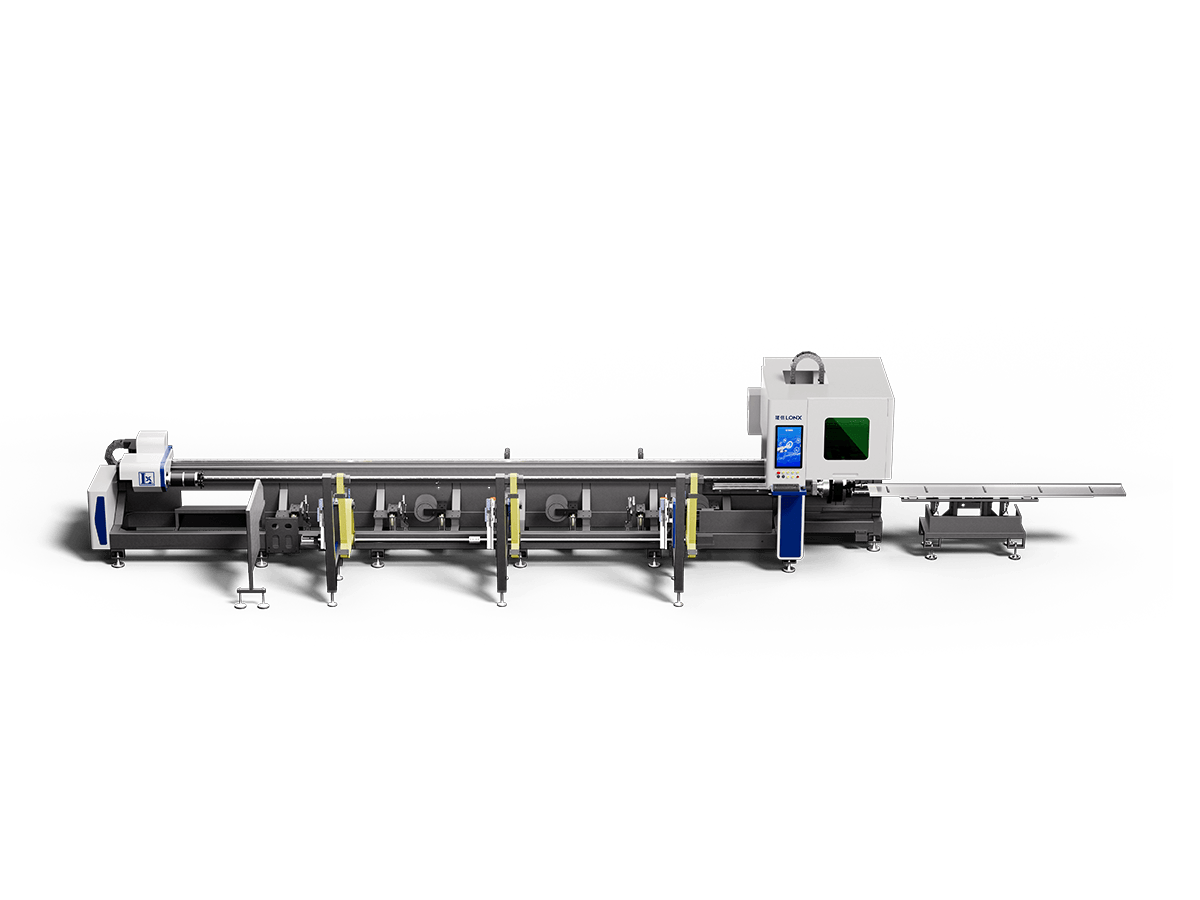
LX-K19
For manufacturers working with a wider range of automotive tubes, the LX-K19 handles round and square tubes from Ø15–180 mm / 15×15–180×180 mm. Its automatic loading system, ±0.05 mm processing accuracy, and broader tube range make it suitable for both small and medium-diameter tubular components.