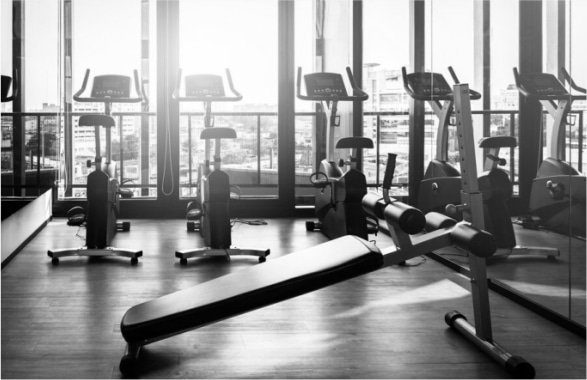
Fitness equipment manufacturers rely heavily on welded metal tube frames. Treadmills, squat racks, weight benches, cable machines, exercise bikes, rowing machines, and other gym equipment all use tubular components for their frames, supports, handles, and adjustment structures.
But the difficult part is rarely cutting a tube to length. A single frame component may also need repeated holes, slots, angled ends, notches, or intersecting joints before welding and assembly. These features have a direct effect on how quickly a frame can be welded, aligned, and finished.
Tube Laser Cutting for Fitness Equipment Frames
The frame is the part where tube laser cutting can make the biggest difference.
A typical fitness frame may contain dozens of individual tube components, each with its own length and connection geometry. For example, a squat rack may require repeated adjustment holes, while a treadmill frame can combine long structural tubes with mounting holes and angled connections.
Instead of cutting the tube first and then moving it through separate drilling, punching, notching, and deburring operations, a tube laser can produce many of these features during the same CNC-controlled process.
This is particularly useful when the same frame design is produced in large quantities. Every tube follows the same programmed dimensions and feature positions, making the next welding and assembly stages more predictable.
Accurate Holes for Adjustable Fitness Equipment
Repeated holes are one of the more distinctive requirements in fitness equipment manufacturing.
Squat racks, power racks, benches, cable machines, and adjustable training equipment may require rows of holes for:
-
J-hooks and bar supports
-
Seat and backrest adjustment
-
Handle positioning
-
Safety pins
-
Accessory mounting
-
Brackets and adjustment mechanisms
With conventional drilling, these patterns often require measurement, marking, drilling, and repositioning. At production volume, even small differences in hole spacing can create problems during assembly.
Tube laser cutting allows the hole pattern to be programmed together with the tube length and other features. The hole positions therefore remain tied to the same digital part geometry, improving repeatability between components.
Better Tube Joints Mean Easier Welding
Fitness equipment frames often need clean connections between tubes.
A horizontal tube may intersect a vertical frame member, or two tubes may meet at an angle. If the tube ends are simply saw-cut, workers may need to manually notch, grind, and adjust the parts until they fit correctly.
Laser-cut notches, miters, and shaped tube ends can prepare these joints before welding. This reduces the amount of manual fitting required and can help fixtures hold components more consistently.
For fitness equipment, this also has an appearance benefit. BLM specifically highlights laser-cut tube joints as a way to improve frame positioning during welding and create cleaner, less visible joints.
That matters for equipment such as commercial gym machines and premium home fitness products, where the frame itself is part of the visible product design.
Supporting Modern Fitness Equipment Designs
Fitness equipment is no longer limited to simple square-tube frames.
Manufacturers may use round, square, rectangular, oval, and other shaped tubes depending on the product design. Modern gym equipment increasingly incorporates curved or ergonomic structures, while compact adjustment mechanisms may require holes and slots in unusual positions.
Tube laser cutting provides more freedom when these geometries change. A new hole pattern, tube length, or joint contour can be modified in the production program instead of requiring a new mechanical fixture or dedicated cutting tool.
This flexibility is especially useful for manufacturers producing multiple product models, OEM equipment, or frequent design variations.
From Tube Cutting to a More Consistent Frame
The real production benefit is not just cutting faster. It is reducing variation between the individual parts that make up the frame.
A more traditional workflow might look like:
Sawing → Drilling → Punching → Notching → Grinding → Welding
With a suitable tube laser, many of these tube-preparation operations can be consolidated into:
Tube Laser Cutting → Welding → Assembly
The exact process depends on the component and machine configuration, but reducing repeated handling can make a significant difference when hundreds or thousands of frame components are produced.
For automated or semi-automated welding, consistent tube geometry is even more important because fixture and welding processes depend on the parts arriving in predictable positions. Recent fitness-equipment manufacturing solutions similarly emphasize the relationship between tube accuracy, fixture alignment, and welding consistency.
What Tubes Are Used for Fitness Equipment?
Fitness equipment manufacturers commonly work with carbon steel or mild steel tubes, while stainless steel and aluminum may be used for specific designs.
Common profiles include:
-
Tubos redondos
-
Square tubes
-
Rectangular tubes
-
Oval or flat-oval tubes
-
Other applicable shaped profiles
The correct tube laser therefore depends on the actual components being produced. A machine intended for small adjustment tubes may not be the right choice for large commercial equipment frames.
Tube diameter, profile dimensions, wall thickness, material, tube length, hole patterns, joint geometry, and production volume should all be considered before selecting the machine.
Choosing a Tube Laser Cutting Machine for Fitness Equipment
For manufacturers of fitness equipment, the most important question is usually not “How much laser power do I need?”
It is:
“What tube parts do I need to produce, and how many of them do I need to make?”
For high-volume production of small and medium tubes, fast material changes, automatic loading, stable chucking, and low material waste can be important. For larger fitness frames, a wider tube range and higher loading capacity may matter more.
If the frame requires repeated adjustment holes, notched joints, or angled cuts, confirm that the machine can produce those features in the required positions and with the necessary accuracy.
Recommended LONX Tube Laser Cutting Machines
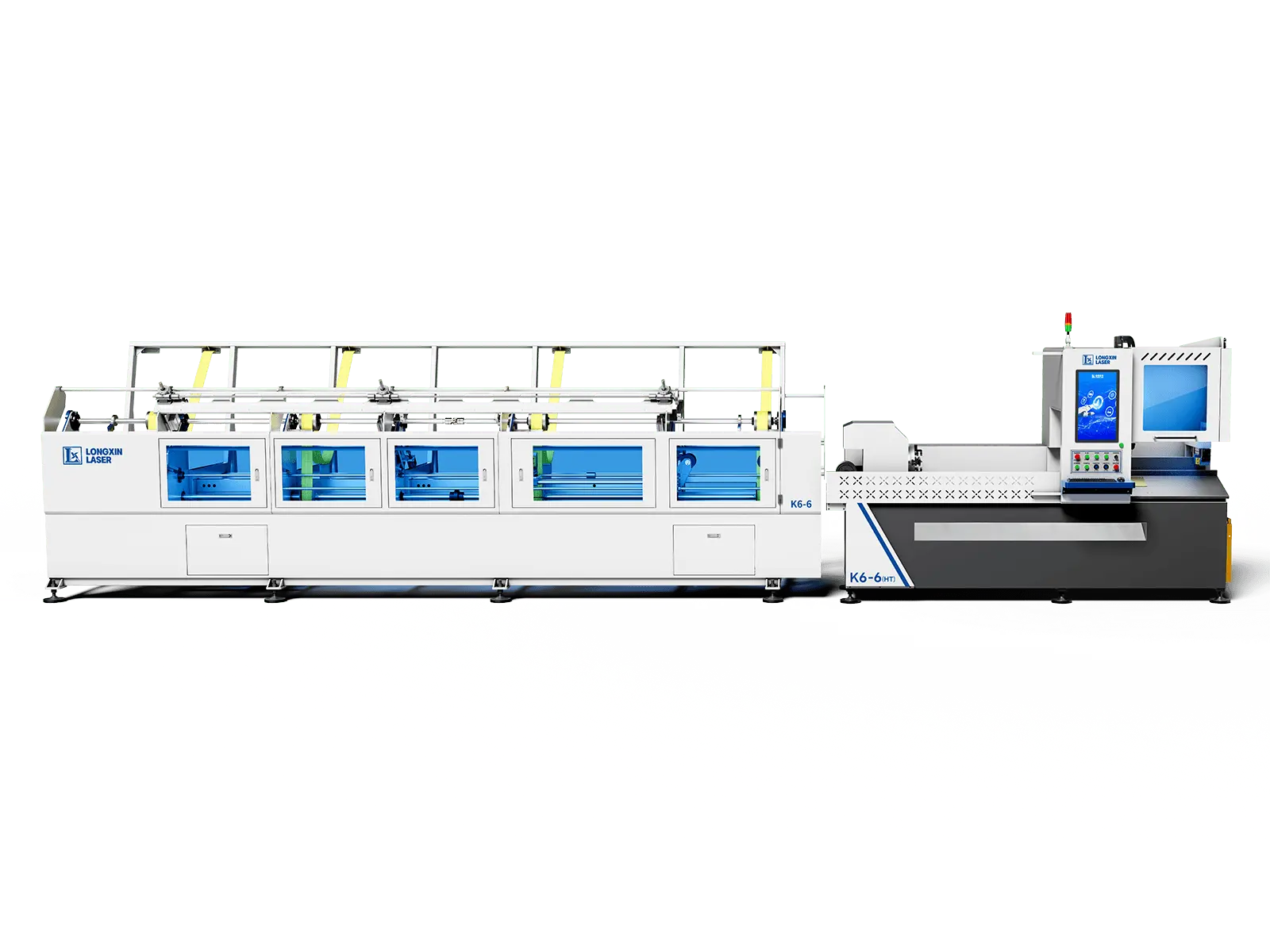
LX-K6-6(HT)
Designed for high-speed batch processing of small-to-medium tubes, the LX-K6-6(HT) handles round tubes from Ø10–85 mm and square tubes from 10×10–60×60 mm. It features 1.5G acceleration, a 7-second material change, and 5,500–6,200 mm tube length capability, making it suitable for high-volume fitness equipment components and frame parts.

LX-K16
The LX-K16 covers round and square tubes from Ø15–160 mm, with a maximum tube length of 7,200 mm and 1.5–6 kW laser power. Its dual-chuck design and zero-tailing cutting modes make it suitable for manufacturers processing a wider range of fitness equipment frame components.
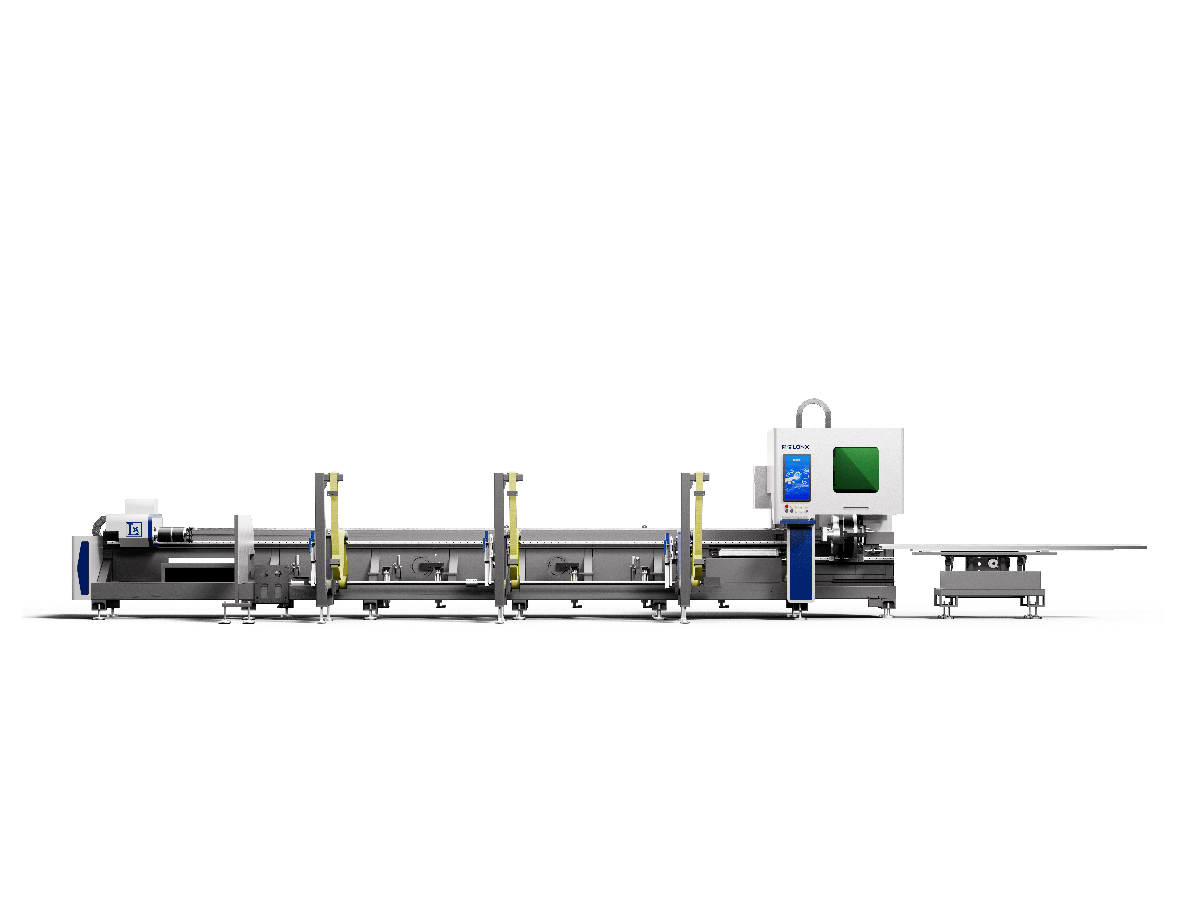
LX-K19
For manufacturers working with larger or more varied frame tubes, the LX-K19 processes round and square tubes from Ø15–180 mm, with a 1.8-ton automatic loading system, 1.5G acceleration, and ±0.05 mm repeat positioning accuracy. It is suited to production that requires both flexibility and stable batch processing.