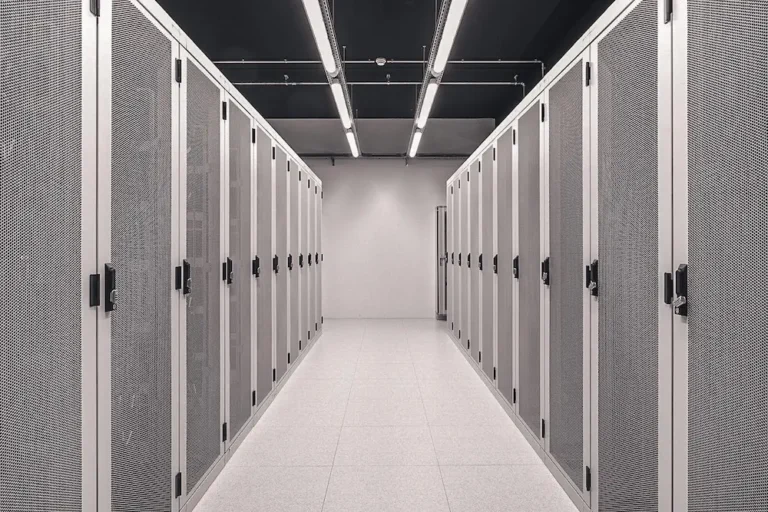
Data centers depend on server racks, network cabinets, power distribution units, and supporting metal components to keep computing equipment organized, accessible, and properly installed. Behind every cabinet are sheet metal parts that must align with mounting hardware, accommodate cable routing, support airflow requirements, and fit together consistently during assembly.
For manufacturers, the challenge is not simply producing a metal enclosure. A mounting hole that does not align with a rail, a panel that interferes with cable routing, or a ventilation pattern that does not meet the equipment design can create problems further down the production line.
At the same time, server cabinet manufacturers may need to support different rack heights, cabinet depths, cooling configurations, and customer-specific layouts. Changing designs can increase setup work, while standardized high-volume components demand repeatable production and cost control.
Fiber laser cutting provides a programmable way to produce suitable sheet metal profiles, openings, brackets, and enclosure panels. Its value is greatest when manufacturers need flexibility across different part designs. For highly repetitive hole patterns and standardized high-volume panels, CNC punching may be a better choice.
The goal is to select the right process for each component and ensure that cutting supports the requirements of the complete rack assembly.

Where Server Rack Manufacturers Face Production Problems
1. Mounting Holes Must Align With Rails and Equipment
Server racks rely on mounting rails, brackets, front panels, and other components with defined hole patterns and installation dimensions. These features determine whether equipment can be mounted correctly and whether components fit together as intended.
If hole positions drift or a panel is manufactured to the wrong drawing revision, assembly may require adjustment or the part may be unusable.
How fiber laser cutting helps
CNC laser cutting can produce programmed profiles and mounting features according to an approved digital drawing. This can be useful for customized brackets, panels, and parts with varying hole layouts, particularly when designs change between product configurations.
However, programmed cutting does not guarantee that every finished assembly will meet its dimensional requirements. Material variation, machine condition, process parameters, bending, and assembly tolerances also affect the result.
Manufacturers should identify critical mounting dimensions, establish inspection procedures, and verify representative parts against the actual rail and equipment interfaces.
2. Different Rack Configurations Increase Design and Setup Work
Data center equipment may require different cabinet heights, depths, mounting arrangements, access panels, and cable-entry positions. Some customers need standard cabinets, while others require modifications for specific equipment or facility layouts.
If every design variation depends on dedicated cutting tools or extensive manual preparation, accommodating custom orders can become expensive.
How fiber laser cutting helps
A programmed cutting process can accommodate different panel dimensions and contours by revising the cutting file. This reduces dependence on dedicated cutting dies for every customized shape.
It can be particularly useful for lower-volume configurations, prototype cabinets, custom mounting plates, and panels with changing interface locations.
For stable, high-volume production of standardized components, dedicated punching or other automated processes may remain more economical. The appropriate method depends on the production mix, tool investment, and expected order quantities.
3. Ventilation Openings Must Support the Cooling Design
Server racks and associated enclosures may use perforated doors, vented panels, blanking panels, and other airflow-related components.
The opening pattern affects the available open area, while the remaining material must still satisfy the panel’s structural and mechanical requirements. An opening pattern selected only for appearance may not meet the needs of the equipment or the intended airflow arrangement.
How fiber laser cutting helps
Laser cutting can produce customized opening patterns and panel contours for suitable applications. This flexibility is useful when ventilation layouts vary between cabinet designs or when panels need a combination of openings and mounting features.
However, cutting a ventilation pattern does not establish the cooling performance of the finished rack. Airflow depends on the complete system design, including equipment placement, fans, blanking panels, sealing, and the relationship between the rack and the data center cooling layout.
For repetitive, high-volume perforation, CNC punching may provide a more economical production route. The process should be selected according to the required pattern, production volume, and panel design.
4. Cable Routing and Power Distribution Create Complex Panel Requirements
Server cabinets must accommodate power cables, network connections, cable managers, and power distribution units. Their panels may require cable-entry openings, mounting points, slots, and access features in carefully defined positions.
Poorly positioned openings can interfere with cable routing, equipment installation, or the assembly of adjacent components.
How fiber laser cutting helps
Programmed cutting allows different openings and external contours to be incorporated into a panel layout. Manufacturers can revise the cutting file when equipment interfaces or cabinet configurations change.
This is useful for custom cable-entry plates, PDU mounting panels, brackets, and other components that do not rely exclusively on standardized hole patterns.
Critical openings should still be checked against the actual hardware, cable bend requirements, access clearances, and approved equipment drawings.
5. Surface Finishing Can Affect Electrical Bonding and Assembly
Server rack components may receive powder coating or other surface treatments to provide the required finish and corrosion protection.
However, certain designs require specific conductive contact areas to remain free of insulating coatings. If these areas are covered unintentionally, electrical bonding or grounding requirements may not be met.
How fiber laser cutting helps
Laser cutting can produce the specified component geometry, including the edges and features used to locate mounting hardware. Accurate drawings and consistent part preparation help support subsequent finishing and assembly.
But the cutting process does not establish electrical continuity or grounding performance. These depend on the approved electrical design, contact surfaces, fasteners, coating specifications, masking, assembly, and verification procedures.
Manufacturers should identify any required uncoated areas on the engineering drawings and validate the finished assembly according to the applicable requirements.
6. Inconsistent Panels Create Problems Across Production Batches
A server rack is assembled from multiple components, including rails, doors, side panels, covers, brackets, and mounting hardware. Small variations can accumulate when parts from different production batches must fit together.
Panel flatness, hole positions, bending dimensions, and finishing consistency can all affect the assembly process.
How fiber laser cutting helps
Validated CNC cutting programs can help reproduce programmed geometry across repeated production runs. For customized parts, digital files also make it easier to manage different approved versions.
The complete manufacturing process still requires appropriate material control, bending accuracy, hardware installation, finishing, and inspection. Consistency should be measured across production batches rather than judged from a single sample.
Which Data Center Components Can Benefit From Laser Cutting?
Server Rack Panels and Covers
Server racks use side panels, top and bottom covers, access panels, and other sheet metal components to enclose and protect equipment.
These parts may require mounting holes, cable openings, ventilation features, or customized external dimensions. Laser cutting can produce suitable flat blanks before the parts are bent, coated, or assembled.
For standardized, high-volume panels with repetitive hole patterns, compare laser cutting with CNC punching to determine the most economical process.
Mounting Brackets and Equipment Support Plates
Brackets and support plates connect equipment to rack frames, cabinets, and other mounting structures.
Customized brackets may contain irregular profiles, multiple holes, slots, or interfaces that vary between equipment configurations. Laser cutting can produce these features from programmed drawings, making it useful for custom components and changing product designs.
Load-bearing parts must still be designed and validated for their intended loads, material properties, and joining methods. Cutting capability alone does not establish structural performance.
Perforated Doors and Ventilation Panels
Rack doors and selected enclosure panels may use perforated or louvered patterns to support ventilation and equipment access.
Laser cutting can be considered for customized patterns and panels with varied openings. For standardized perforation at high production volumes, punching may be preferable depending on the hole pattern and production requirements.
The selected pattern must follow the intended thermal and mechanical design rather than being chosen solely for cutting convenience.
Cable Management Panels and PDU Mounting Components
Cable routing and power distribution systems may require brackets, mounting plates, access covers, and panels with specific openings.
Laser cutting can accommodate customized dimensions and hole layouts for these components. Before production, verify that the openings match the actual hardware and leave adequate space for cable installation and maintenance access.
Aisle Containment Panels and Supporting Components
Some data center layouts use hot-aisle or cold-aisle containment systems with doors, ceiling panels, brackets, and other sheet metal components.
These parts may require customized dimensions to fit a specific cabinet row, ceiling height, or facility layout. Programmable cutting can support these variations before the components are formed and assembled.
The completed containment system still depends on installation alignment, sealing, structural support, and the overall cooling design.
Laser Cutting or CNC Punching for Server Rack Production?
Laser cutting and CNC punching can both be useful in server rack manufacturing. They should be selected according to the parts being produced rather than treated as interchangeable processes.
Fiber laser cutting is worth evaluating when:
- Panel designs and mounting layouts change frequently.
- Parts require customized external contours or varied openings.
- Production includes prototypes, custom configurations, or smaller batches.
- Manufacturers need flexibility without dedicated cutting dies for every contour.
CNC punching is worth evaluating when:
- Production involves large quantities of standardized panels.
- Components contain repetitive holes or established perforation patterns.
- The same features are produced consistently over long runs.
- Punching tools and automated handling can deliver the required throughput economically.
Some production lines use both methods. Laser cutting can process customized profiles and changing designs, while punching handles repetitive features across high-volume panels.
The right balance depends on part geometry, batch size, tooling costs, machine utilization, material handling, and the downstream forming process.
How to Evaluate a Cutting Process for Server Rack Components
Before selecting a machine or changing an existing production route, identify the parts that create the greatest assembly or manufacturing difficulties.
01. Identify the Critical Components
Start with representative rack panels, mounting rails, brackets, cable-entry plates, or ventilation panels. Determine whether the main problem involves hole alignment, design changes, material waste, finishing, or batch consistency.
02. Confirm the Drawings and Rack Requirements
Check the approved part drawings, mounting dimensions, equipment interfaces, and any applicable rack standards. Identify the dimensions that are critical to installation rather than treating every dimension as equally important.
03. Define Materials and Surface Requirements
Specify the material grade, thickness, surface treatment, and required finish. If particular contact areas must remain conductive, identify those requirements before production and coordinate them with the finishing process.
04. Test Representative Parts and Assemblies
Evaluate cutting quality, critical hole positions, panel flatness, bending dimensions, and fit with actual hardware. Where necessary, assemble the parts to verify that the complete component meets the intended installation requirements.
05. Compare the Complete Manufacturing Cost
Include programming, tooling, cutting or punching time, material utilization, deburring, bending, coating, hardware installation, inspection, and rework.
The best process is the one that meets the required component specifications at an appropriate total production cost.
Is Fiber Laser Cutting the Right Choice for Data Center Manufacturing?
Fiber laser cutting is worth considering when server rack production involves customized panel layouts, changing mounting features, complex contours, or a varied mix of components.
It may be less economical for standardized, high-volume perforation and repetitive hole patterns that can be processed efficiently using CNC punching or dedicated tooling.
The appropriate manufacturing route depends on the panel design, material, thickness, production quantity, required tolerances, and downstream processes.
If you are evaluating laser cutting for server rack panels, brackets, or other data center components, review the available sheet metal laser cutting machines against your actual drawings and production requirements.
Câu hỏi thường gặp
Can fiber laser cutting be used to manufacture server rack panels?
Yes. It can produce suitable flat sheet metal panels, covers, brackets, cable-entry plates, and other components with programmed contours and openings. The appropriate process depends on the material, thickness, geometry, and production volume.
Is laser cutting better than punching for server rack ventilation holes?
Not always. Laser cutting offers flexibility for customized patterns, while CNC punching may be more economical for repetitive, high-volume perforation. Compare the required opening pattern, production quantity, tooling costs, and processing time.
How can manufacturers maintain accurate mounting hole positions?
Use approved drawings, validated cutting programs, suitable process controls, and dimensional inspection. Critical features should be checked against the actual rack rails and equipment interfaces, including the effects of subsequent bending and assembly.
Can laser cutting guarantee server rack grounding performance?
No. Grounding performance depends on the complete electrical design, conductive contact surfaces, coatings, fasteners, assembly, and verification procedures. Required uncoated areas must be specified and controlled separately.
Does laser cutting produce a complete server rack?
No. It produces suitable sheet metal components. A finished rack may also require punching, bending, welding, hardware installation, coating, assembly, and inspection.