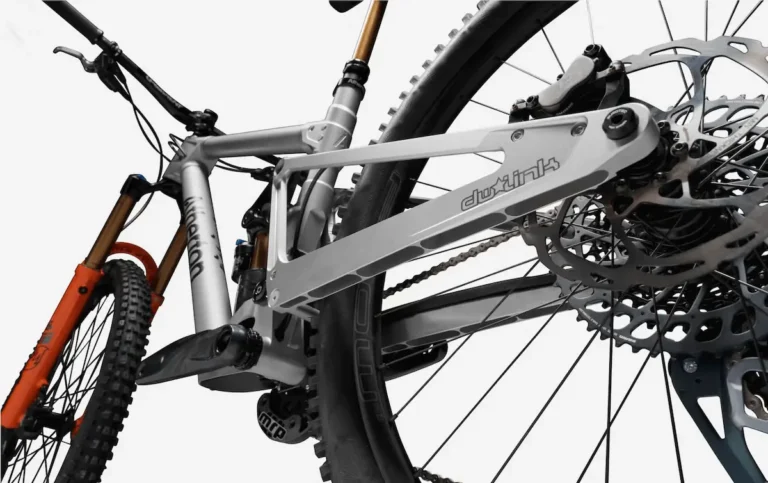
Bicycle frames are built from multiple tubes that must be cut and prepared accurately before welding. A typical frame may require different tube lengths, angled ends, notches, holes, and slots to create strong and properly aligned joints. For bicycle manufacturers producing multiple frame models or large batches, relying on sawing, manual measurement, drilling, and tube notching can make production slower and introduce variation between parts.
Tube laser cutting provides a CNC-controlled way to prepare these components directly from digital designs. By combining length cutting and tube-feature processing in one operation, manufacturers can produce more consistent frame components while reducing manual preparation before welding.
Where Tube Laser Cutting Is Used in Bicycle Manufacturing
The main application is bicycle frame production, where individual tubes need to fit together accurately before TIG, robotic, or other welding processes.
Typical tubular components include:
- Top tubes and down tubes
- Seat tubes and chainstays
- Head tubes and frame supports
- Handlebar and steering components
- Fork and support tubes
- E-bike battery and motor support structures
- Cargo bike and specialty bicycle frames
The same approach can also be used for tubular components in electric bicycles, folding bikes, cargo bikes, and other light-mobility products. LONX specifically lists bicycle frames, handlebars, forks, seat posts, and other tubular components among the applications of its tube laser cutting machines.
Tube Notching and Joint Preparation for Bicycle Frames
For a bicycle frame, simply cutting a tube to length is rarely enough. Tube ends often need to match the shape of another tube so that the parts can be positioned correctly and welded with the required joint geometry.
Laser tube cutting can produce miters, notches, holes, slots, and other connection features directly from the programmed geometry. This reduces the need for separate notching, drilling, and manual fitting operations.
Accurate joint preparation is particularly valuable during frame welding. When mating tubes are cut consistently, they can be positioned more predictably in fixtures, helping reduce excessive gaps, manual grinding, and repeated adjustments before welding. BLM highlights laser-cut tube joints as a way to simplify positioning and improve tubular-frame assembly, while bicycle manufacturers also use laser processing as part of frame production.
Why Precision Matters in Bicycle Frame Production
Bicycle frames often combine several tubes into a relatively compact structure. Small variations in tube length, joint angle, or hole position can accumulate as multiple components are assembled.
For manufacturers, the objective is therefore not simply a clean cut. The important result is repeatable geometry from one component to the next.
A CNC tube laser can help maintain consistent tube lengths and feature positions across production batches. This makes downstream fixture positioning and welding more predictable and can reduce rework caused by inconsistent tube preparation. A recent bicycle-frame production example from KTM Components describes strict control of tolerances across frame tubes because accumulated errors can affect weld quality.
Processing Thin-Wall Steel and Aluminum Tubes
Bicycle frames commonly use lightweight materials, including steel and aluminum alloys. Tube-wall thickness and material properties therefore need to be considered when selecting and configuring a laser cutting machine.
Thin-wall tubes require stable clamping and feeding to prevent unwanted movement during processing. Cutting parameters, chuck pressure, tube straightness, and support position can all affect the quality of the finished part. Recent industry guidance for bicycle-frame laser cutting specifically identifies these factors as important when processing thin-wall components.
For aluminum and other reflective materials, the laser source, cutting head, and process parameters should also be matched to the material and thickness being processed.
For non-standard bicycle tubes such as heavily ovalized, tapered, bent, or hydroformed sections, manufacturers should confirm machine compatibility before selecting equipment. Standard tube laser systems are not automatically suitable for every formed bicycle tube.
From CAD Design to Weld-Ready Tube Components
One of the main advantages of laser tube cutting for bicycle manufacturing is the connection between digital design and production.
Once the tube geometry and required features are defined, the cutting program can produce the required length, joint contours, holes, and slots without creating dedicated cutting tools for every new design.
This is particularly useful for bicycle manufacturers handling multiple frame models or frequent design changes. A new tube geometry can be programmed digitally rather than requiring new drilling or notching fixtures.
The finished components can then move directly to the next stage of the process, such as bending, fixture positioning, TIG welding, or robotic welding, depending on the production method. Bicycle manufacturers already combine tube forming, laser cutting, and automated welding within modern frame-production workflows.
Choosing a Tube Laser Cutting Machine for Bicycle Components
For bicycle manufacturing, machine selection should start with the actual tube specifications rather than laser power alone.
The key factors are:
- Tube diameter and profile
- Épaisseur de paroi
- Material, such as steel or aluminum
- Required tube length
- Types of joints and features to be cut
- Production volume and automation requirements
For high-volume production of small and medium tubes, fast loading, short cycle times, stable clamping, and low material waste can be important. For manufacturers using a wider range of tube sizes, a larger processing range may be more valuable than maximum cutting speed.
LONX Tube Laser Cutting Machines for Bicycle Components
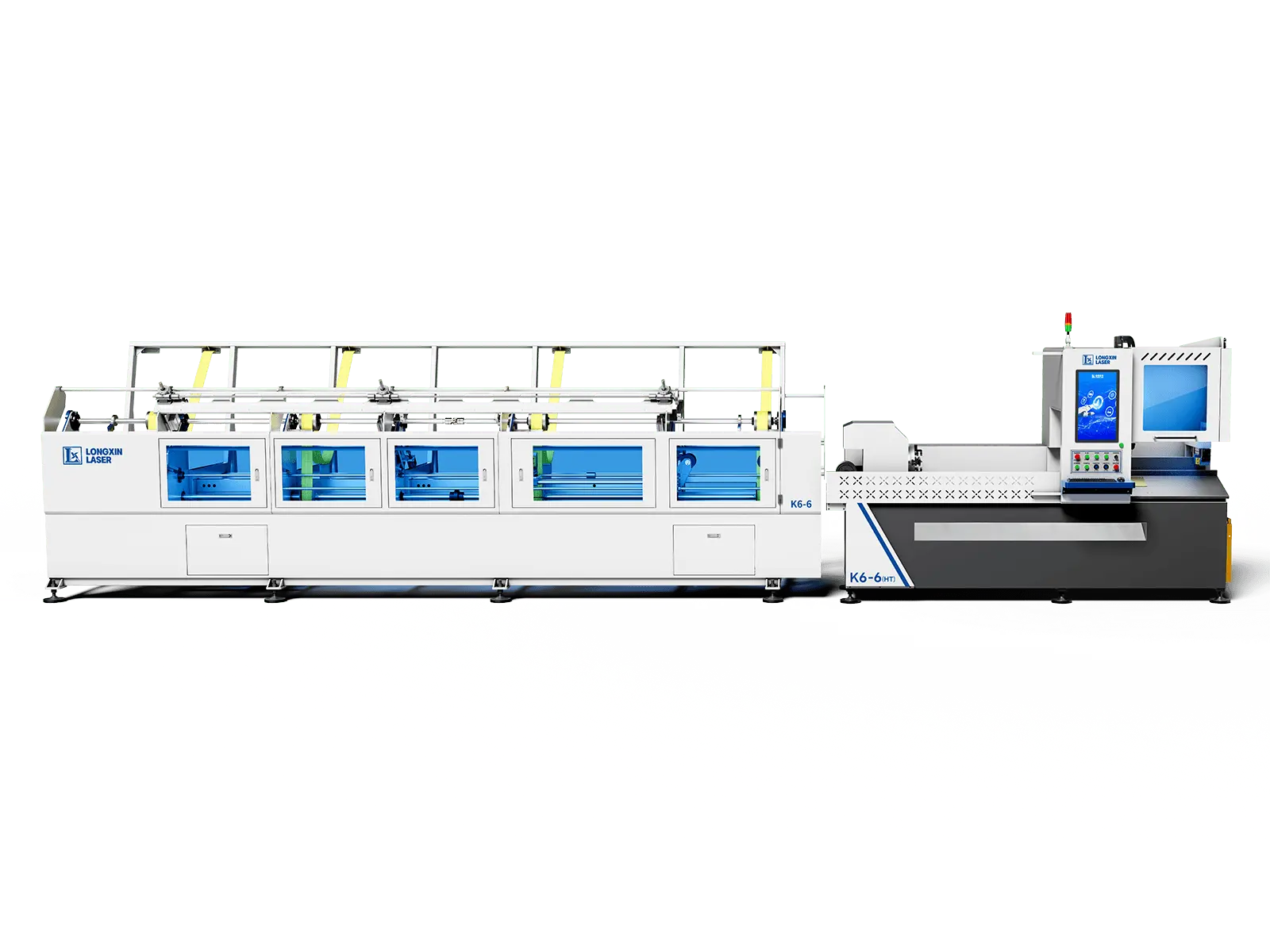
LX-K6-6(HT)
Designed for high-volume processing of small and medium tubes, the LX-K6-6(HT) handles round tubes from Ø10–85 mm and square tubes from 10×10 to 60×60 mm, with support for rectangular and waist-shaped tubes. It offers up to 1.5G acceleration, ±0.03 mm processing accuracy, and tube lengths of 5,500–6,200 mm, making it suitable for manufacturers focused on fast, repeatable processing of bicycle frame tubes.
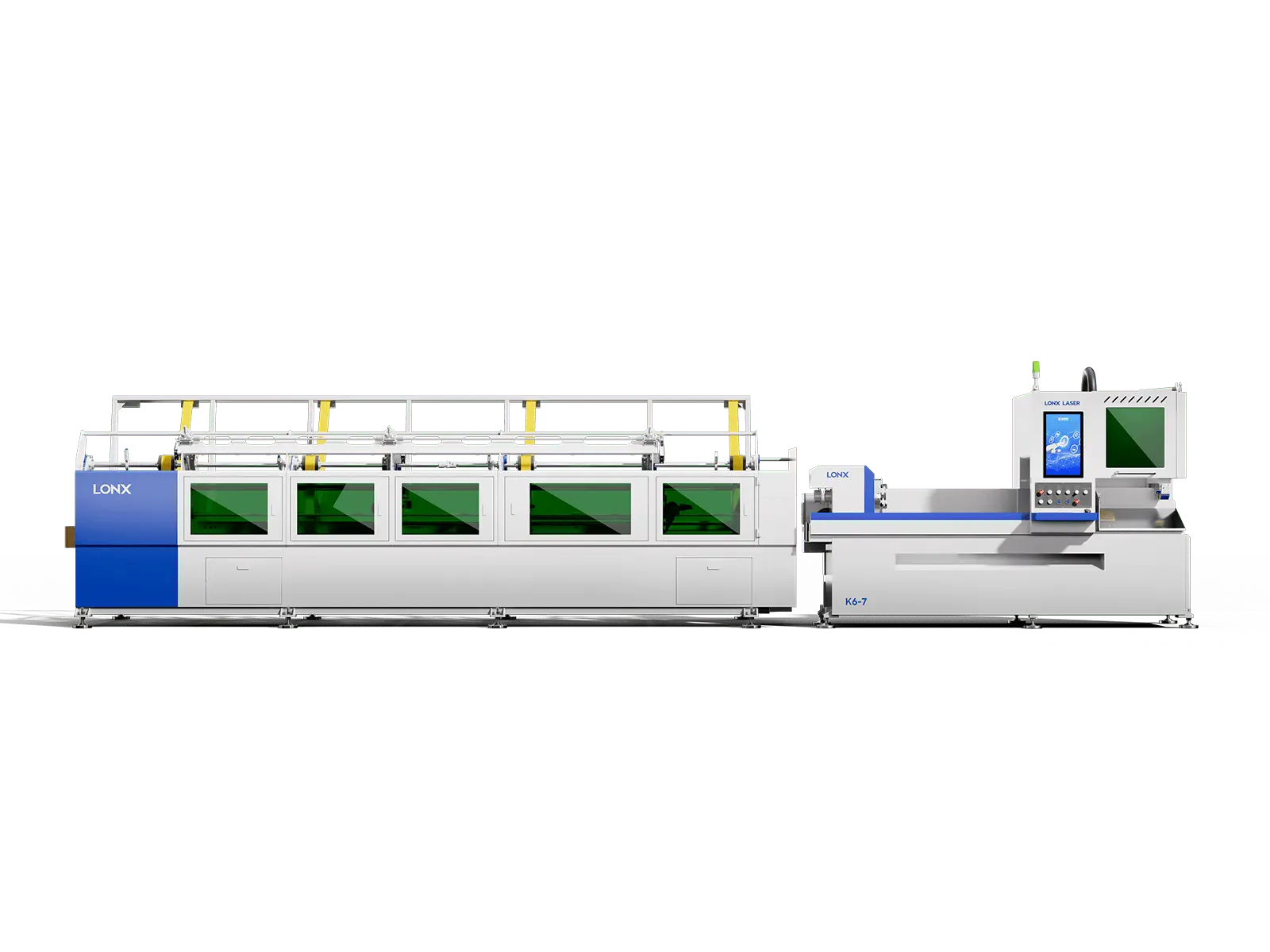
LX-K6
The LX-K6 processes round tubes from Ø10–85 mm and square tubes with a diagonal below 85 mm. It supports stainless steel, carbon steel, aluminum, copper, and iron and is listed by LONX for bicycle frames, handlebars, forks, seat posts, and other tubular components. It is a practical option for manufacturers looking for a flexible tube cutting system for standard bicycle components.

LX-K19
For manufacturers working with a wider range of tube sizes, the LX-K19 covers round and square tubes from Ø15–180 mm and offers ±0.05 mm processing accuracy, automatic loading, and a 1.5G motion acceleration. Its broader size range makes it suitable when bicycle-component production extends beyond typical small frame tubes.