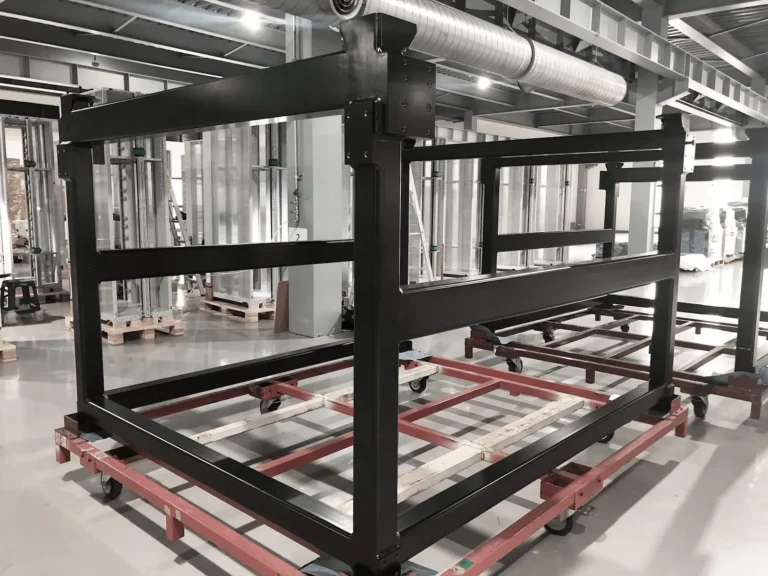
Industrial equipment manufacturers produce a wide range of machines and systems, from automated production equipment and conveyor systems to material-handling machines, industrial workstations, and custom machinery. Many of these products rely on welded tube frames, equipment bases, guards, supports, and mounting structures.
The challenge is that these components are rarely just tubes cut to length. A single part may require mounting holes, slots, notches, intersecting joints, or other features before it can be welded and assembled. Tube laser cutting allows many of these operations to be produced directly from the digital design, making it suitable for both standard equipment and customized machinery.
What Industrial Equipment Components Can Be Made from Tubes?
Tube and profile components are found throughout industrial equipment.
Les applications typiques incluent :
- Machine frames and bases
- Conveyor frames and support structures
- Automation equipment frames
- Equipment guards and protective structures
- Machine stands and workstations
- Mounting supports and brackets
- Material-handling equipment
- Skid and equipment support structures
For many equipment builders, the same production line may need to handle several different types of components. A conveyor frame might require long square tubes with regularly spaced mounting holes, while a machine base may use larger rectangular sections with structural connection features.
This variety makes tube laser cutting particularly useful for manufacturers that need one machine to handle different parts instead of using dedicated equipment for every operation. Current industrial fabrication applications commonly include machine frames, conveyor structures, equipment supports, guards, and automation equipment.
One Tube, More Than One Operation
The real value of tube laser cutting becomes apparent when looking at how an equipment frame is actually manufactured.
A conventional process might require:
Cut to length → Mark → Drill → Notch → Grind → Weld
Every step can require additional positioning and handling.
With tube laser cutting, the required geometry can be programmed directly into the cutting system. The same tube can be cut to length while producing holes, slots, notches, and connection contours.
For equipment manufacturers, this means fewer separate operations and less repositioning of the workpiece. Industrial tube-laser applications specifically highlight the ability to produce accurate holes, slots, notches, and contours on structural tubing before welding and assembly.
Machine Frames and Equipment Bases
Machine frames are one of the most natural applications for tube laser cutting.
A frame may contain dozens of individual tubes, each with different lengths and mounting positions. The tubes need to fit accurately when they are assembled into a square or rectangular structure.
Laser cutting can produce:
- Tube lengths
- Mounting holes
- Connection slots
- Notches at tube intersections
- Openings for brackets and components
When these features are generated from the same digital part geometry, the components can arrive at the welding station ready for positioning and assembly.
For equipment builders, this can be more important than simply increasing cutting speed. Consistent hole positions and tube dimensions can reduce the adjustment required during frame fabrication and help maintain the geometry of the finished machine.
Conveyor Frames, Guards and Automation Structures
Industrial equipment often includes a large number of secondary tubular structures around the main machine.
Conveyors require frame members, roller supports, brackets, and mounting structures. Automation cells require structural frames, equipment supports, and protective guards. Workstations and material-handling systems may use similar combinations of square and rectangular tubes.
These components often have relatively simple geometries individually, but there can be many different versions within the same project.
Tube laser cutting is well suited to this type of production because changing from one component to another mainly involves changing the digital cutting program rather than producing a new mechanical fixture. Current industrial equipment fabrication applications include conveyor frames, machine guards, warehouse automation structures, equipment bases, and structural tubing.
When Equipment Designs Keep Changing
Industrial equipment is often built to order or customized for a particular production line. Even manufacturers with standardized products may have different frame dimensions, mounting positions, or accessory configurations for different customers.
This creates a different requirement from purely high-volume manufacturing.
The machine needs to be productive, but it also needs to switch between different parts without creating excessive setup time.
Tube laser cutting fits this type of production because CAD-based programming makes it possible to create different tube geometries without dedicated drilling templates or notching tools. BLM, for example, positions tube laser systems as flexible systems capable of processing round, square, rectangular, special, and open profiles, with automated setup and material handling.
For custom equipment builders, this flexibility can be valuable when the production mix changes frequently.
Different Tubes for Different Machines
Industrial equipment manufacturers may work with very different tube sizes depending on the machine being built.
Small and medium tubes may be used for:
- Guards
- Workstations
- Supports
- Conveyor structures
- Automation frames
Larger tubes and structural profiles may be required for:
- Heavy machine bases
- Large equipment frames
- Material-handling systems
- Industrial support structures
Round, square, and rectangular tubes are common, while larger equipment may also involve structural profiles.
This makes the processing range one of the first things to consider when choosing a tube laser. A machine designed for small tubes may be ideal for automation frames but unsuitable for a heavy equipment base.
When Cutting Is Not Enough
Some industrial equipment components require additional operations after the tube has been cut.
Mounting structures may need threaded holes. Equipment supports may require marked part numbers. Components with mechanical connections may require drilling and tapping in addition to the laser-cut geometry.
This is where a multifunctional tube processing system can have an advantage. LONX’s LX-F16, for example, integrates laser cutting with thermal drilling, tapping, and marking, allowing several tube-processing operations to be performed on the same machine. It handles round tubes from Ø20–160 mm and square tubes from 20×20–160×160 mm.
For manufacturers whose components repeatedly require these additional operations, combining them can reduce movement between separate machines.
Choosing a Tube Laser Cutting Machine for Industrial Equipment
There is no single tube size or machine configuration that fits every industrial equipment manufacturer.
The machine should be matched to the actual mix of components being produced.
For general equipment frames and automation structures, look at the range of round and square tubes you process, along with the required hole and slot patterns.
For larger machine frames, conveyors, and structural assemblies, consider the maximum tube size, workpiece weight, tube length, and support system.
If your parts frequently require mounting holes, tapping, marking, or other secondary operations, an integrated processing machine may reduce the number of separate production steps.
For manufacturers producing custom equipment, flexibility and quick changes between different tube components can also be as important as maximum cutting speed.
Recommended LONX Tube Laser Cutting Machines
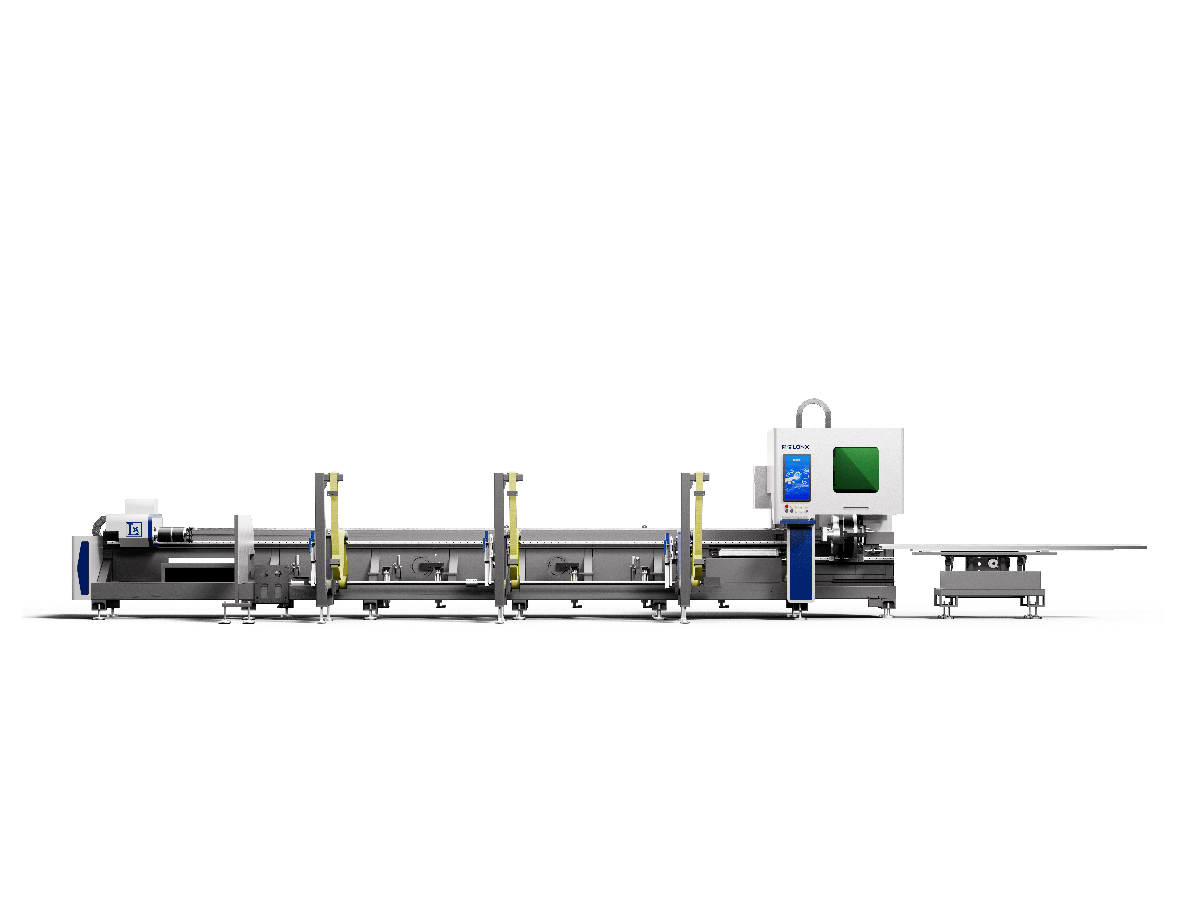
LX-K19
A high-speed tube laser cutting machine for round and square tubes from Ø15–180 mm / 15×15–180×180 mm. With 1.5G acceleration, ±0.05 mm repeat positioning accuracy, and a 1.8-ton automatic loading system, it suits industrial equipment manufacturers processing a wide range of small and medium-size structural tubes.
A multifunctional tube processing machine covering round and square tubes from Ø20–160 mm. In addition to laser cutting, it integrates thermal drilling, tapping, and marking, making it suitable for equipment components that require multiple machining operations.
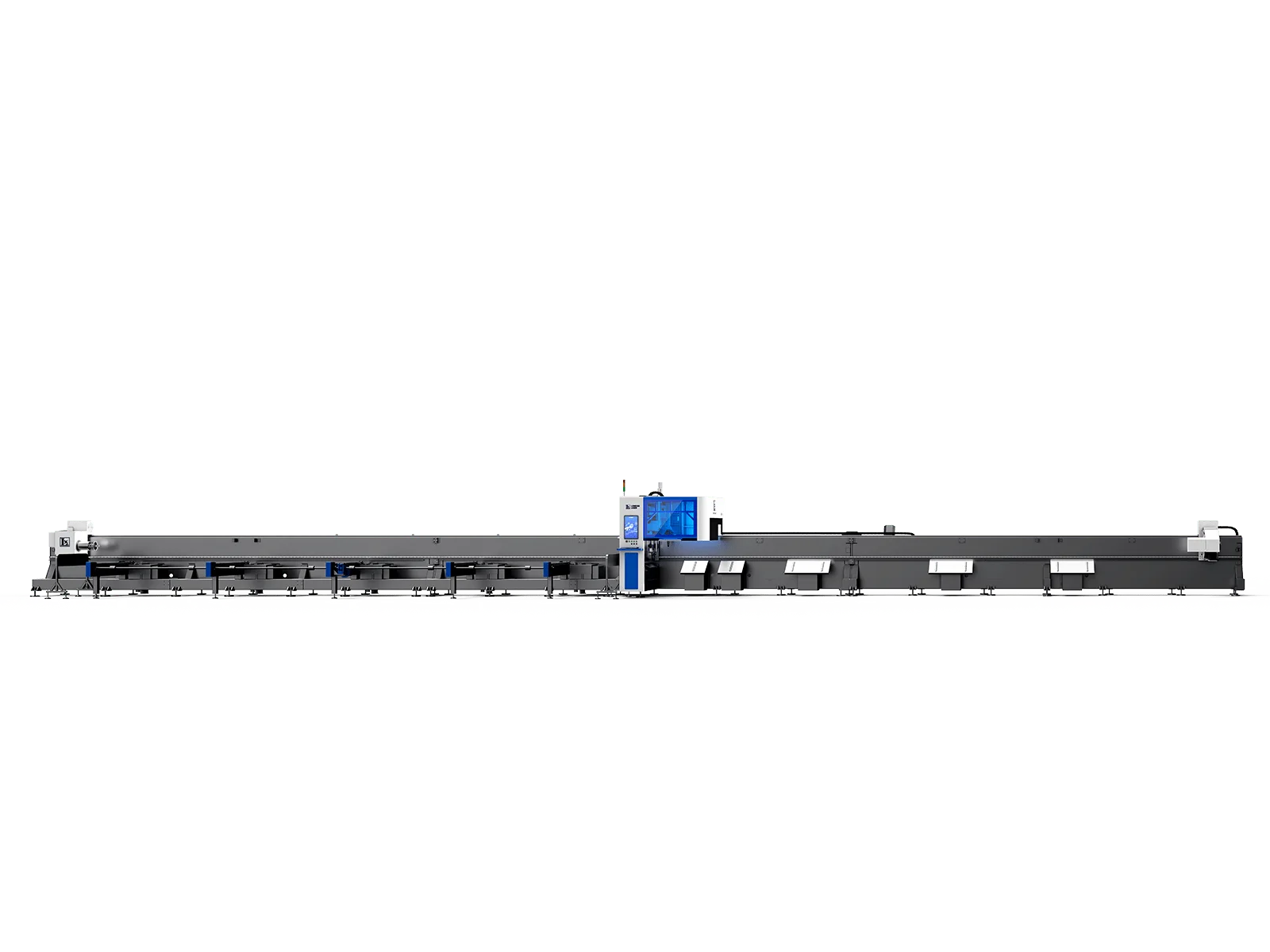
LX-K28-3
A three-chuck system for larger industrial equipment structures, processing round tubes from Ø20–280 mm and square tubes from 20×20–280×280 mm, with tube lengths up to 12,000 mm. Its servo follow-up support and automatic loading system are designed for stable processing of larger tubes and profiles. LONX specifically lists machine frames, equipment structures, guards, and conveyors among its industrial equipment applications.