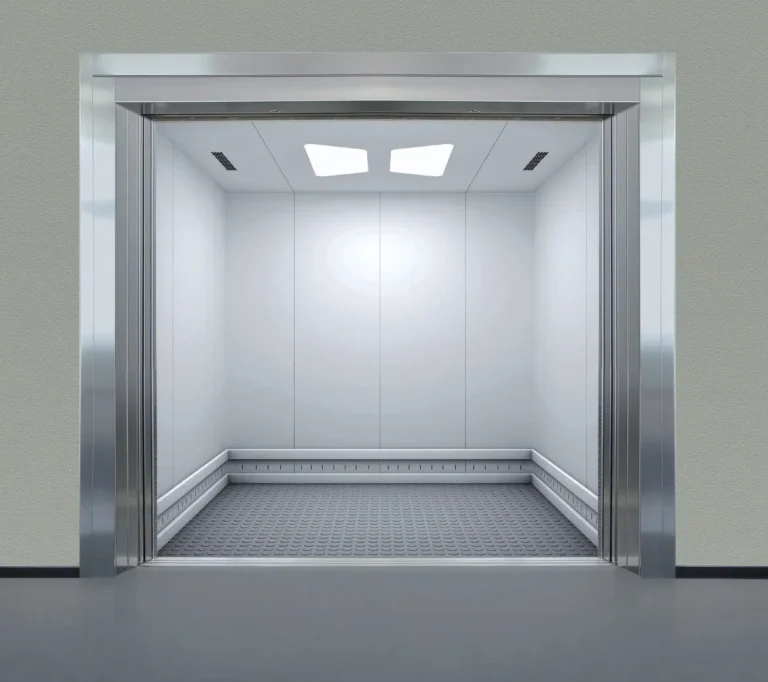
Elevator manufacturers need sheet metal components that fit accurately, maintain a consistent appearance, and move through production without unnecessary rework. From elevator cabin panels and door components to control panels, ceiling sections, and mounting brackets, each part must match the design and fit into the final assembly.
The challenge is that elevator production rarely involves just one type of component. Standardized parts may run in repeated batches, while different building projects require variations in cabin dimensions, panel layouts, finishes, and installation features. When cutting depends on fixed tooling or several separate processing steps, accommodating these changes can become time-consuming.
Fiber laser cutting gives manufacturers a programmable way to produce sheet metal profiles, holes, slots, and cutouts directly from digital designs. Used in the right applications, it can reduce tooling constraints, simplify the production of varied parts, and help prepare components for subsequent bending and assembly.
The real benefit is not simply cutting faster. It is making the cutting stage more flexible and predictable while keeping the requirements of the finished elevator component in view.
Where Elevator Manufacturers Lose Time in Sheet Metal Production
1. Frequent Design Changes Make Tooling Expensive to Maintain
Elevator manufacturers may produce different cabin sizes, door configurations, control panel layouts, and decorative panel designs. Even when two components look similar, their dimensions and opening positions may differ.
With tooling-dependent processes, a design change can require new tooling, adjustments, or additional setup work. This becomes more difficult when production includes many variants or customized orders.
How fiber laser cutting helps
A CNC laser cutting machine uses programmed cutting paths to produce different part geometries. When a design changes, the cutting program can be revised rather than requiring a dedicated cutting tool for every new contour.
This is particularly useful for manufacturers handling custom cabin panels, changing control panel layouts, and smaller production batches.
Laser cutting is not automatically the most economical option for every part. For simple features produced in very large quantities, punching or dedicated tooling may remain competitive. The decision should reflect order volume, part complexity, and the cost of changing designs.
2. Multiple Holes and Openings Create Positioning and Rework Problems
Elevator components can contain mounting holes, fastening slots, control button openings, display cutouts, ventilation openings, and interfaces for other components.
When these features are produced through several separate operations, repeated positioning and setup can introduce variation. Incorrectly positioned openings may interfere with hardware installation or require corrective work before assembly.
How fiber laser cutting helps
Laser cutting can produce many designed contours and openings in a programmed operation. CNC positioning reduces the need to locate each feature independently using separate manual operations.
For repeated components, a validated cutting program can also be reused, helping maintain consistency between production batches.
The important qualification is that the final result still depends on machine condition, material properties, cutting parameters, and the component drawing. Critical hole positions and dimensions should be verified using actual production parts.
3. Visible Stainless Steel Panels Leave Little Room for Finishing Defects
Elevator cabin interiors, decorative panels, and selected door components may use brushed stainless steel or other visible metal finishes. Scratches, cutting residue, edge defects, or heat-related discoloration can create additional work before the parts are ready for assembly.
For manufacturers working with pre-finished or protective-film-coated sheet, material handling and cutting conditions also affect the final appearance.
How fiber laser cutting helps
A properly configured laser cutting process can produce controlled contours and openings without the mechanical cutting contact associated with some conventional methods. Suitable parameters may help achieve an edge condition that requires less corrective work for a particular component.
However, laser cutting does not guarantee a scratch-free surface, zero discoloration, or an edge that never requires deburring. Results depend on the material, thickness, cutting setup, protective film compatibility, and finishing requirements.
Manufacturers should test representative decorative panels and define acceptable edge quality before committing to a production process. Where the surface is particularly sensitive, handling, storage, and downstream polishing must be considered alongside cutting.
4. Cutting, Bending, and Assembly Do Not Always Match
A cabin panel or door component may look correct as a flat blank but still cause problems after bending. Openings may sit too close to bend lines, mounting points may not align with adjoining components, or formed dimensions may differ from the original flat layout.
These issues can lead to adjustment work during assembly and delay the completion of a batch.
How fiber laser cutting helps
Laser cutting allows holes, slots, contours, and other features to be positioned according to the digital part drawing. When cutting and forming are planned together, manufacturers can account for bend locations, flanges, fastening points, and the geometry of mating components before production begins.
This does not eliminate the need for accurate bending or assembly control. The flat pattern must account for the forming process, and the finished component should be checked against the required dimensions.
The goal is to identify design and process problems earlier, rather than discovering them when the parts reach final assembly.
5. Changing Order Priorities Disrupt Production Planning
Elevator projects can involve different delivery schedules, cabin specifications, and quantities. A manufacturer may need to process several small batches while keeping recurring components moving through production.
If cutting requires lengthy tooling changes or repeated manual preparation, it can become difficult to respond efficiently to changing priorities.
How fiber laser cutting helps
Programmable cutting and nesting allow different part designs to be arranged and processed according to production requirements. Manufacturers can prepare cutting programs for different batches and revise the layout as orders change.
For repeated production, nesting software can help organize components on the sheet and improve material utilization. Actual savings depend on part geometry, spacing, sheet dimensions, and the nesting strategy.
Loading and unloading also matter. If sheet handling occupies a significant part of the production cycle, an exchange-table configuration may be worth evaluating. Its value depends on batch volume, operator workflow, and the factory’s overall production layout.
Which Elevator Components Are Suitable for Laser Cutting?
Laser cutting is most relevant to flat sheet metal parts that require defined profiles, holes, slots, or customized openings before forming or assembly.
Elevator Cabin Panels and Decorative Sheets
Cabin wall panels and decorative sheets may require customized dimensions, mounting features, and openings for fixtures or other interfaces. Laser cutting can produce these features from flat sheet metal before the panels undergo bending, surface finishing, or installation.
For visible surfaces, material handling and edge-quality requirements should be established before choosing the cutting process.
Elevator Door Panels and Related Sheet Metal Parts
Elevator door systems contain components with specific dimensional and functional requirements. Laser cutting can be used for suitable flat door panels, covers, brackets, and other sheet metal parts that require programmed profiles or openings.
The complete door system involves more than cutting. Door mechanisms, clearances, structural requirements, and safety-related functions must be addressed through the appropriate engineering and validation processes.
Control Panels and Operating Panel Plates
Operating panels may contain openings for buttons, displays, indicators, fasteners, and other interfaces.
Laser cutting can produce many of these features according to a programmed layout, making it easier to accommodate different panel designs. Critical openings should be checked against the actual components being installed, including required clearances and mounting arrangements.
Ceiling Panels, Covers, and Mounting Brackets
Cabin ceilings, equipment covers, and mounting brackets may use flat metal blanks with specific contours and fastening features.
Laser cutting can prepare these parts for subsequent bending and assembly. The appropriate method depends on the part geometry, material, thickness, and required finish.
Lift Enclosures and Related Equipment Panels
Industrial lifts and elevator installations may incorporate sheet metal covers, access panels, equipment enclosures, and support components.
These parts can have different material and thickness requirements depending on their structural function and operating environment. Evaluate each component individually rather than assuming all parts can be processed using the same machine settings.
How to Evaluate Laser Cutting for Your Elevator Production
Before investing in a fiber laser cutting machine, start with the components that create the greatest production difficulty. This provides a more useful basis for equipment selection than comparing headline specifications alone.
01. Identify the Parts Causing the Most Rework
Select representative cabin panels, door components, control panels, or mounting brackets. Record the recurring problems, such as incorrect hole positions, excessive edge finishing, frequent tooling changes, or delays between cutting and bending.
02. Review Material and Thickness Requirements
Identify the materials used most frequently, including the relevant stainless steel or carbon steel grades, sheet thicknesses, and surface conditions. The required cutting process may differ between thin decorative panels and thicker structural components.
03. Confirm Dimensions and Production Volume
Measure the largest sheet and component dimensions, identify critical features, and estimate the quantity of each part produced per batch. These details help determine the working area, suitable configuration, and whether automation could improve the workflow.
04. Test Representative Production Parts
Use actual drawings and materials to evaluate cutting quality, dimensional accuracy, edge condition, and compatibility with subsequent forming and assembly. Include visible surfaces and critical mounting features in the assessment.
05. Compare the Complete Production Cost
Consider not only cutting time, but also tooling, operator handling, material utilization, deburring, polishing, bending, rework, and the time required to change between product variants.
A laser cutting machine is most valuable when its effect on the complete workflow justifies the investment.
When Is Fiber Laser Cutting the Right Choice?
Fiber laser cutting is worth evaluating when elevator manufacturers need to process varied panel designs, produce complex openings, accommodate frequent design changes, or reduce the number of separate cutting and drilling operations.
It may be less advantageous for simple, repetitive features that can be produced economically with existing tooling or high-volume punching processes.
The right decision depends on the actual part mix, material range, production quantity, required finish, and downstream manufacturing process.
If your factory is considering an upgrade, review the available sheet metal laser cutting machines against your production requirements. The most suitable configuration should be determined by your representative parts and manufacturing workflow, not by laser power alone.
Domande frequenti
Can a fiber laser cutting machine process elevator cabin panels?
Yes. Suitable flat sheet metal cabin panels can be laser cut to produce specified contours, holes, slots, and other openings. The appropriate machine configuration depends on the material, thickness, panel dimensions, and required cutting quality.
Can laser cutting improve consistency between elevator panel batches?
A validated CNC cutting program can help maintain consistent programmed geometry between batches. Actual results still depend on machine condition, material variation, process parameters, and dimensional inspection.
Can laser cutting eliminate deburring and polishing?
Not in every application. Edge condition depends on the material, thickness, cutting parameters, and finish requirements. Decorative stainless steel components may still require deburring, brushing, or polishing.
Is laser cutting suitable for customized elevator orders?
It can be useful when different orders require changing panel dimensions, mounting patterns, or cutout layouts. Programmable cutting reduces dependence on dedicated tooling for each new contour, although production economics depend on batch size and part complexity.
What should I evaluate before choosing a machine?
Start with representative component drawings, materials, thicknesses, largest sheet dimensions, production volume, and critical dimensional or surface requirements. Include downstream bending and finishing when assessing the proposed cutting process.
Does a laser cutting machine manufacture a complete elevator door or cabin?
No. It processes suitable sheet metal components. A complete elevator cabin or door system may require forming, joining, surface finishing, mechanical installation, and safety-related engineering and validation.