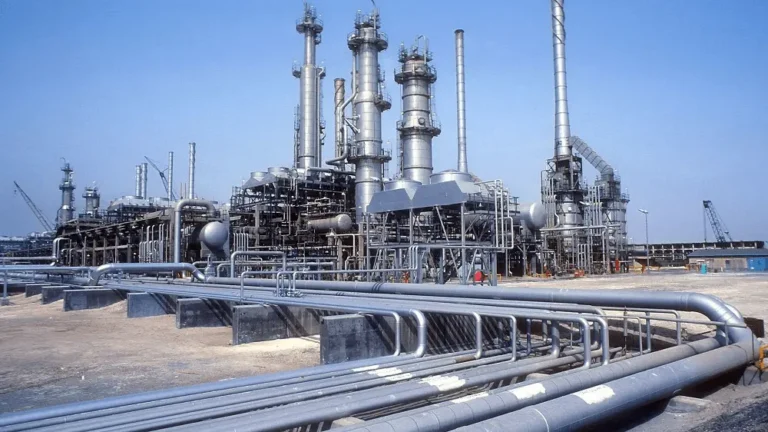
Pipeline engineering involves much more than producing straight lengths of pipe. Fabricated piping systems may require branch connections, pipe joints, supports, transition sections, mounting features and weld-ready ends before the final assembly.
For these components, the challenge is often the geometry of the connection. A pipe may need an opening cut into its curved wall, a shaped end to meet another pipe, or a bevel prepared for welding. Tube laser cutting can produce these features directly from the digital model, reducing separate marking, drilling, coping and beveling operations for suitable parts. Current tube-laser fabrication guidance specifically identifies branch intersections, saddle cuts, compound miters, holes, slots and weld-preparation geometry as key applications.
Where Tube Laser Cutting Fits in Pipeline Engineering
The strongest application is generally pipeline component fabrication, rather than simply cutting straight pipe sections.
A typical fabricated component may move through:
Pipe Stock → Laser Cutting → Fit-Up → Welding → Inspection → Installation
The laser cutting stage can prepare much of the geometry needed for fit-up. Instead of sending a pipe through separate sawing, drilling, layout and manual coping processes, manufacturers can create the required intersections and openings directly on the tube.
This approach is especially relevant to fabrication shops producing piping components for industrial plants, energy projects, infrastructure and other engineered systems.
Branch Connections and Pipe Intersections
Branch connections are one of the most demanding tube-cutting applications in pipeline fabrication.
When a branch pipe meets a main pipe, the opening cannot always be treated as a simple round hole. The required profile changes according to the branch diameter, intersection angle and pipe geometry.
A tube laser can generate the corresponding curved intersection, often referred to as a saddle or fish-mouth cut, so the branch component fits against the main pipe before welding. Modern tube-laser systems support orthogonal, angled and other intersecting pipe geometries directly from programmed data.
This can reduce manual layout and grinding at the welding station and make repeated branch components more consistent.
Le applicazioni tipiche includono:
- Branch pipe connections
- T-joints and Y-joints
- Intersecting tubular assemblies
- Pipe headers and manifolds
- Structural pipe connections
The actual joint geometry should still be developed around the required welding procedure, wall thickness and assembly tolerance rather than assuming that every CAD intersection is automatically production-ready.
Pipe Joints and Weld-Ready Ends
A pipeline component may need more than a 90° straight cut at its end.
Depending on the joint design, the tube may require a mitre, compound angle, shaped end or bevel before welding. Tube laser cutting allows these geometries to be programmed directly into the component.
For fabrication work, this changes what arrives at the welding station. Instead of a basic cut tube requiring manual coping and grinding, the component can be supplied with the intended connection profile already formed.
Bevel cutting becomes particularly relevant where the pipe requires a controlled weld preparation. LONX’s bevel tube laser range supports ±45° bevel cutting on applicable tube and profile configurations, specifically for applications where tube cutting and weld preparation need to be integrated.
Flange Connections and Mounting Features
Pipeline assemblies often include components that connect the pipe to valves, equipment or supporting structures.
Laser cutting can produce suitable mounting holes, slots and connection openings directly in the pipe or fabricated tubular component. When multiple features are required around the circumference, CNC tube rotation allows them to be positioned within the same programmed process.
This can reduce repeated setup between a tube saw, drill press and fabrication table, particularly for custom or low-to-medium-volume pipeline components.
The same principle applies to pipe supports and brackets: the tube can arrive at fabrication with the required holes, notches and connection features already cut.
Pipe Supports and Pipeline Structures
Not every tube used in pipeline engineering carries process fluid.
Industrial piping systems also require structural supports, frames, brackets and access structures. These components may use round, square or rectangular tubes and often need multiple holes and connection cuts before welding.
Tube laser cutting can therefore be used across both:
Process-Pipe Components
Branch connections, joints, fabricated pipe sections and transition components.
Supporting Structures
Pipe supports, frames, brackets, maintenance structures and equipment supports.
This wider use is important for fabrication contractors because one tube laser can support both piping-related components and the structural tube work around the installation.
Bevel Cutting Can Reduce a Separate Preparation Step
For certain pipe joints, cutting and weld preparation are traditionally separate operations.
A simplified conventional workflow might be:
Saw Cutting → Layout → Coping → Grinding → Beveling → Fit-Up → Welding
With an appropriate 3D bevel tube laser, some of these operations can be consolidated:
Tube Loading → Profile Cutting + Beveling → Fit-Up → Welding
The advantage is not simply eliminating a machine. Consistent bevel geometry can also make repeated weld preparation easier to control.
LONX’s LX-T52 III, for example, is designed around large-diameter tube processing with triple-chuck clamping and one-step 45° full bevel forming. LONX specifically lists pipeline engineering among its applications.
For pressure-bearing or safety-critical piping, however, laser cutting capability does not by itself establish compliance with a particular code or pressure-system standard. Material certification, weld procedures, dimensional inspection and applicable project standards remain separate requirements.
Long and Heavy Pipes Need Stable Support
As pipe diameter and length increase, cutting becomes increasingly dependent on workpiece support and clamping.
A long pipe can sag under its own weight, while rotation of a heavy workpiece can introduce vibration or positional variation. Three-chuck systems and servo follow-up supports are therefore useful for large tubular work.
Il LX-K35-3, for example, uses three-chuck clamping and follow-up support for tubes from Ø40–350 mm, with tube lengths up to 12,000 mm and a single-tube load capacity of up to 1,000 kg.
LONX’s heavy-duty bevel model, the LX-T35-3, adds ±45° bevel cutting for tubes up to 350 mm and is positioned for large structural and heavy fabrication work.
These configurations become more relevant as pipeline fabrication moves from ordinary small and medium pipes toward large-diameter, long and heavy components.
Material Efficiency in Pipeline Fabrication
Pipeline projects can involve large quantities of steel, stainless steel or other metal pipe, so material utilization can have a direct effect on fabrication cost.
Tube utilization depends on the individual cutting layout, pipe length, chuck arrangement and the position of parts along the raw tube. A system capable of moving its chuck through the cutting area can reduce unusable material at the end of the tube.
LONX’s three-chuck systems are designed for long-tube processing and reduced tail waste. The LX-K24-3, for example, uses full-stroke three-chuck clamping and supports tubes up to 12,000 mm long. Its current specifications cover round and square tubes up to approximately 230 mm.
For larger production runs, this can be combined with automatic or semi-automatic loading to reduce both material handling and machine downtime.
Digital Tube Fabrication for Engineered Projects
Pipeline work is frequently project-driven. Pipe diameters, branch locations, joint angles and component dimensions can vary from one project to another.
This makes digitally programmed tube cutting particularly useful.
Instead of building dedicated tooling for every pipe configuration, the cutting geometry can be generated from the engineering model and transferred to the CNC system. A revised branch position or connection angle can therefore be handled as a new cutting program rather than a complete mechanical tooling change.
For engineering contractors and fabrication shops handling multiple projects, that flexibility can be as important as cutting speed.
Recommended LONX Tube Laser Cutting Machines for Pipeline Engineering
Pipeline fabrication covers a broad range of pipe sizes, so machine selection should start with the actual pipe dimensions and joint requirements.
LX-K24-3 — For Medium and Large Pipe Fabrication
Il LX-K24-3 is a three-chuck tube laser cutting machine for round and square tubes, covering approximately Φ15–230 mm and tube lengths up to 12,000 mm. Its full-stroke three-chuck configuration provides additional support for long tubes, while servo follow-up support helps maintain stability during processing.
Suitable for: branch pipes, pipe joints, supports and medium-sized fabricated pipeline components.
LX-T35-3 — For Large Pipes and Weld Preparation
Il LX-T35-3 combines triple-chuck processing with ±45° bevel cutting and supports round and square tubes up to 350 mm. The three-chuck configuration is designed for long and heavy workpieces, while bevel cutting can integrate weld preparation into the cutting process.
Suitable for: large pipeline components, heavy pipe fabrication and joints requiring bevel preparation.
LX-T52 III — For Large-Diameter Pipeline Components
For larger pipeline components, the LX-T52 III extends the tube diameter range to Ø80–500 mm and combines triple-chuck clamping, dynamic support and 45° full bevel cutting. LONX explicitly lists pipeline engineering alongside steel structure, elevator manufacturing and wind-power applications for this model.
Suitable for: large-diameter pipes, heavy pipeline components, complex joints and applications requiring integrated bevel preparation.
Choosing the Right Tube Laser for Pipeline Engineering
The right machine should be selected from the actual pipeline component rather than simply from the maximum laser power.
The key inputs are:
Pipe diameter and profile → Wall thickness → Material → Pipe length → Joint geometry → Bevel requirements → Production volume
For smaller and medium pipe components, a conventional tube laser may provide everything required. When the work involves long or heavy pipes, branch intersections and repeated production, three-chuck support becomes increasingly useful. Where weld preparation is part of the manufacturing process, a bevel-capable configuration can consolidate additional work.
It is also worth separating pipe cutting for fabrication from the requirements of the completed pipeline system. A laser cutter can produce accurate pipe geometry, but project-specific pressure, welding, inspection and regulatory requirements still need to be handled by the appropriate engineering and quality systems.
A More Integrated Approach to Pipeline Fabrication
Tube laser cutting is most valuable when a pipeline component contains several operations that would otherwise be performed separately.
A branch pipe can be cut to length and given its intersection profile. A support tube can receive its mounting holes before welding. A large pipe section can receive an angled end and bevel preparation in the same machining workflow.
Instead of treating cutting, coping and weld preparation as separate jobs, manufacturers can design the tube component around the complete fabrication process.
For pipeline engineering companies, EPC contractors and metal fabrication shops, this provides a more flexible way to produce repeatable, weld-ready pipe components for different projects and pipe configurations.
Send us your pipe diameter, material, wall thickness, length and connection drawings. LONX can recommend the suitable tube laser cutting machine and configuration for your pipeline fabrication requirements.