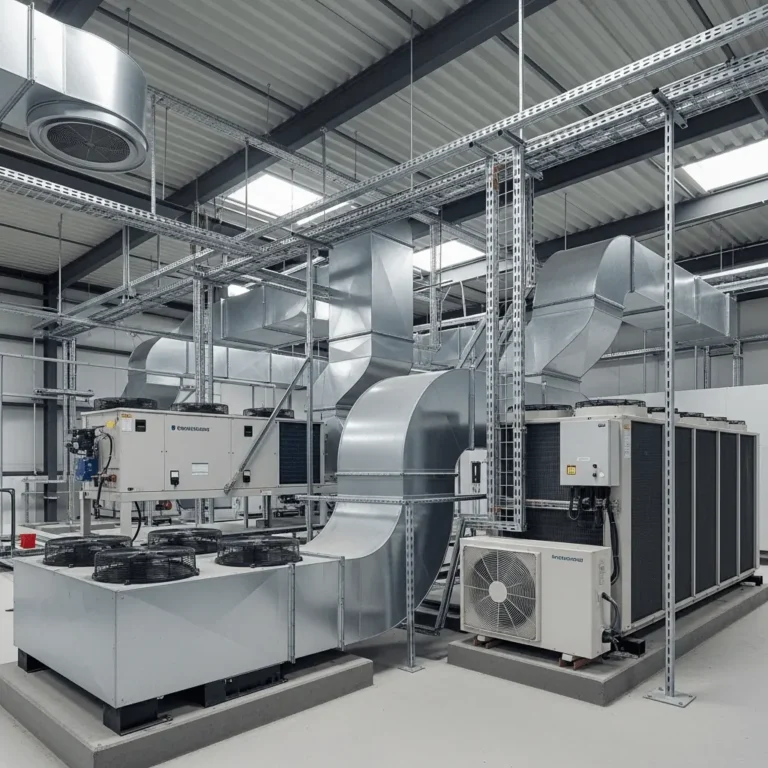
HVAC and ventilation equipment contains many tubular and structural components that need to be cut accurately before assembly. Ventilation systems, air-handling equipment, heat exchangers, supports, and related equipment can involve round, square, and rectangular tubes with different diameters, lengths, and connection features.
For manufacturers, the challenge is often handling many different tube specifications rather than producing one simple part in large quantities. Tubes may need to be cut to length, opened, notched, or prepared for connection and welding. Tube laser cutting provides a flexible CNC process for producing these features with consistent dimensions and less manual preparation.
Tube Laser Cutting Applications in HVAC & Ventilation
Tube laser cutting is used for tubular components found in ventilation and air-treatment equipment, including:
- Ventilation and air-handling structures
- ชิ้นส่วนเครื่องแลกเปลี่ยนความร้อน
- HVAC equipment frames and supports
- Duct and pipe connection components
- Filter and ventilation structures
- Mounting brackets and tubular supports
- Other fabricated components made from metal tubes and profiles
In ventilation equipment, larger tubes and structural members can require precise cutting for openings, connections, and assembly features. BLM, for example, identifies laser cutting of larger tubes as part of its ventilation production solutions and also uses tube laser processing for ventilation filters and heat-exchanger components.
Cutting Connections and Openings Directly on the Tube
Many HVAC components are not simply straight pieces of pipe. They may require holes, slots, branch openings, notches, or shaped tube ends so that different components can be connected accurately.
A tube laser can produce these features directly from the programmed geometry. This is useful when a component needs several openings or connection points in different positions, because the manufacturer does not have to mark and drill each feature separately.
For welded frames and supports, shaped tube ends can also simplify the fit between intersecting members. This can reduce manual cutting and grinding before assembly.
Flexible Production for Different HVAC Specifications
HVAC equipment is often produced in multiple sizes and configurations. A manufacturer may process different tube diameters, lengths, and materials depending on the equipment model or project requirements.
This makes production flexibility particularly important. BLM identifies flexibility, productivity, component quality, and the ability to process different tube formats and diameters as key requirements in modern HVACR tube production.
With CNC tube laser cutting, changing from one tube component to another can mainly involve changing the cutting program rather than changing dedicated mechanical tooling. This is useful for manufacturers handling customized equipment, multiple product models, or relatively small production batches.
Tube Cutting for Heat Exchangers and Ventilation Equipment
Heat exchangers and HVAC equipment can involve a combination of tubing, supports, frames, and connection components.
Tube processing requirements vary depending on the specific component. Some small tubes may require bending and end forming, while larger tubes and structural components can require laser cutting. BLM’s HVAC solutions use tube bending, end forming, and laser tube cutting for different heat-exchanger and ventilation applications rather than treating all HVAC tube components as the same process.
For manufacturers using tube laser cutting, this means the machine should be selected according to the actual components being produced, especially when the production includes both small tubing and larger structural tubes.
Reduce Manual Tube Preparation
Traditional tube fabrication may involve several separate steps:
Cutting → Marking → Drilling → Notching → Grinding → Assembly
A suitable tube laser can combine many cutting and hole-making operations into one CNC-controlled process.
This reduces repeated handling and makes it easier to maintain consistent hole positions and tube lengths. It can be especially useful when HVAC manufacturers produce repeated components but frequently change dimensions or designs.
For higher-volume production, automatic loading and material handling can further reduce operator intervention. LONX tube laser systems include automatic feeding options on several models, allowing manufacturers to match machine automation to production volume.
What Tubes and Profiles Are Used in HVAC Manufacturing?
The exact tube and profile requirements depend on the HVAC component.
Common materials include carbon steel, stainless steel, and aluminum, while typical sections include:
- Round tubes
- Square tubes
- Rectangular tubes
- Selected structural profiles
Tube dimensions can vary considerably between ventilation structures, equipment frames, heat-exchanger components, and support systems.
For manufacturers processing standard small and medium tubes, a conventional tube laser can be sufficient. When larger structural members are involved, the machine should provide the required diameter range, loading capacity, and workpiece support.
Choosing a Tube Laser Cutting Machine for HVAC & Ventilation
The most important consideration is the actual range of HVAC components you produce.
Check the maximum and minimum tube diameter, wall thickness, tube length, material, and the cutting features required.
If your production mainly consists of standard round and square tubes, a machine optimized for fast automatic processing may provide the required flexibility. If your components require holes, notches, connection openings, or angled cuts, make sure the machine supports those operations.
Production volume also matters. For repeated HVAC components, automatic loading, fast material changes, stable tube positioning, and low material waste can improve overall production efficiency.
Recommended LONX Tube Laser Cutting Machines
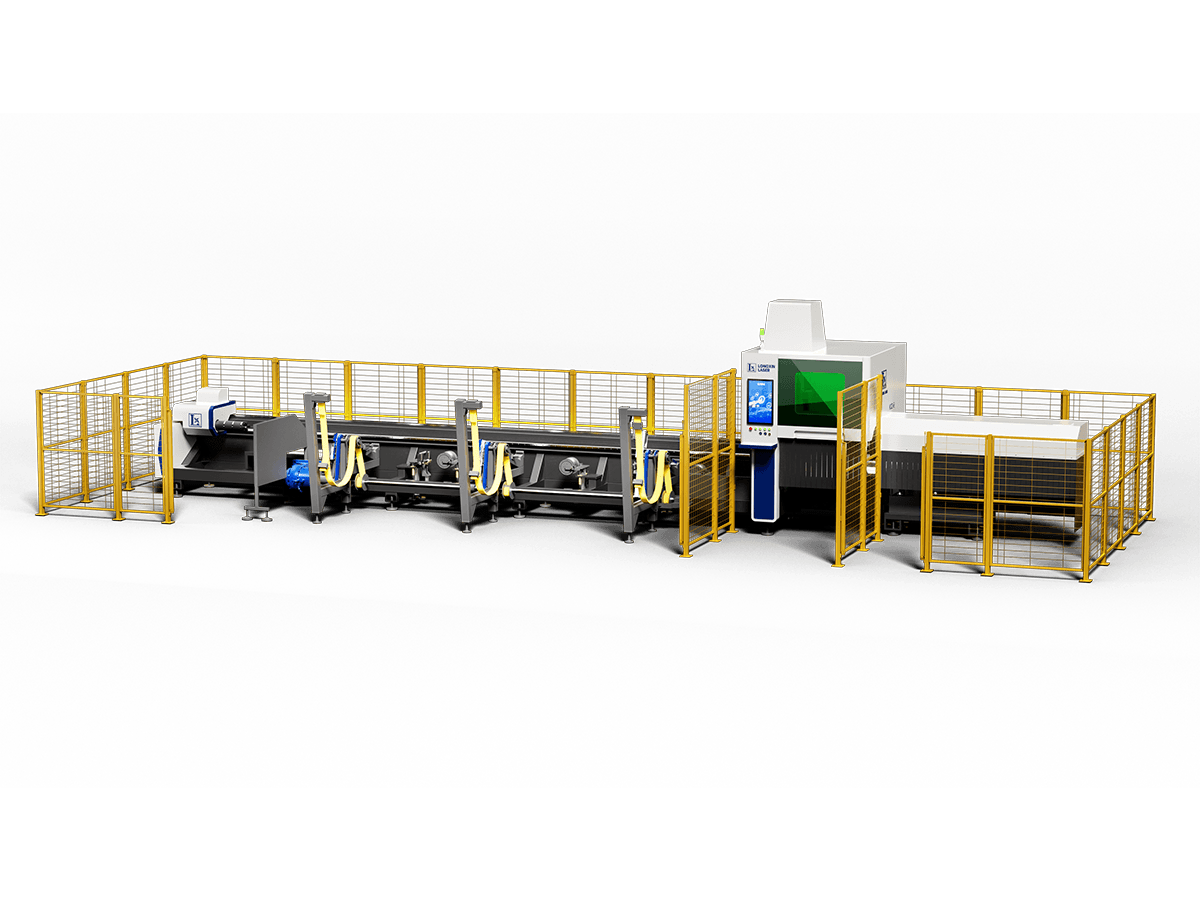
LX-K12-6
The LX-K12-6 processes round tubes from Ø15–120 mm and square tubes from 15×15 to 120×120 mm, with tube lengths up to 7,100 mm. Its dual-chuck system, automatic feeding options, and zero-tailing cutting capability make it suitable for standard HVAC and ventilation tube components where material utilization and flexible production are important.
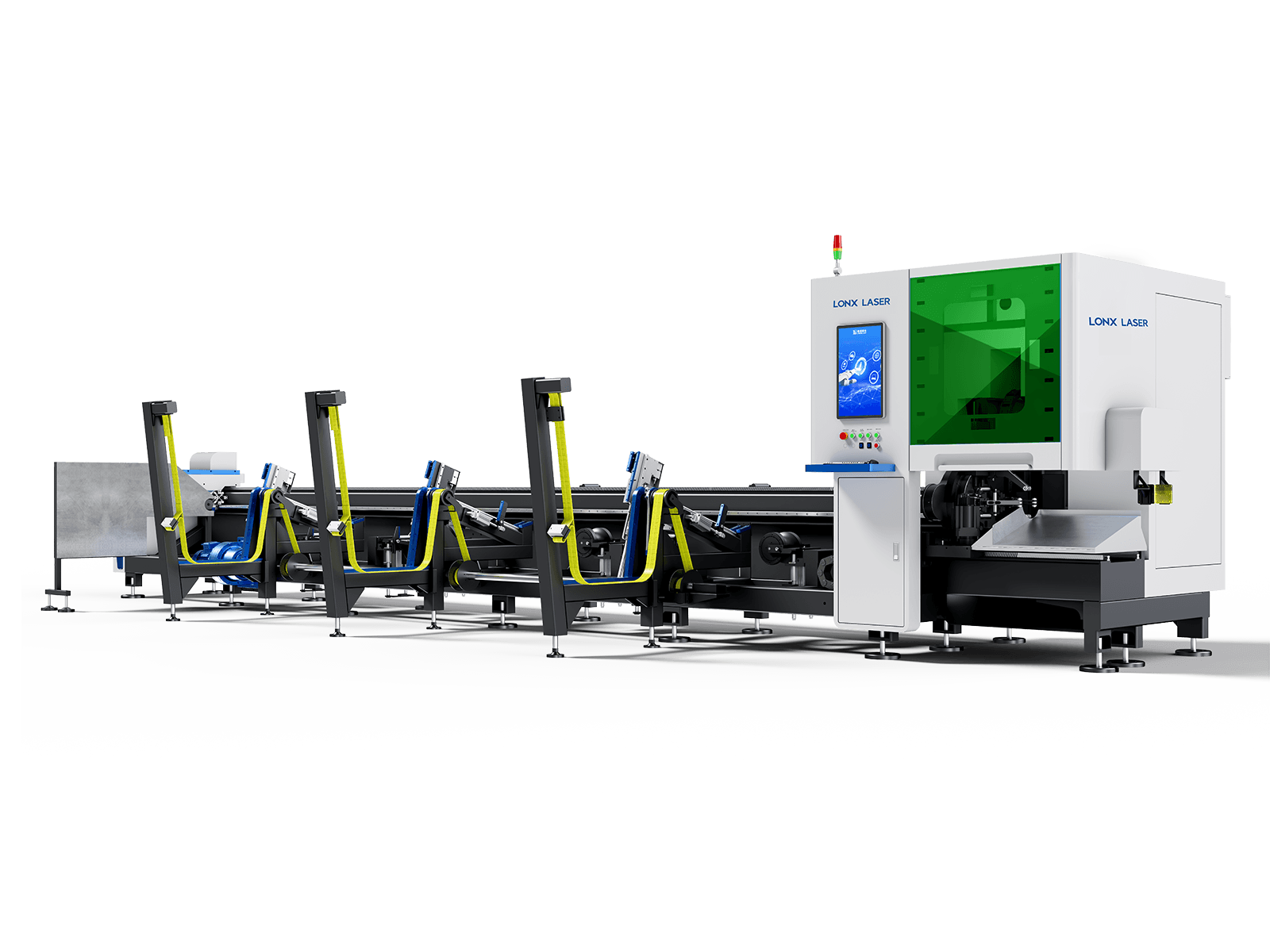
LX-T12
The LX-T12 covers round tubes from Ø20–120 mm and square tubes from 15×15 to 120×120 mm, with 45° bevel cutting and optional fully automatic loading. Its ability to process round, square, rectangular tubes as well as channel and angle profiles makes it suitable for HVAC structures and components that require angled or weld-preparation cuts.

LX-F16
The LX-F16 handles round and square tubes from Ø20–160 mm and combines laser cutting with thermal drilling, tapping, and marking. This multi-process configuration can be useful when HVAC components require not only cutting but also threaded holes and other downstream tube-processing operations.