Introducción
En la fabricación moderna de metales, la calidad de la soldadura a menudo determina la resistencia, seguridad y vida útil del producto final. Para industrias como el acero estructural, petróleo y gas, equipos pesados y fabricación de tuberías, simplemente cortar un tubo en un ángulo de 90 grados a menudo no es suficiente.
Para lograr soldaduras más fuertes y una mejor penetración de la junta, los extremos de los tubos frecuentemente requieren preparación de bisel antes de soldar.
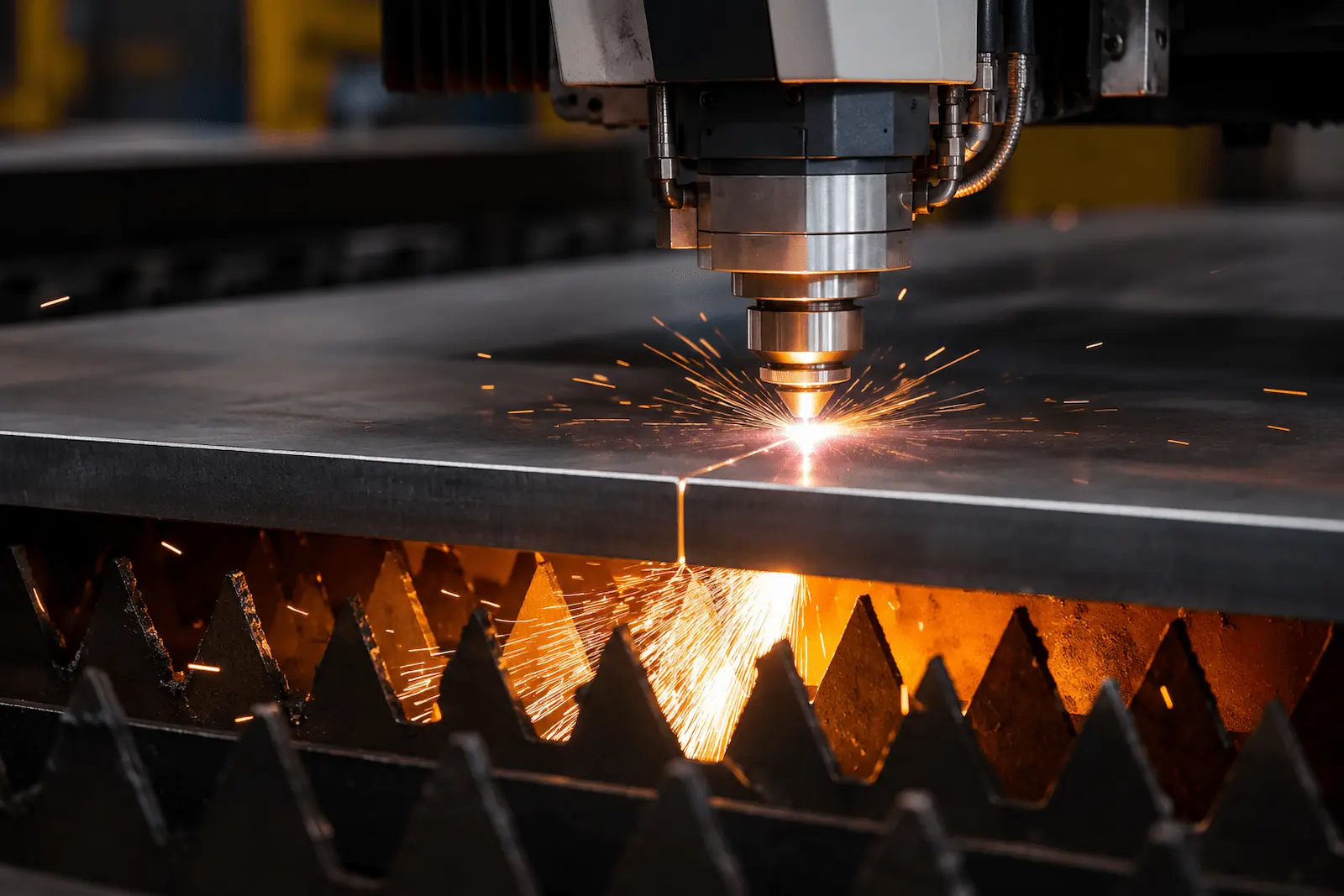
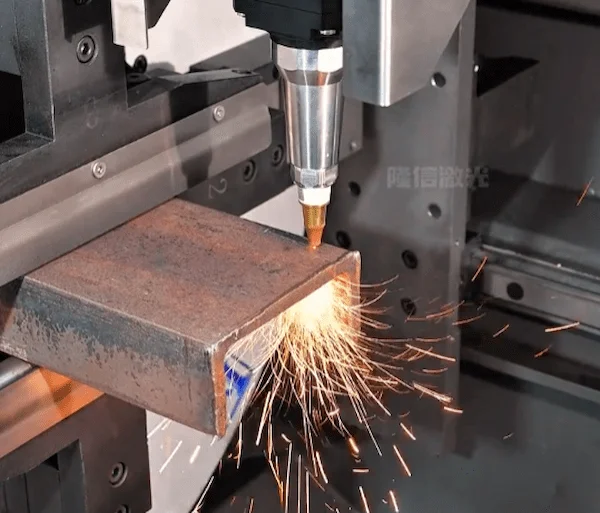
Una máquina de corte de bisel para tubos es un sistema CNC de procesamiento de tubos que puede cortar tubos mientras crea biseles listos para soldar en una sola operación. A diferencia de las máquinas convencionales de corte de tubos que solo producen cortes rectos, las máquinas de corte de bisel utilizan un sistema de control multieje y un cabezal de corte inclinable para generar geometrías de bisel precisas como ranuras en V, Y, X y K.
Al combinar el corte y la preparación de bisel en un solo proceso, los fabricantes pueden reducir operaciones secundarias, mejorar la consistencia de la soldadura y aumentar la eficiencia general de producción.
¿Qué es el corte de bisel en tubos?
El corte de bisel en tubos se refiere al proceso de mecanizar un borde angulado en un tubo o tubería antes de soldar.
El bisel crea una ranura entre dos componentes que se unen, permitiendo que el metal de aporte fundido penetre más profundamente en la junta durante la soldadura. Una preparación adecuada del bisel ayuda a mejorar la calidad de la soldadura, la integridad estructural y la confiabilidad a largo plazo.
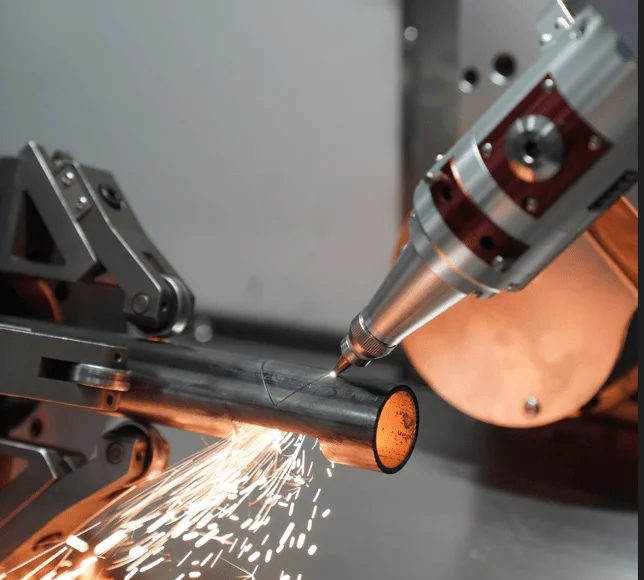
Las ubicaciones comunes de biselado incluyen:
- Extremos de tubos
- Extremos de tuberías
- Juntas de tubos que se intersectan
- Bordes de orificios
- Puntos de conexión estructural
Sin una preparación adecuada del bisel, los tubos de pared gruesa pueden experimentar:
- Penetración incompleta de la soldadura
- Falta de fusión
- Mayor riesgo de agrietamiento
- Mayor distorsión por soldadura
Por esta razón, la preparación de bisel se usa ampliamente en tuberías a presión, estructuras de acero, puentes e industrias de fabricación pesada.
Tipos comunes de bisel utilizados en la soldadura de tubos
Antes de elegir una máquina de corte de bisel, es importante comprender las geometrías de ranura más comunes utilizadas en la soldadura.
Ranura en V
La ranura en V es la preparación de soldadura más comúnmente utilizada.
Los ángulos de bisel típicos varían entre 30° y 37.5° por lado y son adecuados para la mayoría de las aplicaciones estándar de soldadura.

Ranura en X (doble V)
Una ranura en X se bisela desde ambos lados del material.
Reduce el volumen de metal de soldadura, mejora la simetría y minimiza la distorsión al soldar secciones más gruesas.

Ranura en K
Las ranuras en K se utilizan comúnmente para componentes estructurales de pared gruesa.
En comparación con las ranuras en V estándar, pueden reducir significativamente el consumo de metal de aporte mientras mantienen la resistencia de la soldadura.

Ranura en J y ranura en U
Las ranuras en J y U se utilizan típicamente para materiales muy gruesos y aplicaciones de soldadura de alto rendimiento.
Estos perfiles reducen el volumen de soldadura y pueden mejorar la eficiencia de soldadura en componentes de pared pesada.
¿Por qué es importante el corte de bisel para la soldadura?
Mejor penetración de la soldadura
Uno de los propósitos principales de la preparación de bisel es permitir una penetración más profunda de la soldadura.
Para tubos de pared media y gruesa, un bisel diseñado adecuadamente crea suficiente espacio para que el material de aporte y el calor de soldadura lleguen a la raíz de la junta, ayudando a lograr una penetración completa de la junta (CJP) donde se requiera.
Resistencia de junta mejorada
Una junta biselada correctamente soldada generalmente proporciona:
- Mayor capacidad de carga
- Mejor resistencia a la fatiga
- Mejor contención de presión
- Menor riesgo de defectos de soldadura
Estas ventajas son especialmente importantes en tuberías, puentes, estructuras marinas y maquinaria pesada.
Preparación de soldadura consistente
El esmerilado y biselado manual a menudo introducen variaciones en el ángulo y el ajuste.
Las máquinas automáticas de corte de bisel producen resultados repetibles, lo que facilita estandarizar y automatizar los procesos de soldadura.
Cortadora láser de tubos con bisel vs cortadora láser de tubos estándar
Muchos fabricantes se preguntan si necesitan una máquina dedicada de corte de bisel o una cortadora láser de tubos estándar.
La respuesta depende en gran medida de los requisitos de soldadura.
| Característica | Cortadora láser de tubos estándar | Cortadora láser de tubos con bisel |
|---|---|---|
| Corte de tubos a 90° | ✓ | ✓ |
| Corte de ranura en V | ✗ | ✓ |
| Corte de ranura en X | ✗ | ✓ |
| Corte de ranura en K | ✗ | ✓ |
| Preparación de soldadura | Proceso secundario requerido | Integrado |
| Eficiencia de producción | Medio | Alta |
| Consistencia de soldadura | Medio | Alta |
Para fabricantes que producen estructuras de tubos soldados, el corte con bisel puede eliminar varias operaciones secundarias y acortar significativamente los tiempos de producción.
¿Cómo funciona una máquina de corte láser de tubos con bisel?
La diferencia clave entre una cortadora láser de tubos estándar y una máquina de corte láser de tubos con bisel radica en el sistema de control de movimiento.
Una cortadora láser de tubos convencional generalmente opera con tres ejes lineales:
- Eje X
- Eje Y
- Eje Z
Un sistema de corte con bisel agrega movimiento rotativo adicional:
- Eje A (rotación del tubo)
- Eje B (inclinación del cabezal de corte)
Juntos, estos ejes permiten una verdadera interpolación multieje y permiten que el cabezal de corte mantenga un ángulo preciso relativo a la superficie del tubo durante todo el proceso de corte.
Rango típico de ángulo de bisel
La mayoría de las máquinas modernas de corte láser de tubos con bisel admiten:
- ±30°
- ±45°
- Hasta ±50° en ciertos modelos
Esta capacidad permite que la máquina cree geometrías de bisel complejas y perfiles de tubos que se intersectan en una sola configuración.
Tipos de máquinas de corte de tubos con bisel
Máquinas de corte láser de fibra para tubos con bisel
Los sistemas láser de fibra son actualmente la solución más avanzada para el procesamiento de tubos con bisel.
Las ventajas incluyen:
- Alta precisión
- Ancho de corte estrecho
- Zona afectada por calor pequeña
- Excelente calidad de borde
- Alto potencial de automatización
Estas máquinas se utilizan ampliamente en:
- Estructuras de acero
- Equipos de fitness
- Fabricación de automóviles
- Maquinaria de construcción
- Fabricación de alta gama
Máquinas de corte de tubos con bisel por plasma
Los sistemas de plasma a menudo se seleccionan para aplicaciones de servicio pesado.
Las ventajas incluyen:
- Fuerte capacidad de corte de paredes gruesas
- Menor inversión inicial
- Alta productividad en acero al carbono
Las aplicaciones comunes incluyen:
- Construcción naval
- Ingeniería offshore
- Fabricación estructural pesada
Máquinas de biselado mecánico
Los sistemas de biselado mecánico utilizan herramientas de corte en lugar de procesos térmicos.
Las ventajas incluyen:
- Sin zona afectada por el calor
- Alta consistencia dimensional
- Adecuado para materiales especiales
Se utilizan frecuentemente en:
- Equipos de procesamiento de alimentos
- Tuberías farmacéuticas
- Sistemas de acero inoxidable de alta pureza
Industrias que utilizan máquinas de corte de tubos con bisel
La tecnología de corte de tubos con bisel se adopta ampliamente en muchas industrias.
Petróleo y Gas
La fabricación de tuberías a presión y tuberías a menudo requiere una preparación de bisel estandarizada antes de la soldadura.
Fabricación de acero estructural
Las intersecciones complejas de tubos y las estructuras de espacio frecuentemente requieren corte con bisel para asegurar un ajuste preciso y conexiones soldadas fuertes.
Construcción de puentes e infraestructura
Los tubos de gran diámetro y los miembros estructurales pesados se benefician de la preparación automatizada de biseles.
Fabricación de automóviles
El corte con bisel ayuda a mejorar la calidad de ensamblaje para chasis, componentes estructurales y marcos de vehículos especializados.
Fabricación de equipos de fitness
Los equipos de fitness modernos a menudo utilizan uniones de tubos complejas donde los cortes de bisel precisos mejoran tanto la apariencia como la calidad de la soldadura.
¿Cómo elegir la máquina de corte láser de tubos con bisel adecuada?
Al evaluar una solución de corte de tubos con bisel, considere los siguientes factores:
Rango de tamaño de tubo
Elija una máquina que coincida con su diámetro máximo de tubo y requisitos de perfil.
Capacidad de ángulo de bisel
Verifique si la máquina soporta las geometrías de bisel requeridas para su proceso de soldadura.
Configuración del mandril
- Sistemas de 2 mandriles
- Sistemas de 3 mandriles
- Sistemas de 4 mandriles
Las máquinas de tres mandriles generalmente ofrecen mejor utilización de material y menor desperdicio de cola para el procesamiento de tubos largos.
Nivel de automatización
Características como:
- Carga automática
- Descarga automática
- Anidamiento inteligente
- Software de gestión de producción
pueden mejorar significativamente la productividad.

Conclusión
Una máquina de corte de tubos con bisel es mucho más que un dispositivo de corte. Es una solución de fabricación que cierra la brecha entre el corte y la soldadura.
Al producir biseles listos para soldar durante el proceso de corte, los fabricantes pueden reducir las operaciones secundarias, mejorar la consistencia de la soldadura y aumentar la eficiencia general de producción.
A medida que las industrias de fabricación continúan avanzando hacia la automatización y la fabricación inteligente, la tecnología de corte láser de tubos con bisel se está convirtiendo en una herramienta cada vez más valiosa para las empresas que buscan mayor productividad, mejor calidad de soldadura y menores costos de producción.