Einführung
In der modernen Metallverarbeitung bestimmt die Schweißqualität oft die Festigkeit, Sicherheit und Lebensdauer eines Endprodukts. Für Branchen wie Baustahl, Öl & Gas, Schwermaschinenbau und Rohrleitungsfertigung reicht es oft nicht aus, ein Rohr einfach in einem 90-Grad-Winkel zu schneiden.
Um stärkere Schweißnähte und eine bessere Nahtdurchdringung zu erzielen, müssen Rohrenden vor dem Schweißen häufig mit einer Fase vorbereitet werden.
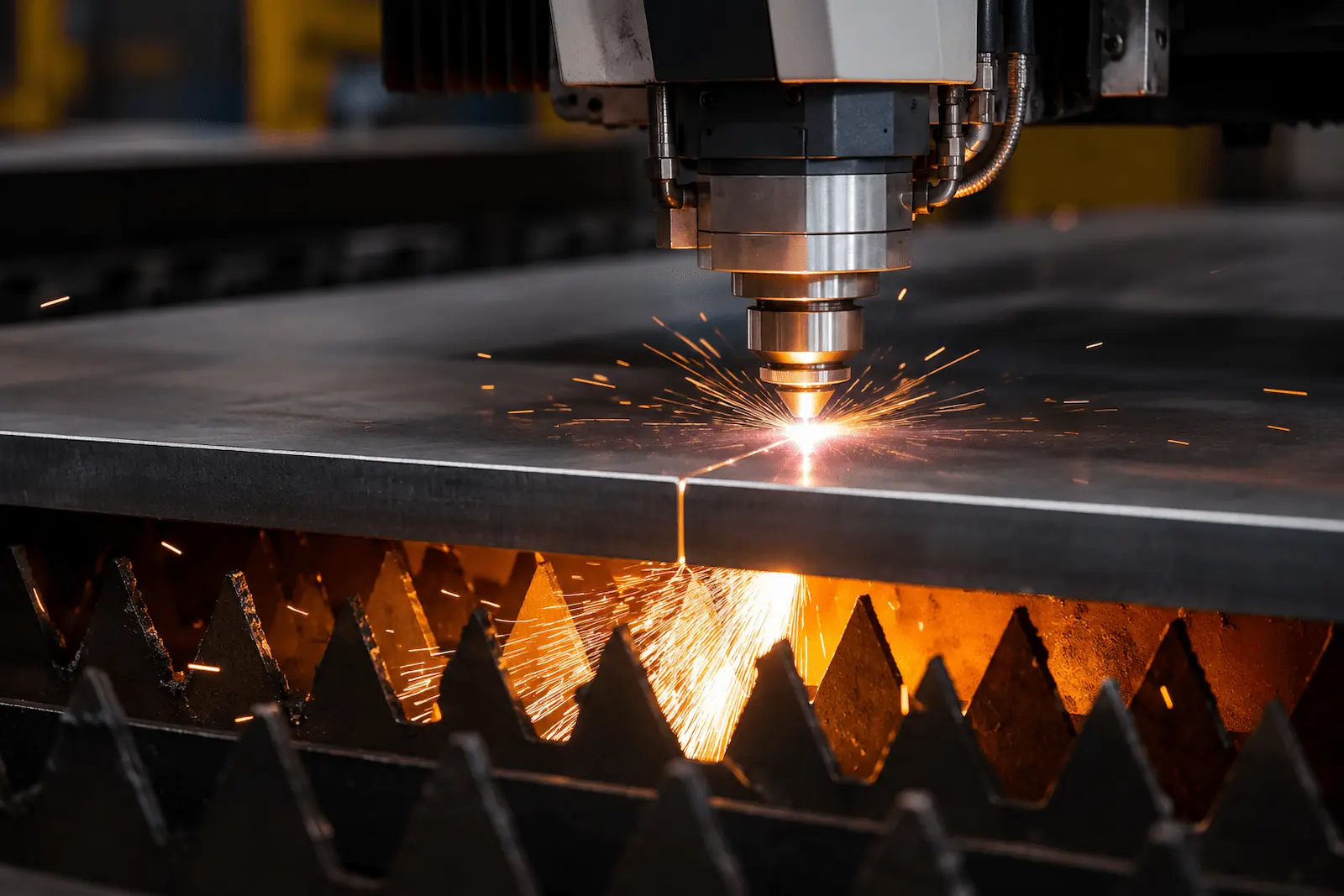
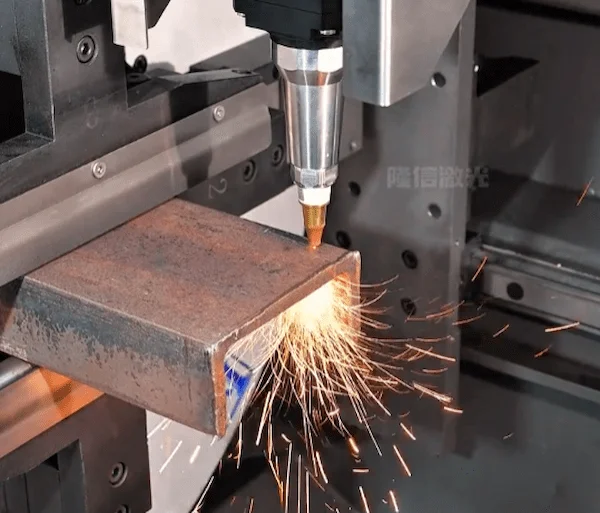
Eine Rohrfasen-Schneidemaschine ist ein CNC-Rohrverarbeitungssystem, das Rohre schneiden und gleichzeitig in einem einzigen Arbeitsgang schweißfertige Fasen erzeugen kann. Im Gegensatz zu herkömmlichen Rohrschneidemaschinen, die nur gerade Schnitte erzeugen, verwenden Fasen-Schneidemaschinen ein mehrachsiges Steuerungssystem und einen schwenkbaren Schneidkopf, um präzise Fasen-Geometrien wie V-, Y-, X- und K-Nuten zu erzeugen.
Durch die Kombination von Schneiden und Fasen-Vorbereitung in einem Prozess können Hersteller Nachbearbeitungsschritte reduzieren, die Schweißkonsistenz verbessern und die Gesamtproduktionseffizienz steigern.
Was ist Rohrfasen-Schneiden?
Rohrfasen-Schneiden bezeichnet den Prozess der Bearbeitung einer abgeschrägten Kante an einem Rohr oder einer Leitung vor dem Schweißen.
Die Fase erzeugt eine Nut zwischen zwei zu verbindenden Bauteilen, sodass geschmolzenes Zusatzmetall während des Schweißens tiefer in die Verbindung eindringen kann. Eine ordnungsgemäße Fasen-Vorbereitung trägt zur Verbesserung der Schweißqualität, der strukturellen Integrität und der langfristigen Zuverlässigkeit bei.
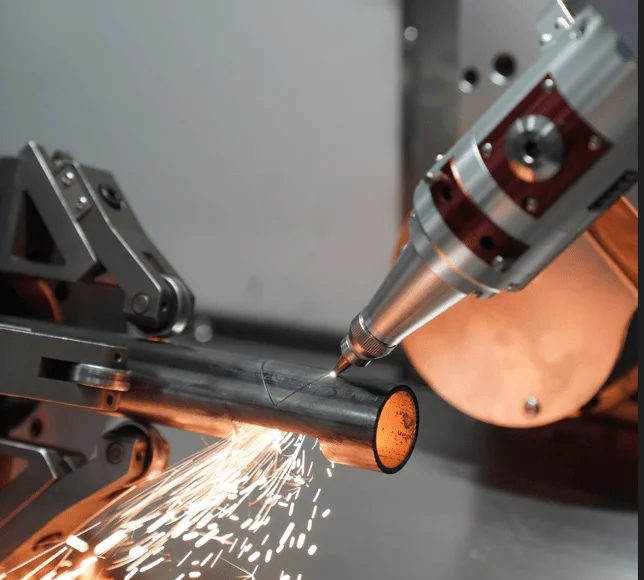
Häufige Fasen-Positionen umfassen:
- Rohrenden
- Leitungsenden
- Sich kreuzende Rohrverbindungen
- Lochkanten
- Strukturelle Verbindungspunkte
Ohne ordnungsgemäße Fasen-Vorbereitung können dickwandige Rohre folgende Probleme aufweisen:
- Unvollständige Schweißnahtdurchdringung
- Mangelnde Verschmelzung
- Erhöhtes Rissrisiko
- Höhere Schweißverformung
Aus diesem Grund wird die Fasen-Vorbereitung häufig in Druckrohrleitungen, Stahlkonstruktionen, Brücken und der Schwermetallverarbeitung eingesetzt.
Häufige Fasentypen beim Rohrschweißen
Bevor Sie eine Fasen-Schneidemaschine auswählen, ist es wichtig, die gängigsten Nut-Geometrien beim Schweißen zu verstehen.
V-Nut
Die V-Nut ist die am häufigsten verwendete Schweißvorbereitung.
Typische Fasenwinkel liegen zwischen 30° und 37,5° pro Seite und sind für die meisten Standard-Schweißanwendungen geeignet.

X-Nut (Doppel-V)
Eine X-Nut wird von beiden Seiten des Materials angeschrägt.
Sie reduziert das Schweißmetallvolumen, verbessert die Symmetrie und minimiert Verformungen beim Schweißen dickerer Abschnitte.

K-Nut
K-Nuten werden häufig für dickwandige Strukturbauteile verwendet.
Im Vergleich zu Standard-V-Nuten können sie den Verbrauch an Zusatzmetall erheblich reduzieren und gleichzeitig die Schweißfestigkeit aufrechterhalten.

J-Nut und U-Nut
J- und U-Nuten werden typischerweise für sehr dicke Materialien und Hochleistungs-Schweißanwendungen verwendet.
Diese Profile reduzieren das Schweißvolumen und können die Schweißeffizienz bei schwerwandigen Bauteilen verbessern.
Warum ist Fasen-Schneiden für das Schweißen wichtig?
Bessere Schweißnahtdurchdringung
Einer der Hauptzwecke der Fasen-Vorbereitung besteht darin, eine tiefere Schweißnahtdurchdringung zu ermöglichen.
Bei mittel- und dickwandigen Rohren schafft eine ordnungsgemäß konstruierte Fase genügend Platz, damit Füllmaterial und Schweißwärme die Wurzel der Verbindung erreichen können, was bei Bedarf eine vollständige Durchdringung der Verbindung (CJP) ermöglicht.
Verbesserte Verbindungsfestigkeit
Eine ordnungsgemäß geschweißte, gefaste Verbindung bietet im Allgemeinen:
- Höhere Tragfähigkeit
- Bessere Ermüdungsbeständigkeit
- Verbesserte Druckhaltung
- Reduziertes Risiko von Schweißfehlern
Diese Vorteile sind besonders wichtig bei Rohrleitungen, Brücken, Offshore-Strukturen und Schwermaschinen.
Konsistente Schweißvorbereitung
Manuelles Schleifen und Fasen führt oft zu Abweichungen bei Winkel und Passung.
Automatisierte Fasen-Schneidemaschinen erzeugen wiederholbare Ergebnisse, wodurch Schweißprozesse leichter zu standardisieren und zu automatisieren sind.
Fasen-Rohrlaserschneider vs. Standard-Rohrlaserschneider
Viele Hersteller fragen sich, ob sie eine spezielle Fasen-Schneidemaschine oder einen Standard-Rohrlaserschneider benötigen.
Die Antwort hängt weitgehend von den Schweißanforderungen ab.
| Funktion | Standard-Rohrlaserschneider | Schrägschnitt-Rohrlaserschneider |
|---|---|---|
| 90°-Rohrschneiden | ✓ | ✓ |
| V-Nut-Schneiden | ✗ | ✓ |
| X-Nut-Schneiden | ✗ | ✓ |
| K-Nut-Schneiden | ✗ | ✓ |
| Schweißvorbereitung | Sekundärprozess erforderlich | Integriert |
| Produktionseffizienz | Mittel | Hoch |
| Schweißkonsistenz | Mittel | Hoch |
Für Hersteller, die geschweißte Rohrkonstruktionen produzieren, kann das Schrägschneiden mehrere Sekundäroperationen eliminieren und die Produktionsvorlaufzeiten erheblich verkürzen.
Wie funktioniert eine Schrägschnitt-Rohrlaserschneidmaschine?
Der Hauptunterschied zwischen einem Standard-Rohrlaserschneider und einer Schrägschnitt-Rohrlaserschneidmaschine liegt im Bewegungssteuerungssystem.
Ein herkömmlicher Rohrlaserschneider arbeitet typischerweise mit drei linearen Achsen:
- X-Achse
- Y-Achse
- Z-Achse
Ein Schrägschnittsystem fügt zusätzliche Rotationsbewegungen hinzu:
- A-Achse (Rohrrotation)
- B-Achse (Schneidkopfneigung)
Zusammen ermöglichen diese Achsen eine echte Mehrachsen-Interpolation und erlauben es dem Schneidkopf, während des gesamten Schneidprozesses einen präzisen Winkel relativ zur Rohroberfläche beizubehalten.
Typischer Schrägschnitt-Winkelbereich
Die meisten modernen Schrägschnitt-Rohrlaserschneidmaschinen unterstützen:
- ±30°
- ±45°
- Bis zu ±50° bei bestimmten Modellen
Diese Fähigkeit ermöglicht es der Maschine, komplexe Schrägschnittgeometrien und sich kreuzende Rohrprofile in einem einzigen Aufbau zu erstellen.
Arten von Rohrschrägschnitt-Schneidmaschinen
Faserlaser-Rohrschrägschnitt-Schneidmaschinen
Faserlasersysteme sind derzeit die fortschrittlichste Lösung für die Schrägschnitt-Rohrbearbeitung.
Zu den Vorteilen gehören:
- Hohe Präzision
- Schmale Schnittfugenbreite
- Kleine Wärmeeinflusszone
- Hervorragende Kantenqualität
- Hohes Automatisierungspotenzial
Diese Maschinen werden häufig eingesetzt in:
- Stahlkonstruktionen
- Fitnessgeräten
- Automobilherstellung
- Baumaschinen
- Hochwertiger Fertigung
Plasma-Rohrschrägschnitt-Schneidmaschinen
Plasmasysteme werden oft für Schwerlastanwendungen ausgewählt.
Zu den Vorteilen gehören:
- Starke Schneidfähigkeit bei dicken Wänden
- Geringere Anfangsinvestition
- Hohe Produktivität bei Kohlenstoffstahl
Häufige Anwendungen umfassen:
- Schiffbau
- Offshore-Technik
- Schwerer Stahlbau
Mechanische Fasenmaschinen
Mechanische Fasenanlagen verwenden Schneidwerkzeuge anstelle von thermischen Verfahren.
Zu den Vorteilen gehören:
- Keine Wärmeeinflusszone
- Hohe Maßhaltigkeit
- Geeignet für Spezialwerkstoffe
Sie werden häufig eingesetzt in:
- Lebensmittelverarbeitungsanlagen
- Pharmazeutische Rohrleitungen
- Hochreine Edelstahlsysteme
Branchen, die Rohrfasen-Schneidemaschinen verwenden
Die Technologie zum Rohrfasenschneiden wird in vielen Branchen weit verbreitet eingesetzt.
Öl & Gas
Druckrohrleitungen und Rohrleitungsfertigung erfordern oft eine standardisierte Fasenbearbeitung vor dem Schweißen.
Stahlbau
Komplexe Rohrverschneidungen und Raumfachwerke erfordern häufig Fasenschneiden, um eine präzise Passung und starke Schweißverbindungen zu gewährleisten.
Brücken- und Infrastrukturbau
Großdurchmesser-Rohre und schwere Strukturbauteile profitieren von automatischer Fasenbearbeitung.
Automobilherstellung
Fasenschneiden verbessert die Montagequalität für Fahrgestelle, Strukturkomponenten und spezialisierte Fahrzeugrahmen.
Herstellung von Fitnessgeräten
Moderne Fitnessgeräte verwenden oft komplexe Rohrverbindungen, bei denen präzise Fasenschnitte sowohl das Aussehen als auch die Schweißqualität verbessern.
Wie wählt man die richtige Fasen-Rohrlaserschneidemaschine?
Bei der Bewertung einer Fasen-Rohrschneidlösung sollten Sie folgende Faktoren berücksichtigen:
Rohrgrößenbereich
Wählen Sie eine Maschine, die Ihren maximalen Rohrdurchmesser und Ihre Profilanforderungen erfüllt.
Fasenwinkelfähigkeit
Prüfen Sie, ob die Maschine die für Ihren Schweißprozess erforderlichen Fasengeometrien unterstützt.
Spannfutterkonfiguration
- 2-Spannfutter-Systeme
- 3-Spannfutter-Systeme
- 4-Spannfutter-Systeme
Drei-Spannfutter-Maschinen bieten in der Regel eine bessere Materialausnutzung und geringeren Restabfall bei der Verarbeitung langer Rohre.
Automatisierungsgrad
Funktionen wie:
- Automatische Beschickung
- Automatische Entladung
- Intelligente Verschachtelung
- Produktionsmanagementsoftware
können die Produktivität erheblich steigern.

Fazit
Eine Rohrfasen-Schneidemaschine ist weit mehr als ein Schneidgerät. Sie ist eine Fertigungslösung, die die Lücke zwischen Schneiden und Schweißen schließt.
Durch die Erzeugung schweißfertiger Fasen während des Schneidprozesses können Hersteller Nachbearbeitungsschritte reduzieren, die Schweißkonsistenz verbessern und die Gesamtproduktionseffizienz steigern.
Da sich die Fertigungsindustrie zunehmend in Richtung Automatisierung und intelligenter Fertigung bewegt, wird die Fasen-Rohrlaserschneidtechnologie zu einem immer wertvolleren Werkzeug für Unternehmen, die höhere Produktivität, bessere Schweißqualität und geringere Produktionskosten anstreben.