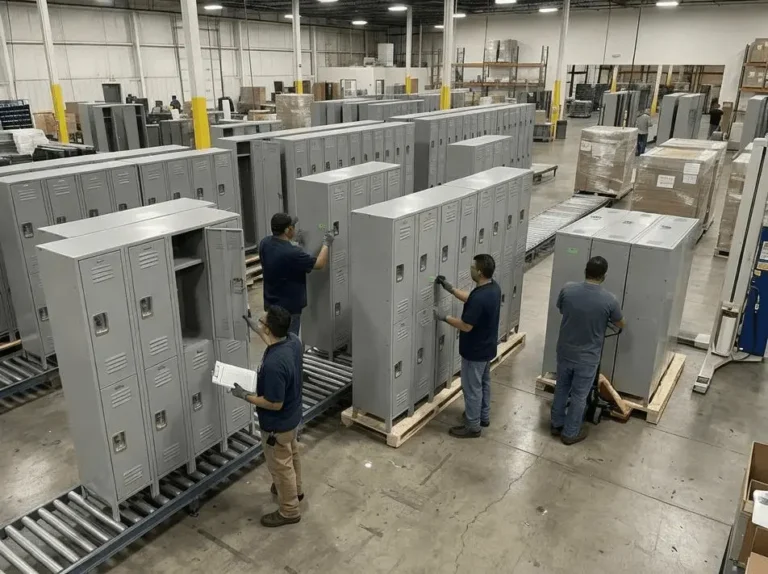
Metal furniture manufacturers need to balance product appearance, manufacturing cost, and production flexibility. From office storage cabinets and steel lockers to shelving systems, drawers, and retail display fixtures, many products rely on sheet metal components that must fit together accurately and maintain a consistent finish.
The challenge is that furniture designs, dimensions, and order quantities can vary considerably. A manufacturer may produce several cabinet sizes, customized storage units, or different shelf configurations using similar materials but different cutting patterns. When each variation requires additional tooling or manual layout work, production becomes more difficult to manage.
Fiber laser cutting offers a programmable way to produce flat metal components with defined contours, holes, slots, and mounting features. For suitable parts, it can reduce dependence on dedicated cutting tools and make it easier to accommodate changing designs.
The practical value depends on the part and the production process. Cabinet panels, shelves, drawer fronts, brackets, and decorative sheet metal components may benefit from laser cutting, while some standardized, high-volume parts may be more economical to punch or stamp.
Where Metal Furniture Manufacturers Lose Time and Money
1. Too Many Product Variations Increase Setup Costs
Furniture manufacturers often offer different cabinet widths, shelf dimensions, drawer configurations, door designs, and mounting arrangements. Even small changes can affect the dimensions and positions of holes, slots, and cutouts.
When production relies on dedicated tooling or repeated manual marking, every variation can add preparation time and increase the complexity of production planning.
How fiber laser cutting helps
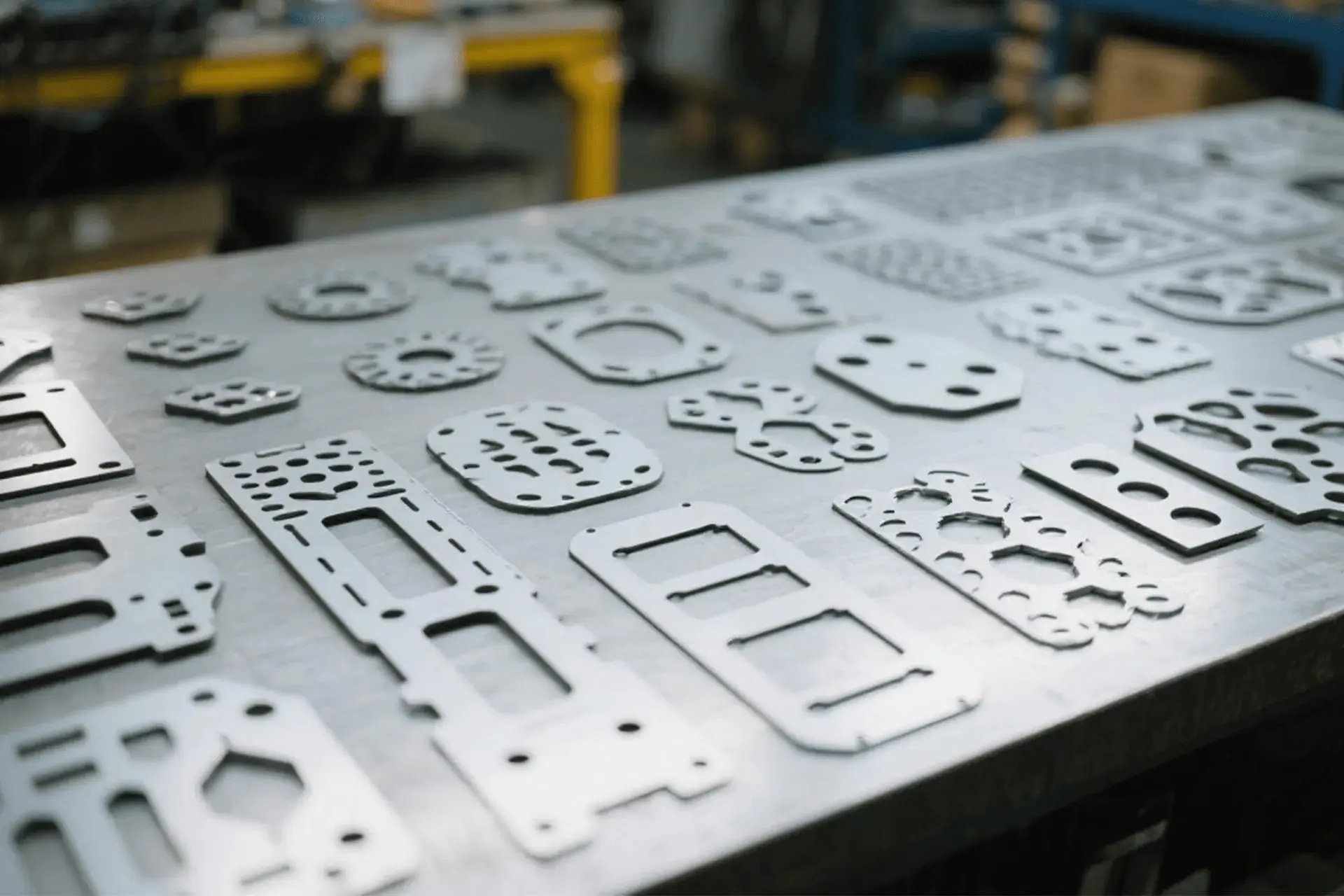
A CNC fiber laser cutting machine produces suitable parts from programmed cutting paths. When a product dimension or hole layout changes, the cutting file can be revised without manufacturing a dedicated cutting die for every new contour.
This is useful for customized storage systems, multiple product sizes, prototypes, and smaller production batches.
The benefit is not universal. For simple components manufactured in very large quantities, dedicated punching or stamping tools may offer a lower cost per part. Manufacturers should compare tooling investment, batch size, and expected lifetime demand before selecting a process.
2. Shelf, Drawer, and Cabinet Parts Must Fit During Assembly
A metal storage cabinet may contain side panels, shelves, drawer fronts, doors, mounting brackets, and fastening features. These components must align with hinges, slides, locks, handles, and other hardware.
If holes are misplaced or panel dimensions vary, assembly workers may need to adjust parts manually. Small errors can accumulate across multiple components, affecting fit and increasing rework.
How fiber laser cutting helps
Programmed cutting allows holes, slots, and external contours to be defined within the same digital part layout. This can reduce separate marking and positioning operations for suitable components.
For repeated production, validated cutting programs can be reused to help maintain consistent programmed geometry across batches.
However, successful assembly also depends on material variation, bending accuracy, hardware tolerances, and the design of mating components. Critical dimensions should be verified using actual parts, especially where drawer slides, hinges, and interlocking components must align precisely.
3. Visible Surfaces Are Vulnerable to Finishing Problems
Metal furniture often includes visible panels, drawer fronts, cabinet doors, and decorative components. Scratches, excessive burrs, cutting residue, or inconsistent finishing can affect the product’s appearance and create additional work before coating or assembly.
This is particularly important for stainless steel furniture, painted steel products, and premium office or retail fixtures.
How fiber laser cutting helps
A properly configured cutting process can produce controlled contours and openings while avoiding the mechanical cutting contact associated with some conventional methods.
Suitable cutting parameters may help achieve an edge condition that reduces finishing work for particular parts. But laser cutting does not guarantee scratch-free surfaces or eliminate deburring and polishing.
Manufacturers should evaluate material handling, protective film compatibility, edge quality, and the required powder coating, brushing, or polishing process. Representative samples provide a more reliable basis for judging the result than a general claim about cutting quality.
4. Poor Nesting Increases Material Costs
Shelves, cabinet sides, drawer panels, and storage components come in different shapes and dimensions. If parts are arranged inefficiently on the sheet, unused spaces can increase material consumption.
The problem becomes more noticeable when a production order includes several component sizes or irregular shapes that cannot be arranged efficiently using a simple cutting layout.
How fiber laser cutting helps
Nesting software can arrange different components on a sheet and help manufacturers evaluate material utilization before cutting. The layout can be adjusted according to part geometry, sheet dimensions, spacing requirements, and production quantities.
This flexibility can be useful when processing several product variants in one production run.
Actual material savings depend on the part mix and nesting strategy. Very small parts, narrow features, and minimum spacing requirements can limit how efficiently a sheet is used. Manufacturers should compare real nesting layouts rather than assume that laser cutting automatically eliminates waste.
5. Custom Orders Disrupt Standard Production Runs
Some furniture manufacturers produce standard cabinets and shelving systems in recurring batches, while others accept customized orders for offices, warehouses, retail stores, and commercial facilities.
Switching between different part designs can complicate scheduling, particularly when custom components must be processed alongside standard products.
How fiber laser cutting helps
Programmable cutting allows suitable parts from different designs to be prepared through digital files rather than dedicated cutting tools for each contour. Manufacturers can organize programs by product model, order, or production batch.
This can make it easier to accommodate customized dimensions and changing order priorities.
The overall production benefit still depends on programming, sheet loading, unloading, bending, welding, coating, and assembly. A flexible cutting process will not solve bottlenecks that occur later in the production line.
Which Metal Furniture Components Can Be Laser Cut?
Laser cutting is most relevant to flat sheet metal parts that require specific profiles, holes, slots, or other features before bending and assembly.
Storage Cabinet Doors and Side Panels
Metal cabinets and lockers may contain doors, side panels, top and bottom panels, back panels, and access covers.
These parts can require hinge holes, lock openings, fastening points, ventilation cutouts, or customized external dimensions. Laser cutting can produce suitable flat blanks from programmed drawings before the parts are bent or assembled.
For components that use purchased hinges, locks, or latches, confirm the mounting dimensions and clearances against the actual hardware specifications.
Shelves and Drawer Components
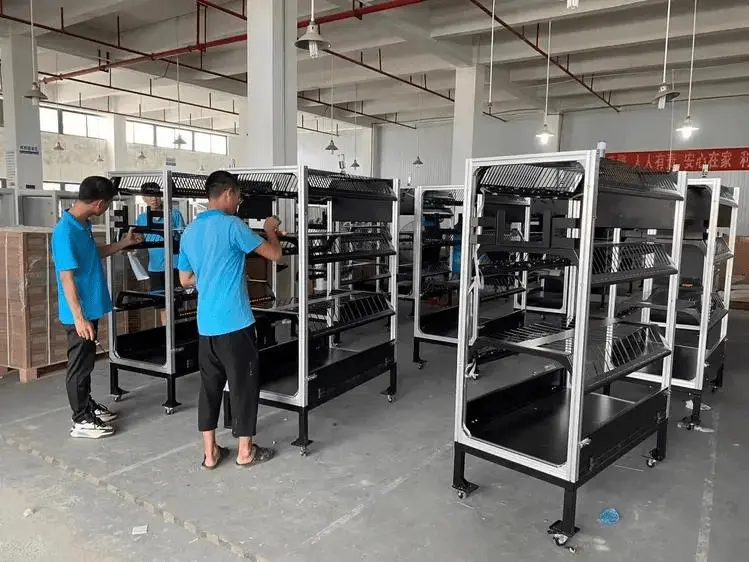
Metal shelving and drawer systems may use flat shelves, drawer fronts, side panels, bottom panels, and support brackets.
These components often require repeated holes, slots, or connection features. Programmable cutting can help manufacturers accommodate different shelf dimensions and drawer configurations without changing dedicated cutting tools for every design.
The finished parts may still require bending, hemming, reinforcement, or other forming operations to achieve the required stiffness and fit.
Brackets, Mounting Plates, and Connecting Parts
Furniture assemblies use brackets and plates to connect panels, support shelves, attach hardware, and reinforce joints.
These parts can be suitable for laser cutting when they have irregular contours, multiple holes, or customized mounting patterns. Their dimensions should be coordinated with the final assembly and any subsequent bending or welding operations.
Retail Displays and Point-of-Sale Fixtures
Retail display stands, product holders, promotional fixtures, and modular display systems may require customized panels, brackets, and decorative metal components.
Because designs often change between campaigns or retail environments, the ability to revise cutting programs can be useful for producing different display configurations without dedicated cutting tooling for every design.
Where display components incorporate tubes or structural profiles, those parts require a separate assessment of the appropriate tube or profile processing method.
Office Furniture Panels and Metal Storage Accessories
Office furniture may incorporate metal modesty panels, pedestal cabinet components, desk accessories, cable-management covers, and mounting plates.
Laser cutting can produce suitable flat parts with defined openings and contours. For components with visible surfaces, manufacturers should consider edge quality, handling, coating, and alignment with the surrounding furniture structure.
Furniture frames made primarily from round, square, or rectangular tubes should be evaluated separately from flat sheet metal components.
Laser Cutting or Punching: Which Is Better for Metal Furniture?
Laser cutting and punching are both useful in sheet metal furniture production, but they suit different production requirements.
Laser cutting is worth evaluating when:
- Product designs and dimensions change frequently.
- Parts contain complex contours or varied hole patterns.
- Production involves customized orders or relatively small batches.
- Reducing dependence on dedicated cutting tools is important.
Punching or stamping is worth evaluating when:
- Components have simple, repetitive geometries.
- Production quantities are high and predictable.
- Dedicated tooling can be used across large production runs.
- High-volume hole patterns or standardized features dominate the workload.
There is no universal production-volume threshold at which one method becomes cheaper. Tooling costs, material utilization, cutting time, setup requirements, and downstream operations all affect the result.
Some manufacturers may benefit from using laser cutting for customized panels and complex profiles while retaining punching or stamping for repetitive high-volume components.
How to Evaluate Laser Cutting for Your Furniture Production
Before selecting a machine or changing an existing process, start with the parts that create the greatest production difficulties.
01. Identify the Most Problematic Components
Choose representative cabinet doors, shelves, drawer panels, brackets, or display components. Identify whether the main issue is tooling cost, frequent design changes, hole positioning, material waste, edge finishing, or assembly rework.
02. Confirm Material and Thickness Requirements
Determine the materials used most frequently, such as carbon steel, galvanized steel, stainless steel, or aluminum. Record the typical and maximum thicknesses required for your actual product range.
The material grade and surface condition should be considered alongside the required cutting quality and finishing process.
03. Check the Largest Parts and Critical Features
Measure the largest panels and identify critical mounting holes, slots, contours, and assembly interfaces. Consider whether the parts require bending or other forming operations after cutting.
04. Test Representative Production Parts
Use actual drawings and materials to evaluate cutting quality, dimensions, edge condition, and fit with mating components. Include the relevant finishing and assembly stages when assessing the result.
05. Compare the Complete Production Cost
Consider programming, tooling, material utilization, operator handling, machine time, deburring, bending, coating, and assembly. The goal is to improve the complete manufacturing route rather than simply reduce the time spent cutting a sheet.
Is Fiber Laser Cutting the Right Choice for Metal Furniture?
Fiber laser cutting is worth considering when furniture production involves changing designs, customized dimensions, complex flat profiles, or multiple product variants that are difficult to manage with dedicated tooling.
It may be less economical for standardized, high-volume components that can be produced efficiently through punching or stamping.
The best decision depends on part geometry, material, thickness, order quantities, required finish, and downstream manufacturing processes.
If you are evaluating laser cutting for your sheet metal furniture components, review the available sheet metal laser cutting machines against your actual drawings and production requirements.
Frequently Asked Questions
What metal furniture parts can be produced using a sheet metal laser cutting machine?
Common examples include cabinet doors, side panels, shelves, drawer fronts, brackets, mounting plates, display panels, and decorative sheet metal components. The suitability of each part depends on its geometry, material, thickness, and subsequent manufacturing requirements.
Can laser cutting reduce tooling costs for customized furniture?
For suitable parts, laser cutting can reduce the need for dedicated cutting dies because different contours can be produced through programmed cutting paths. The economic benefit depends on order quantities, part complexity, and the cost of alternative processes.
Is laser cutting suitable for metal storage cabinets and lockers?
Yes. It can produce suitable flat panels, doors, mounting plates, and parts with lock openings, hinge holes, or ventilation cutouts. Bending, joining, hardware installation, and finishing may still be required.
Can laser cutting improve material utilization?
Nesting software can help arrange components on a sheet to improve material utilization. Actual results depend on sheet dimensions, component geometry, spacing constraints, and the production mix.
Should I use laser cutting or punching for metal shelves?
Laser cutting may be attractive for customized shelves, changing dimensions, and complex contours. Punching or stamping may be more economical for simple, repetitive parts produced in large quantities. Compare both methods using actual part drawings and production volumes.
What information should I provide when requesting a machine quotation?
Provide representative part drawings, material grades, thicknesses, sheet dimensions, production quantities, critical hole positions, and surface finishing requirements. Details about bending, coating, and assembly can also help evaluate the most suitable production approach.