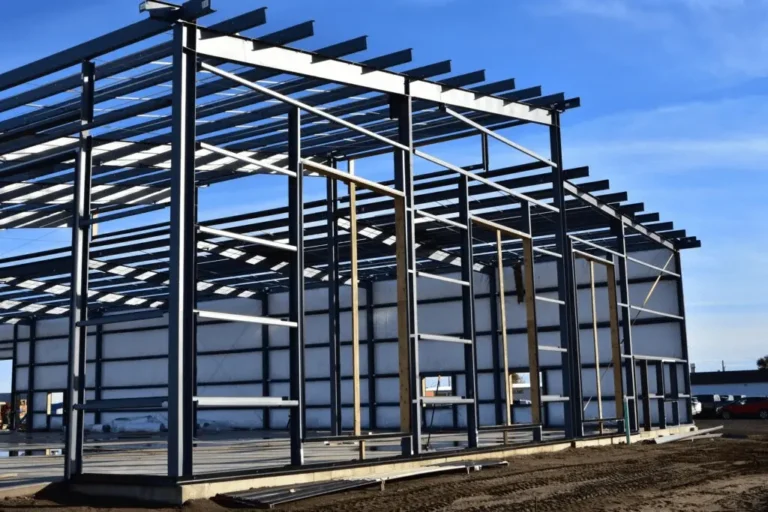
Structural steel fabrication includes far more than cutting beams to length. Modern steel structures use round tubes, square and rectangular hollow sections as well as H-beams, I-beams, channel steel and angle steel.
These components often require holes, slots, notches, end cuts, miters or bevels before they can be bolted, fitted and welded. Tube and profile laser cutting combines many of these operations into a CNC-controlled process, helping structural steel fabricators produce more complete, assembly-ready components directly from digital drawings. Current structural steel laser systems commonly integrate hole cutting, end profiling, beveling and marking for this type of fabrication.
What Tube Laser Cutting Does for Structural Steel
For a simple hollow section that only needs to be cut to length, conventional sawing can be sufficient.
The advantage of laser cutting becomes much clearer when the same member also needs connection holes, slots, shaped ends or other features.
A conventional workflow may involve:
Sawing → Layout → Drilling → Notching → Grinding → Beveling → Welding
A laser-based workflow can combine many of these operations:
Profile Loading → Laser Cutting → Fit-Up → Welding / Bolting → Assembly
The result is a structural member that reaches the next process with more of its required geometry already completed.
This is particularly useful for fabricators that produce beams and hollow sections with repeated connection features or customized structural designs.
Hollow Structural Sections
Round, square and rectangular hollow sections are widely used in steel structures where a closed section is preferred.
Typical applications include:
- Building frames
- Supports and columns
- Trusses
- Bridges
- Equipment structures
- Platforms
- Canopies
- Industrial structures
Laser cutting can produce mounting holes, slots, connection openings and shaped tube ends directly on these sections.
For welded structures, this is especially useful because the cut geometry can be prepared around the final joint rather than simply cutting every member square and leaving the connection work to the fabrication team.
H-Beams and I-Beams
H-beams and I-beams are fundamental structural steel profiles, but processing them is different from processing a closed round or square tube.
The web and flanges may require different holes, slots, end cuts or bevels. A dedicated structural profile laser system uses multi-axis cutting and workpiece detection to access these surfaces while maintaining the required geometry.
Current H-beam laser systems are specifically designed for beam holes, profile end cuts, bevels and other features needed before assembly.
This can reduce manual layout and secondary drilling while making the beam more ready for downstream fabrication.
Channel Steel and Angle Steel
Structural steel projects also use open profiles such as channel steel and angle steel.
These sections may require:
- Bolt holes
- Slots
- End cuts
- Corner cuts
- Connection openings
- Bevels
- Reference or layout marking
Because these profiles have exposed webs and flanges rather than a closed tube wall, they generally require a structural profile cutting system rather than a conventional two-chuck tube laser. Dedicated profile systems are designed specifically to process H/I-beams, channels and angles with multi-axis cutting access.
Cut the Connection Geometry Before Welding
One of the biggest benefits of laser processing in structural steel is the ability to cut the connection itself.
Consider two tubular members that meet at an angle. A simple straight cut may leave a large amount of manual grinding and fitting before welding.
A CNC laser can instead produce a shaped end or cope based on the digital model.
The same principle applies to beam and profile fabrication. Holes, slots, notches and other connection features can be positioned directly from the engineering drawing.
This changes the fabrication sequence from:
Cut First → Fit Later
to:
Cut for the Final Connection → Fit → Weld
Structural steel laser systems increasingly use this approach to create weld-ready members with less manual layout and secondary processing.
Bevel Cutting for Structural Steel
Bevel preparation is another important consideration.
Structural members may require angled edges or weld preparation before assembly. When beveling is performed separately, the fabrication process requires another operation after cutting.
A bevel-capable laser system can combine:
Cutting + Beveling + Profile Preparation
in the same production workflow.
LONX’s structural and bevel systems support multi-axis cutting and bevel processing for applicable tube and profile geometries. The LX-T52 III, for example, supports 45° full bevel cutting on round, square and other compatible profiles, and is specifically positioned for structural steel fabrication.
For structural members where bevel preparation is part of the production process, this can reduce secondary grinding or machining.
From Steel Model to Finished Structural Member
Structural steel production is increasingly based on 3D engineering models rather than manually generated individual cutting dimensions.
This makes software integration an important part of the laser cutting system.
The LX-H65, for example, uses a five-axis RTCP system and supports automatic recognition of structural-steel TEKLA digital models. The system is designed to process H-beams, C-channels, angle steel and other structural profiles.
The LX-H100 extends this approach to very large structural sections, with automatic recognition of TEKLA steel-structure models and support for 3D model formats such as SIP and IGS.
For fabrication companies working directly from engineered structural models, this can reduce the gap between design and production.
Structural Steel Fabrication Is Not Only About Beams
A steel structure may combine several different types of members.
A single project can contain:
H-Beams + I-Beams + Channel Steel + Angle Steel + Square Tube + Round Tube + Rectangular Tube
That is why a fabrication shop should choose its laser system according to the complete profile mix, rather than selecting a machine only from the maximum tube diameter.
For example, a shop producing square hollow sections may need a conventional tube laser. A structural steel workshop processing H-beams and channels needs a dedicated profile system. A large fabrication line may need a machine capable of handling both closed tubes and open structural profiles.
Material Utilization in Structural Steel Fabrication
Structural steel projects can consume large amounts of raw material, so material utilization becomes increasingly important as production volume grows.
Laser cutting allows the cutting sequence and part arrangement to be planned digitally. On long tubes and structural members, chuck movement and workpiece handling can also influence how much raw material is left unused.
LONX uses movable-chuck and multi-chuck configurations on applicable tube laser systems to improve material utilization. The LX-T52 III, for example, uses a movable center chuck in its triple-chuck system and is designed to minimize unusable tail material on long, heavy tubes.
For high-volume fabrication, material savings need to be evaluated together with cutting time, labor and downstream processing rather than as a separate machine specification.
Automation for Large Structural Sections
Handling structural steel can be as challenging as cutting it.
H-beams, long hollow sections and heavy tubes require stable positioning and support throughout the cutting process. As the workpiece becomes longer or heavier, support structures, profile detection and automated handling become increasingly important.
LONX’s large profile systems are designed around this type of production environment.
The LX-H65 supports structural profiles and tubes up to approximately 650 mm, with processing lengths up to 12,000 mm.
The LX-H100 extends the profile-processing range to Ø150–1000 mm round sections and square sections up to 850 × 850 mm, with lengths up to 12,000 mm and a processing accuracy of ±0.05 mm. It is designed for steel structure, shipbuilding, heavy industry, engineering machinery and related applications.
For large-scale structural fabrication, these capabilities allow the laser system to become part of an integrated production line rather than simply another cutting machine.
Recommended LONX Laser Cutting Machines for Structural Steel
Machine selection should start with the type and size of structural member being fabricated.
LX-H45 — For Medium Structural Tubes and Profiles
The LX-H45 handles round and square sections from Ø50–450 mm, with tube lengths up to 12,000 mm. It is designed for H-steel, C-type profiles and compatible bevel-processing applications.
Suitable for: medium-sized structural tubes, truss components, supports and fabricated steel members.
LX-H65 — For H-Beams, Channels and Larger Structural Profiles
The LX-H65 handles round and square sections from 100–650 mm and also supports H-beams, I-beams, channel steel and angle steel. Its five-axis RTCP system and TEKLA model recognition make it particularly relevant to structural steel fabrication based on 3D engineering data.
Suitable for: building frames, trusses, industrial steel structures, H-beams, channels and large tubular members.
LX-H100 — For Very Large Structural Steel
The LX-H100 is designed for very large sections, with round tube processing from Ø150–1000 mm, square sections from 150 × 150 to 850 × 850 mm, and lengths up to 12,000 mm. It supports H-beams, I-beams, channel steel and angle steel, together with 3D five-axis RTCP processing and automated structural-model recognition.
Suitable for: large building structures, heavy steel fabrication, industrial structures and oversized structural members.
LX-K51 — For Dedicated 3D H/C/L Profile Processing
The LX-K51 is a five-axis profile laser cutting system designed for H-steel, C-type and L-type profiles, with H-beam web heights from 250–1000 mm and flange widths from 100–500 mm. Its dual-station support allows two steel profiles to be loaded for production.
Suitable for: H-beam, channel and angle-profile production where 3D cutting, holes, corner cutting and automated structural-profile processing are central to the workflow.
Which Structural Steel Laser System Do You Need?
The first question is not how many kilowatts the laser has. It is what type of structural steel you actually fabricate.
For round, square and rectangular hollow sections, a tube laser may provide the required cutting range and automation.
For H-beams, I-beams, channel steel and angle steel, a dedicated profile laser is generally the more appropriate configuration because these open sections require different clamping and multi-axis cutting access.
The main selection factors are:
Profile type → Section size → Wall thickness → Length → Hole and slot requirements → Bevel requirements → Production volume
For larger members, workpiece weight, support and material handling should also be included in the machine evaluation.
Build More Complete Structural Members with LONX
Tube and structural profile laser cutting can move more fabrication work upstream.
Instead of receiving a raw beam or tube and performing drilling, marking, coping and beveling separately, fabricators can produce a member with many of its required connection features already completed.
That means fewer separate operations between the steel mill and the welding or assembly station.
From hollow structural sections to H-beams and large steel profiles, LONX provides laser cutting systems across different structural steel sizes and production requirements. Its current profile lineup includes the LX-H45, LX-H65, LX-H100 and LX-K51, while heavy tube and bevel systems cover larger tubular fabrication requirements.