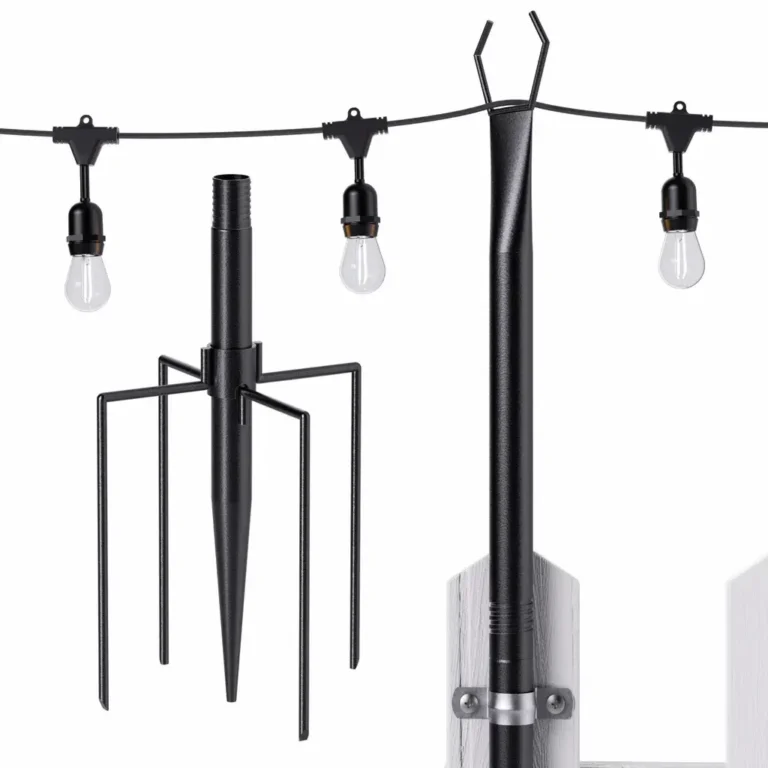
Lighting products are not limited to flat sheet metal parts. Many fixtures, lamp structures, supports and outdoor lighting components use round, square or rectangular tubes that need holes, slots, notches, angled ends or other connection features.
Tube laser cutting provides a flexible way to produce these tubular components directly from digital drawings. It is particularly useful when lighting manufacturers need clean, repeatable cuts without making dedicated tooling for every new design. Tube laser cutting is already used across metal lighting applications, including street lighting, pendant lamps and other tubular lighting structures.
Where Tube Laser Cutting Fits in Lighting Manufacturing
The most suitable lighting parts are those where the tube itself becomes part of the product’s structure or appearance.
Lamp Arms and Lighting Frames
Lamp arms, support frames and tubular brackets often require several holes or mounting points along the same component. With tube laser cutting, these features can be positioned directly on the tube before bending, welding or assembly.
This is useful for decorative lighting as well as functional fixtures, where small changes in hole position or overall geometry may be required from one product series to another.
Outdoor and Street Lighting Components
Outdoor and public lighting systems can contain tubular support components, brackets and connecting structures. Production may involve long tubes, repeated mounting holes and connection points that need to remain consistent across large batches.
Tube laser cutting is increasingly being adopted in outdoor lighting manufacturing for automated and repeatable tube processing.
For large tapered light poles themselves, the main forming process may involve sheet metal bending and welding rather than conventional tube cutting. Tube laser processing is more relevant to tubular brackets, arms, supports and other associated components.
Pendant and Decorative Lighting
Pendant lamps, chandeliers and architectural lighting often place more emphasis on shape and appearance. Tubes may need angled ends, decorative openings, slots or intersecting connections that would be difficult to produce efficiently through multiple conventional operations.
Laser cutting makes these features programmable, allowing manufacturers to change the design without producing new punches, fixtures or templates.
Mounting Brackets and Structural Supports
Small tubular brackets and support components are another common application. A single tube may require cutting, drilling-like holes, slots and end profiles before welding or assembly.
Combining these operations in one CNC process can reduce the number of separate machining steps and make the finished parts easier to prepare for downstream fabrication.
The Important Cuts Are Often Not the Straight Cuts
For lighting manufacturers, cutting a tube to length is usually the easy part. The more valuable capability is creating the features needed to assemble the component.
A tube laser cutting machine can produce:
- Mounting and fastening holes
- Long slots and openings
- Cable-routing holes
- Notches and relief cuts
- Angled tube ends
- 交差するチューブ継手
- Decorative patterns
- Beveled edges where supported by the machine
These features can be programmed from CAD data and cut around the tube as it rotates. This is one reason tube laser processing can replace combinations of sawing, drilling, punching, milling and manual notching for suitable parts.
For lighting structures that must be welded together, accurate connection geometry is particularly useful because the cut profile can be prepared to match the mating tube before assembly.
From Tube Stock to a Fabrication-Ready Part
A typical lighting component can move through a much simpler production route when several features are created in the same setup.
The process starts with the tube specification and digital drawing. The machine positions the tube, rotates it during cutting and produces the required holes, slots, contours and end cuts. After cutting, the component can move to bending, welding, surface treatment or final assembly depending on the product design.
For suitable materials and cutting conditions, the laser process can produce clean edges with limited secondary finishing. This can reduce deburring and other manual preparation before welding or coating.
The result is not simply faster cutting. It is a reduction in the number of separate operations needed to turn raw tube into a usable lighting component.
Better Flexibility for Custom Lighting Designs
Lighting manufacturers often produce multiple models rather than one identical component for years. Decorative fixtures may change diameter, hole patterns, arm geometry or connection design between product series.
Tube laser cutting is well suited to this environment because the cutting pattern is controlled digitally. A new design can be introduced by changing the drawing and cutting program instead of manufacturing a new physical die or punching tool. This flexibility is especially useful for prototypes, short runs and products with frequent design changes.
For larger production runs, automatic loading and tube handling can further reduce manual material handling and improve consistency between parts.
Round Tube, Square Tube and Structural Profiles
Lighting equipment does not rely on one tube shape.
Depending on the product, manufacturers may work with:
- Round tubes for lamp arms, supports and decorative structures
- Square or rectangular tubes for rigid frames and mounting structures
- Special-shaped profiles for more specialized lighting designs
A tube laser system should therefore be selected around the actual tube geometry and production requirements rather than laser power alone.
For example, a manufacturer producing small-diameter lamp components may prioritize fast feeding and automated loading, while a producer of larger lighting structures may need greater tube diameter capacity, longer processing length or bevel cutting.
Recommended Tube Laser Cutting Machines
Different tube fabrication jobs require different levels of cutting speed, tube capacity and automation. LONX offers several tube laser cutting machines to match everything from small-diameter production to large and heavy tube processing.
LX-K9 – For high-speed small tube production
With a cutting range of Φ10–90 mm and up to 3.0G acceleration, the LX-K9 is designed for fast, repetitive processing of small round and square tubes. It is a practical choice for manufacturers focused on high output and efficient material utilization.
LX-K19 – For small to medium tubes
The LX-K19 handles round and square tubes up to 180 mm and combines high-speed cutting with automatic material handling. It is suited to general tube fabrication where a wider tube range and stable batch production are required.
LX-K24 – For versatile medium and large tube processing
The LX-K24 covers tubes up to Φ230 mm and supports laser powers from 3 to 12 kW. Its robust structure and material support system make it suitable for heavier tubes, larger profiles and demanding production environments.
LX-K28 – For large-diameter and high-volume tube cutting
With a cutting range up to Φ280 mm and tube lengths up to 12,000 mm in the three-chuck version, the LX-K28 is designed for large tubular components and continuous production. It is particularly suitable when larger tube capacity and automated material handling are important.
Not sure which model fits your tubes? Tell us your tube diameter, material, wall thickness and production requirements, and our engineers will recommend the appropriate LONX tube laser cutting machine.
FAQ
Can a tube laser cutting machine cut lighting fixtures?
Yes. Tube laser cutting is suitable for lighting components made from metal tubes and profiles, including lamp arms, frames, brackets, supports and other tubular structures. It can produce holes, slots, contours and connection features directly on the tube.
What lighting parts can be made with tube laser cutting?
Typical applications include tubular lamp frames, lamp arms, mounting brackets, lighting supports, decorative tube structures and components used in outdoor and public lighting.
Can tube laser cutting replace drilling and notching?
For suitable tube components, one laser process can combine cutting, hole-making, slotting and contour cutting that might otherwise require several separate operations. The exact replacement depends on the part geometry and required tolerances.
Is tube laser cutting suitable for custom lighting products?
Yes. Because the cutting geometry is controlled digitally, manufacturers can change hole patterns, contours and other features without producing new mechanical tooling. This makes the process useful for prototypes, customized lighting and products with multiple variations.
What should lighting manufacturers consider when selecting a tube laser?
Start with the tube diameter, tube length, material, wall thickness and required features. Production volume and automation requirements should then determine whether automatic loading, high-speed processing, bevel cutting or other advanced functions are necessary.