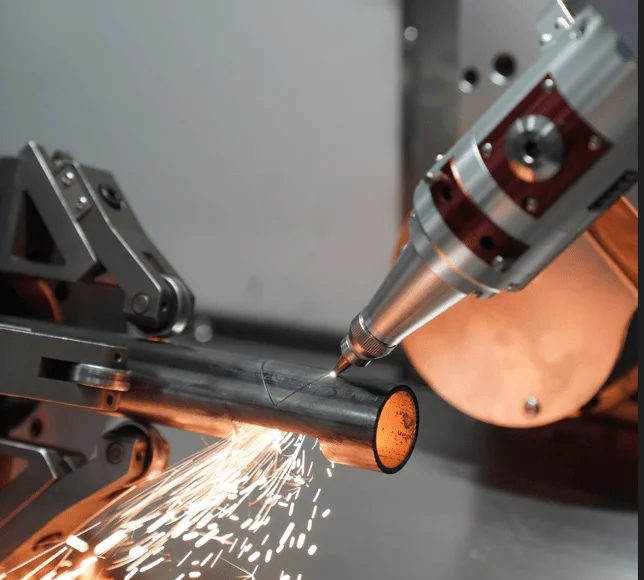
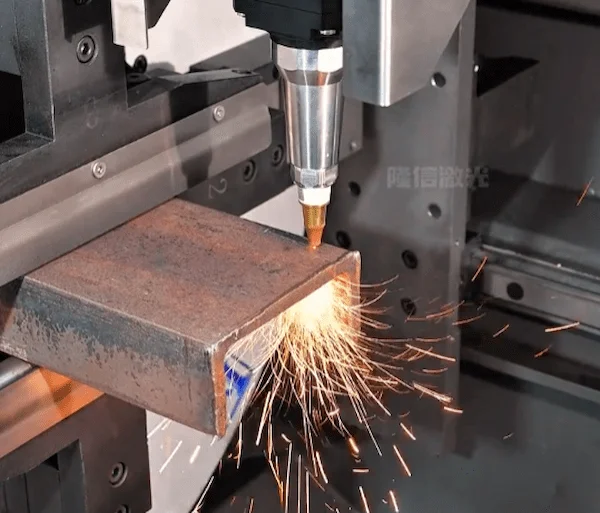
Tak, laser do rur może ciąć kątownik — wydajnie, precyzyjnie i przy minimalnych stratach materiału.
Nowoczesne maszyny do cięcia laserowego rur są w stanie obrabiać różne profile, w tym kątowniki (znane również jako profile L), co czyni je doskonałym wyborem dla przemysłu konstrukcji stalowych i obróbki metali.
Dlaczego lasery do rur są idealne do cięcia kątownika
Kątownik jest kluczowym materiałem w budownictwie, produkcji maszyn i zastosowaniach konstrukcji stalowych. Jego precyzja cięcia i wydajność bezpośrednio wpływają na jakość produktu i koszty produkcji. Laserowe cięcie rur stał się preferowaną metodą obróbki kątownika ze względu na liczne zalety.
Wysoka precyzja i możliwości złożonej geometrii
Dokładność na poziomie mikronów i minimalne odkształcenia termiczne
Cięcie laserowe — zazwyczaj przy użyciu wiązek lasera światłowodowego o wysokiej gęstości — osiąga precyzję na poziomie mikronów (dokładność pozycjonowania 0,02–0,03 mm). Ostre narożniki i krawędzie pod kątem 90 stopni kątownika wymagają czystych cięć bez zadziorów i odkształceń. Mała strefa wpływu ciepła w cięciu laserowym zapobiega wypaczaniu lub zniekształcaniu, często powodowanym przez tradycyjne metody cięcia.Elastyczność dla złożonych elementów i ukosów.
Kątownik często wymaga nacięć, otworów montażowych lub cięć ukosowych (np. 45°). Nowoczesne
6-osiowe lasery do rur mogą wykonywać cięcie 3D bezpośrednio na kątowniku, w tym ukosowanie do 45°, eliminując potrzebę operacji wtórnych. Dzięki integracji CAD/CAM złożone ścieżki mogą być automatycznie generowane dla w pełni niestandardowych cięć. Wydajność i korzyści automatyzacji.
Szybka produkcja z pracą 24/7
Prędkości cięcia laserowego mogą osiągać do 140 m/min, znacznie przewyższając piłowanie lub cięcie plazmowe. W połączeniu z
automatycznymi systemami załadunku (takimi jak uchwyty pneumatyczne), kątownik może być przetwarzany od załadunku do cięcia w pełni automatycznie, wspierając ciągłą, bezobsługową produkcję. Integracja wielu procesów.
Tradycyjna obróbka kątownika często wymaga wielu etapów (wiercenie, fazowanie, cięcie). Maszyny do cięcia laserowego mogą zintegrować je w jednym przejściu — takie jak wiercenie otworów Ø12,7 mm i cięcie konturowe jednocześnie — zwiększając ogólną wydajność o ponad 50%.
Wykorzystanie materiału i kontrola kosztów.
Zoptymalizowane układanie zmniejsza odpady
Ze względu na przekrój w kształcie litery L, tradycyjne metody często generują duże straty materiału. Systemy cięcia laserowego z
oprogramowaniem do układania opartym na AI (takim jak FSCUT5000) automatycznie optymalizują układy dla maksymalnego wykorzystania materiału. Wyniki z praktyki pokazują 15–20% redukcję odpadów. Niższe całkowite koszty produkcji.
Energia i materiały eksploatacyjne
- : Lasery światłowodowe mają sprawność konwersji elektrooptycznej >30% i niższe koszty eksploatacji niż narzędzia mechaniczne.Oszczędność pracy.
- : Automatyzacja zmniejsza interwencję człowieka. Jedna maszyna zazwyczaj wymaga tylko 1–2 operatorów do monitorowania.Adaptacyjność maszyny i uwagi techniczne.
Specjalistyczne mocowanie zapewnia stabilność
Ze względu na asymetryczny kształt L, kątownik ma tendencję do wibracji podczas cięcia. Lasery do rur używają
samocentrujących uchwytów pneumatycznych (np. marki Beut), aby zapewnić mocne, bezpieczne dla powierzchni mocowanie — gwarantując dokładne cięcia na długich odcinkach (do 12 metrów) bez przesunięć. Szeroka kompatybilność materiałów i grubości.
Z opcjami mocy od 1 do 12 kW, lasery do rur mogą obsługiwać różne materiały kątownika:
Stal nierdzewna/stal węglowa
- : do 25 mm grubości (20 mm z laserem światłowodowym 6 kW): wymaga mocy ≥3 kW i ochrony azotem, aby zapobiec utlenianiu
- AluminiumCięcie laserowe rur vs. tradycyjne metody
Kryteria
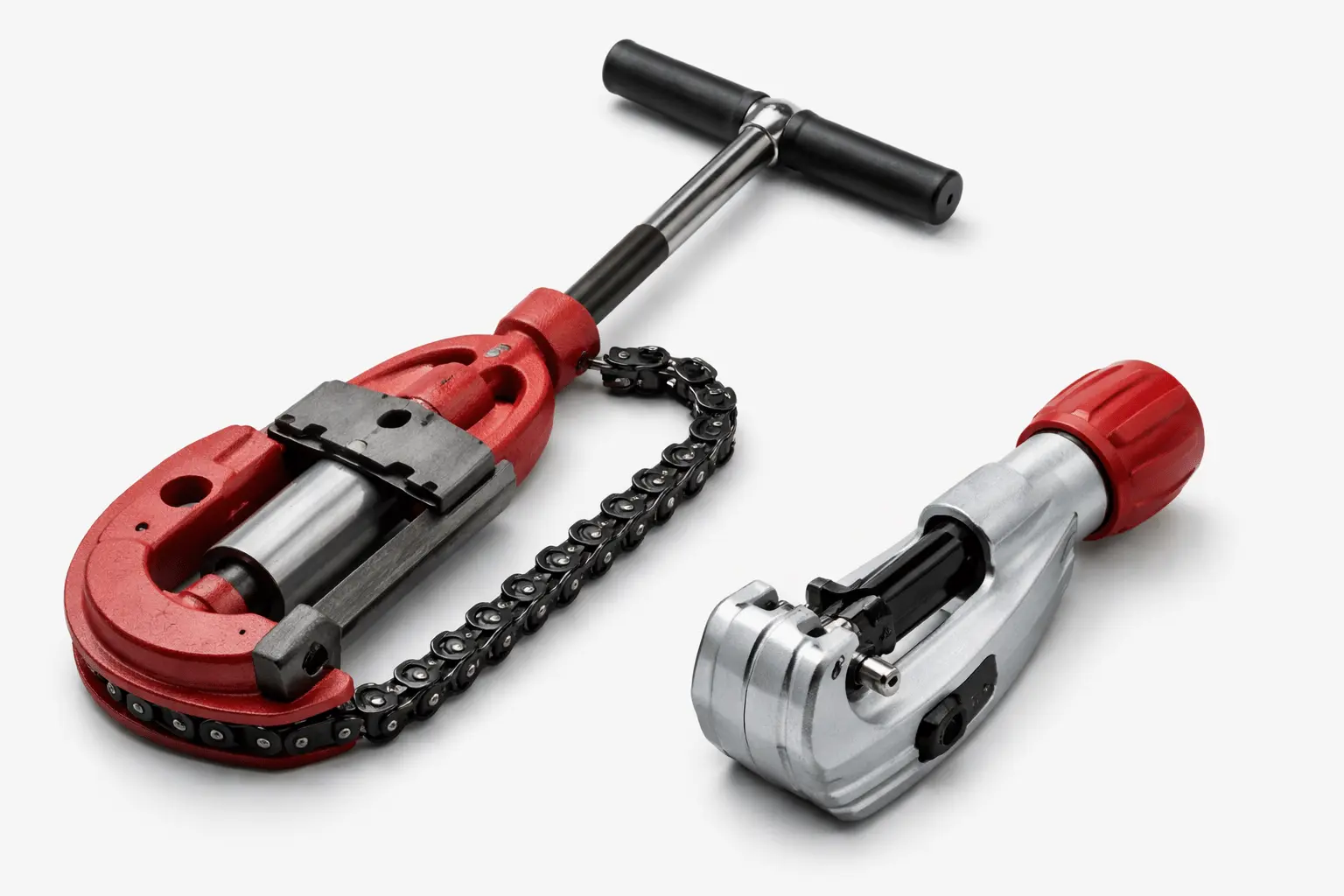
| Cięcie laserowe rur | Piłowanie/cięcie plazmowe | ±0,05 mm |
|---|---|---|
| Precyzja | ±0,5–1 mm | Maksymalny rozmiar profilu |
| Maks. rozmiar profilu | 250 × 250 mm (W×H) | Limited by fixtures |
| Secondary Processing | Not needed (bevels & holes done inline) | Grinding/drilling required |
| Scrap Rate | 8–12% | 15–30% |
Limitations and Key Considerations
1. Primary Limitations
Thickness Constraints
Tube laser cutters generally support up to:
- ≤5 mm for stainless steel
- ≤6 mm for carbon steel
This varies by power level: - ≤2 kW: up to 3 mm
- ≥3 kW: up to 5–6 mm (requires lower speed to control thermal effects)
Size & Profile Matching
- Supported size: Most tube lasers handle angle iron with side lengths ≤250 mm; larger sizes may require custom fixtures.
- Shape challenge: The L-shaped cross-section can cause imbalance—requiring pneumatic chucks to prevent tilting or vibration.
Risk of thermal deformation
Thin-walled angle iron (<2 mm) is susceptible to warping due to localized heat. This can be mitigated by adjusting parameters (e.g., lowering power, increasing speed) or using nitrogen cooling.
2. Machine Setup & Operation Notes
- Special fixtures and correction systems: Anti-deformation chucks and auto-compensation features ensure precision.
- Optimized cutting parameters:
- Match laser power to material thickness
- Use nitrogen for stainless steel; compressed air for carbon steel to save cost
- Balance speed to avoid burn-through or incomplete cutting
- Accuracy control:
- Regular calibration of guide rails and servo motors (positioning accuracy ≤±0.1 mm)
- Adjust laser focus at bent corners to avoid uneven cuts
3. Safety and Maintenance
- Safe operation:
- Clamp length ≥50 mm to prevent ejection
- Avoid contact with moving parts; wear laser safety goggles
- Maintenance best practices:
- Clean the focusing lens every 500 hours to prevent slag buildup
- Regularly replace coolant to prevent overheating and shutdowns
Industry Applications
Tube laser cutters are widely used in angle iron processing thanks to their precision, automation, and capability for complex geometries. Key industries include:
- Power Transmission Towers & Telecom:
High-precision cutting of structural L-profiles (e.g., ±45° bevels), full-length (12 m) processing, zero-tail cutting, improved load-bearing and material utilization. - Construction & Heavy Machinery:
Processing large 360 mm angle iron for stadium beams and columns. Deformation correction ensures accuracy on long profiles. Compared to sawing, laser cutting is 6× faster. Ideal for heavy-duty support arms in cranes and construction equipment. - Renewables & Transportation:
Solar mounting brackets require mass bevel cutting. A 6 kW tube laser can cut 2000 pieces/day with 45° beveling in one pass. In bridge reinforcement, 6–8 mm thick angle iron cut by laser shows 50% improvement in surface flatness vs. plasma. - Furniture & Architectural Metalwork:
Custom staircase railings and decorative L-profiles can be cut with ±0.03 mm accuracy, reducing post-processing steps like polishing or grinding.
Przemyślenia końcowe
Tube lasers are fully capable of cutting angle iron, as long as the machine supports L-shaped profiles with the right clamping and control systems. Whether you’re producing structural components, brackets, or custom metalwork, laser cutting offers unmatched precision and efficiency.
Featured Solution: LX‑T24
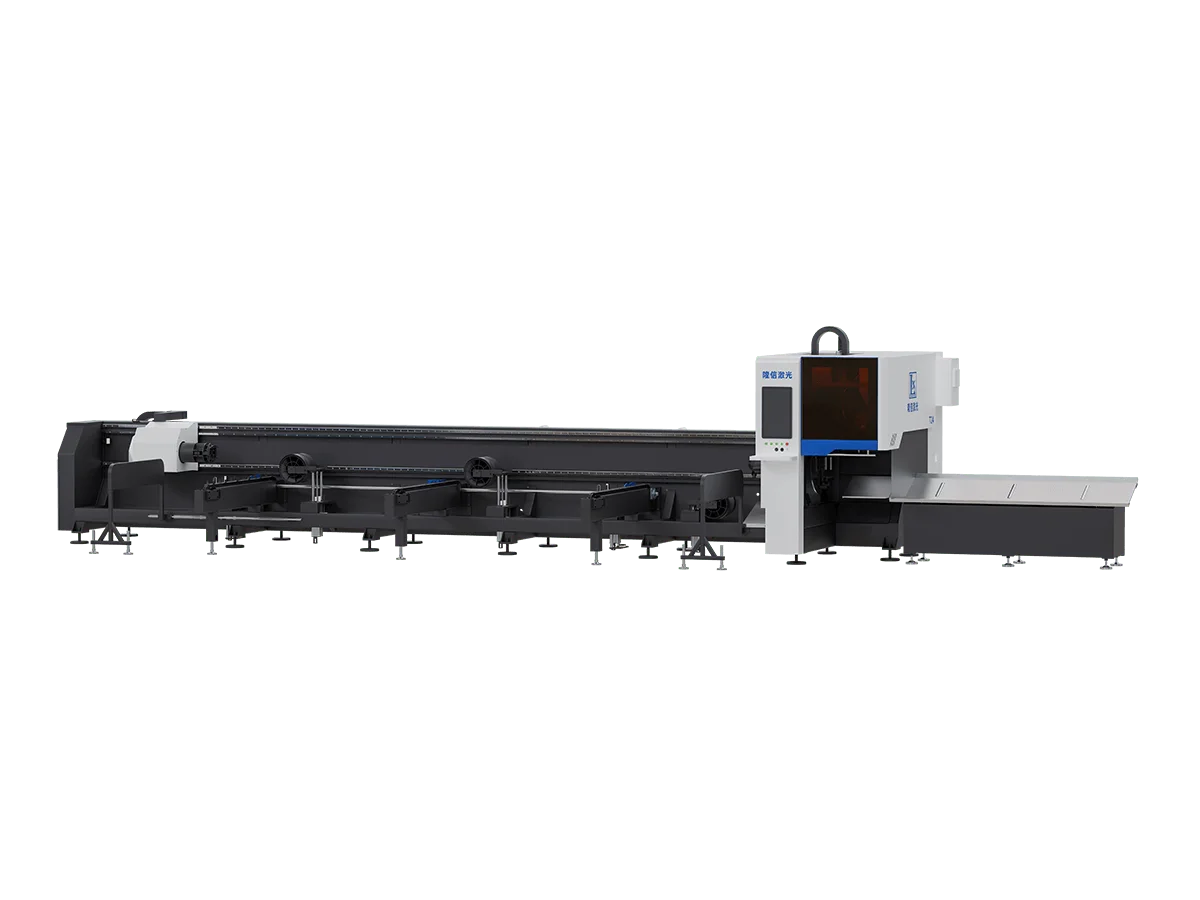
For industrial-grade processing of angle iron, square and round steel profiles, meet the Longxin Laser LX‑T24 Heavy‑Duty Bevel Tube Laser Cutting machine—designed for maximum precision, efficiency, and large-scale fabrication.

Key Highlights:
-
Cięcie fazowe ±45° — Perform multi‑angle chamfers and compound cuts on angle iron and structural steel profiles with ease.
-
Wide Profile Support — Handles round tubes Ø 15–240 mm and square/rectangular tubes 15×15 to 240×240 mm.
-
Heavy‑Duty Capacity — Front chuck feed, ultra‑short tailstock (within 120 mm), and floating support enable stable processing of long, heavy sections—up to 6.5 m in length and 300 kg per tube.
-
Powerful Laser Source — 1.5–6 kW fiber laser delivers clean cuts in stainless steel, carbon steel, aluminum, copper, and iron.
-
High Accuracy — ±0.15 mm processing precision
-
Cost‑Effective Side‑Mount Design — Optimized layout that reduces footprint without compromising performance.
-
Pływający system wspomagania karmienia — Continuous lift and support during cutting ensure smooth handling of large or asymmetric profiles.
Kontakt today to equest a sample cutting video, or schedule an on-site demonstration tailored to your angle iron fabrication needs.