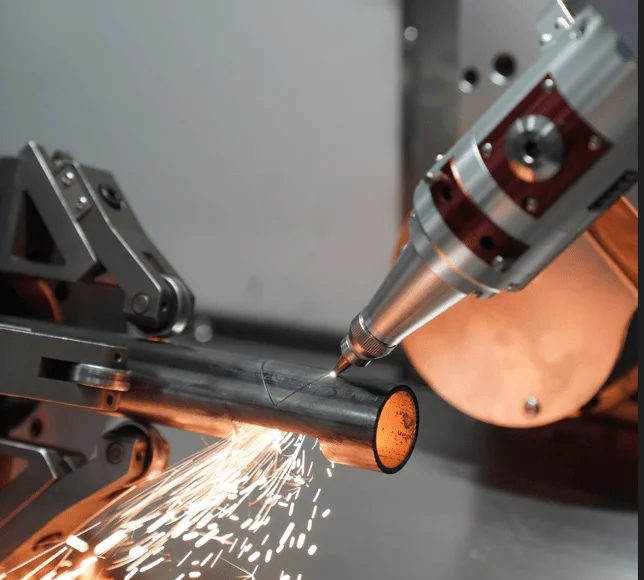
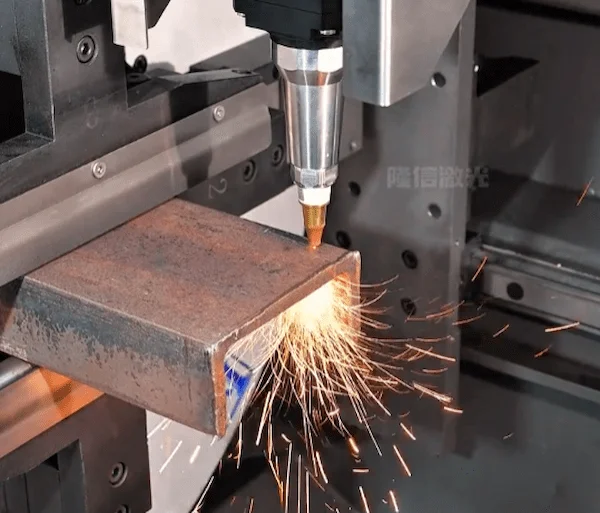
Có, máy laser ống có thể cắt sắt góc — hiệu quả, chính xác và giảm thiểu lãng phí vật liệu.
Hiện đại Máy cắt laser ống có khả năng xử lý nhiều loại profile, bao gồm sắt góc (còn gọi là profile chữ L), khiến chúng trở thành lựa chọn tuyệt vời cho ngành thép kết cấu và chế tạo kim loại.
Tại Sao Máy Laser Ống Lý Tưởng Cho Việc Cắt Sắt Góc
Sắt góc là vật liệu quan trọng trong xây dựng, chế tạo máy móc và các ứng dụng kết cấu thép. Độ chính xác và hiệu quả cắt của nó ảnh hưởng trực tiếp đến chất lượng sản phẩm và chi phí sản xuất. Ống laser đã trở thành phương pháp ưa chuộng để xử lý sắt góc nhờ nhiều ưu điểm vượt trội.
Độ Chính Xác Cao & Khả Năng Xử Lý Hình Học Phức Tạp
Độ chính xác cấp micron và biến dạng nhiệt tối thiểu
Cắt laser—thường sử dụng chùm tia laser sợi quangmật độ cao—đạt độ chính xác cấp micron (độ chính xác định vị 0,02–0,03 mm). Các góc nhọn và cạnh 90 độ của sắt góc yêu cầu đường cắt sạch, không có ba via và không biến dạng. Vùng ảnh hưởng nhiệt nhỏ của cắt laser ngăn ngừa hiện tượng cong vênh hoặc biến dạng thường do các phương pháp cắt truyền thống gây ra.
Linh hoạt cho các chi tiết phức tạp và đường vát
Sắt góc thường yêu cầu các rãnh khía, lỗ bu lông hoặc đường cắt vát (ví dụ: vát 45°). Máy cắt laser ống 6 trục hiện đại có thể thực hiện cắt 3D trực tiếp trên sắt góc, bao gồm vát lên đến 45°, loại bỏ nhu cầu gia công thứ cấp. Với tích hợp CAD/CAM, các đường cắt phức tạp có thể được tự động tạo ra cho các đường cắt tùy chỉnh hoàn toàn.
Lợi Ích Về Hiệu Quả & Tự Động Hóa
Sản xuất tốc độ cao với hoạt động 24/7
Tốc độ cắt laser có thể đạt tới 140 m/phút, vượt xa hiệu suất của cưa hoặc cắt plasma. Kết hợp với hệ thống nạp liệu tự động (như mâm cặp khí nén), sắt góc có thể được xử lý từ nạp liệu đến cắt hoàn toàn tự động, hỗ trợ sản xuất liên tục không cần giám sát.
Tích hợp đa quy trình
Xử lý sắt góc truyền thống thường yêu cầu nhiều bước (khoan, vát mép, cắt). Máy cắt laser có thể tích hợp tất cả trong một lần—chẳng hạn như khoan lỗ Ø12,7 mm và cắt đường viền đồng thời—nâng cao hiệu quả tổng thể lên hơn 50%.
Sử Dụng Vật Liệu & Kiểm Soát Chi Phí
Tối ưu hóa xếp lồng giảm phế liệu
Do mặt cắt ngang hình chữ L, các phương pháp truyền thống thường tạo ra lượng lãng phí vật liệu lớn. Hệ thống cắt laser với phần mềm xếp lồng dựa trên AI (như FSCUT5000) tự động tối ưu hóa bố trí để sử dụng vật liệu tối đa. Kết quả thực tế cho thấy giảm 15–20% phế liệu.
Tổng chi phí sản xuất thấp hơn
- Năng lượng & vật tư tiêu hao: Laser sợi quang có hiệu suất chuyển đổi quang điện >30% và chi phí vận hành thấp hơn so với dụng cụ cơ khí.
- Tiết kiệm nhân công: Tự động hóa giảm can thiệp thủ công. Một máy thường chỉ cần 1–2 công nhân để giám sát.
Khả Năng Thích Ứng Của Máy & Các Lưu Ý Kỹ Thuật
Kẹp chuyên dụng đảm bảo độ ổn định
Do hình dạng chữ L không đối xứng, sắt góc có xu hướng rung trong quá trình cắt. Máy cắt laser ống sử dụng mâm cặp khí nén tự định tâm (ví dụ: thương hiệu Beut) để cung cấp lực kẹp mạnh mẽ, an toàn cho bề mặt—đảm bảo đường cắt chính xác trên chiều dài lớn (lên đến 12 mét) mà không bị lệch.
Tương thích rộng rãi với vật liệu và độ dày
Với các tùy chọn công suất từ 1 đến 12 kW, máy laser ống có thể xử lý nhiều loại vật liệu sắt góc:
- Thép không gỉ/thép carbon: lên đến 25 mm độ dày (20 mm với laser sợi quang 6 kW)
- Nhôm: yêu cầu công suất ≥3 kW và bảo vệ bằng nitơ để ngăn ngừa oxy hóa
Cắt Laser Ống So Với Các Phương Pháp Truyền Thống
| Tiêu chí | Cắt Laser Ống | Cưa/Cắt Plasma |
|---|---|---|
| Chính xác | ±0,05 mm | ±0,5–1 mm |
| Kích Thước Profile Tối Đa | 250 × 250 mm (W×H) | Limited by fixtures |
| Secondary Processing | Not needed (bevels & holes done inline) | Grinding/drilling required |
| Scrap Rate | 8–12% | 15–30% |
Limitations and Key Considerations
1. Primary Limitations
Thickness Constraints
Tube laser cutters generally support up to:
- ≤5 mm for stainless steel
- ≤6 mm for carbon steel
This varies by power level: - ≤2 kW: up to 3 mm
- ≥3 kW: up to 5–6 mm (requires lower speed to control thermal effects)
Size & Profile Matching
- Supported size: Most tube lasers handle angle iron with side lengths ≤250 mm; larger sizes may require custom fixtures.
- Shape challenge: The L-shaped cross-section can cause imbalance—requiring pneumatic chucks to prevent tilting or vibration.
Risk of thermal deformation
Thin-walled angle iron (<2 mm) is susceptible to warping due to localized heat. This can be mitigated by adjusting parameters (e.g., lowering power, increasing speed) or using nitrogen cooling.
2. Machine Setup & Operation Notes
- Special fixtures and correction systems: Anti-deformation chucks and auto-compensation features ensure precision.
- Optimized cutting parameters:
- Match laser power to material thickness
- Use nitrogen for stainless steel; compressed air for carbon steel to save cost
- Balance speed to avoid burn-through or incomplete cutting
- Accuracy control:
- Regular calibration of guide rails and servo motors (positioning accuracy ≤±0.1 mm)
- Adjust laser focus at bent corners to avoid uneven cuts
3. Safety and Maintenance
- Safe operation:
- Clamp length ≥50 mm to prevent ejection
- Avoid contact with moving parts; wear laser safety goggles
- Maintenance best practices:
- Clean the focusing lens every 500 hours to prevent slag buildup
- Regularly replace coolant to prevent overheating and shutdowns
Industry Applications
Tube laser cutters are widely used in angle iron processing thanks to their precision, automation, and capability for complex geometries. Key industries include:
- Power Transmission Towers & Telecom:
High-precision cutting of structural L-profiles (e.g., ±45° bevels), full-length (12 m) processing, zero-tail cutting, improved load-bearing and material utilization. - Construction & Heavy Machinery:
Processing large 360 mm angle iron for stadium beams and columns. Deformation correction ensures accuracy on long profiles. Compared to sawing, laser cutting is 6× faster. Ideal for heavy-duty support arms in cranes and construction equipment. - Renewables & Transportation:
Solar mounting brackets require mass bevel cutting. A 6 kW tube laser can cut 2000 pieces/day with 45° beveling in one pass. In bridge reinforcement, 6–8 mm thick angle iron cut by laser shows 50% improvement in surface flatness vs. plasma. - Furniture & Architectural Metalwork:
Custom staircase railings and decorative L-profiles can be cut with ±0.03 mm accuracy, reducing post-processing steps like polishing or grinding.
Những suy nghĩ cuối cùng
Tube lasers are fully capable of cutting angle iron, as long as the machine supports L-shaped profiles with the right clamping and control systems. Whether you’re producing structural components, brackets, or custom metalwork, laser cutting offers unmatched precision and efficiency.
Featured Solution: LX‑T24
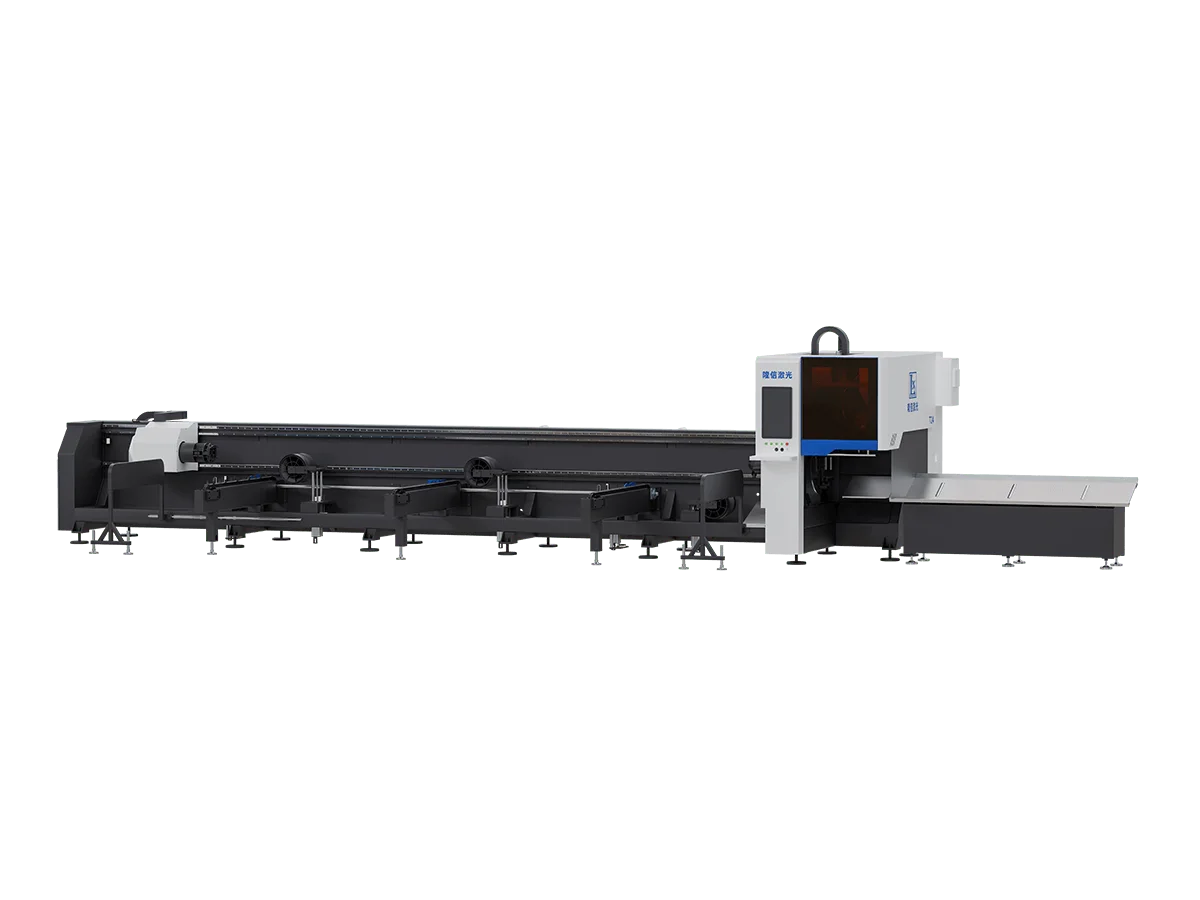
For industrial-grade processing of angle iron, square and round steel profiles, meet the Longxin Laser LX‑T24 Heavy‑Duty Bevel Tube Laser Cutting machine—designed for maximum precision, efficiency, and large-scale fabrication.

Key Highlights:
-
Cắt vát ±45° — Perform multi‑angle chamfers and compound cuts on angle iron and structural steel profiles with ease.
-
Wide Profile Support — Handles round tubes Ø 15–240 mm and square/rectangular tubes 15×15 to 240×240 mm.
-
Heavy‑Duty Capacity — Front chuck feed, ultra‑short tailstock (within 120 mm), and floating support enable stable processing of long, heavy sections—up to 6.5 m in length and 300 kg per tube.
-
Powerful Laser Source — 1.5–6 kW fiber laser delivers clean cuts in stainless steel, carbon steel, aluminum, copper, and iron.
-
Độ Chính Xác Cao — ±0.15 mm processing precision
-
Cost‑Effective Side‑Mount Design — Optimized layout that reduces footprint without compromising performance.
-
Hệ thống cho ăn hỗ trợ nổi — Continuous lift and support during cutting ensure smooth handling of large or asymmetric profiles.
Liên hệ chúng tôi today to equest a sample cutting video, or schedule an on-site demonstration tailored to your angle iron fabrication needs.