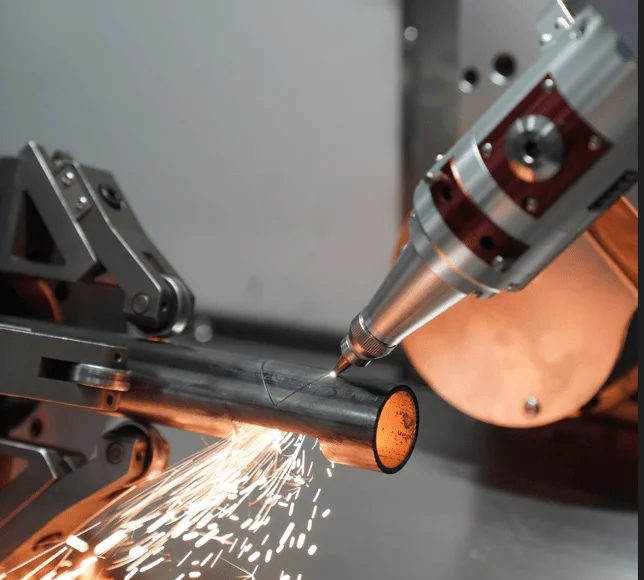
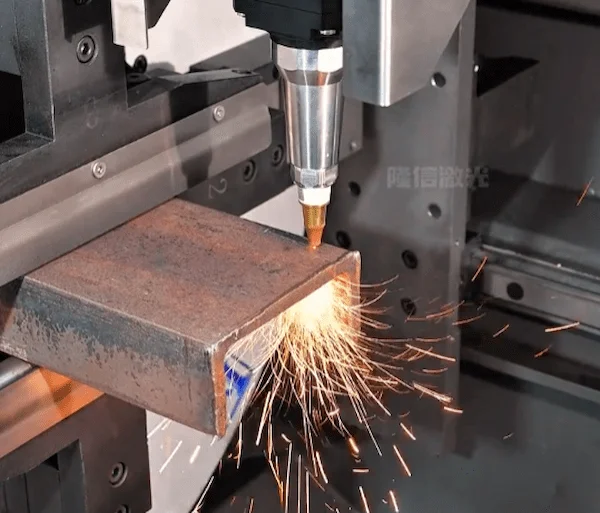
ใช่ เลเซอร์ตัดท่อสามารถตัดเหล็กฉากได้ — อย่างมีประสิทธิภาพ แม่นยำ และสิ้นเปลืองวัสดุน้อยที่สุด.
สมัยใหม่ เครื่องตัดเลเซอร์แบบท่อ สามารถแปรรูปโปรไฟล์ต่างๆ ได้ รวมถึงเหล็กฉาก (หรือที่เรียกว่าโปรไฟล์รูปตัวแอล) ทำให้เป็นตัวเลือกที่ยอดเยี่ยมสำหรับอุตสาหกรรมเหล็กโครงสร้างและการผลิตโลหะ.
เหตุใดเลเซอร์ตัดท่อจึงเหมาะสำหรับการตัดเหล็กฉาก
เหล็กฉาก เป็นวัสดุสำคัญในงานก่อสร้าง การผลิตเครื่องจักร และการใช้งานโครงสร้างเหล็ก ความแม่นยำและประสิทธิภาพในการตัดส่งผลโดยตรงต่อคุณภาพผลิตภัณฑ์และต้นทุนการผลิต. สอดท่อเลเซอร์ตัด ได้กลายเป็นวิธีที่นิยมใช้ในการแปรรูปเหล็กฉาก เนื่องจากมีข้อดีมากมาย.
ความแม่นยำสูงและความสามารถในการสร้างรูปทรงที่ซับซ้อน
ความแม่นยำระดับไมครอนและการเสียรูปจากความร้อนน้อยที่สุด
การตัดด้วยเลเซอร์ — โดยทั่วไปใช้ลำแสง ไฟเบอร์เลเซอร์ความหนาแน่นสูง— ให้ความแม่นยำระดับไมครอน (ความแม่นยำในการวางตำแหน่ง 0.02–0.03 มม.) มุมแหลมและขอบ 90 องศาของเหล็กฉากต้องการการตัดที่สะอาด ปราศจากครีบ และไม่เสียรูป พื้นที่ได้รับผลกระทบจากความร้อนขนาดเล็กของการตัดด้วยเลเซอร์ช่วยป้องกันการบิดงอหรือการเสียรูปที่มักเกิดจากวิธีการตัดแบบดั้งเดิม.
ความยืดหยุ่นสำหรับคุณสมบัติที่ซับซ้อนและการตัดมุมเอียง
เหล็กฉากมักต้องการรอยบาก รูสลักเกลียว หรือการตัดมุมเอียง (เช่น มุม 45°) เครื่องตัด เลเซอร์ท่อ 6 แกน สมัยใหม่ สามารถทำการตัด 3 มิติบนเหล็กฉากได้โดยตรง รวมถึงการตัดมุมเอียงสูงสุด 45° ทำให้ไม่ต้องดำเนินการขั้นตอนที่สอง ด้วยการผสานรวม CAD/CAM เส้นทางที่ซับซ้อนสามารถสร้างขึ้นโดยอัตโนมัติสำหรับการตัดแบบกำหนดเองได้อย่างเต็มที่.
ประสิทธิภาพและประโยชน์ของระบบอัตโนมัติ
การผลิตความเร็วสูงพร้อมการทำงานตลอด 24 ชั่วโมงทุกวัน
ความเร็วในการตัดด้วยเลเซอร์สามารถสูงถึง 140 ม./นาที เหนือกว่าการตัดด้วยเลื่อยหรือพลาสมาอย่างมาก เมื่อรวมกับ ระบบโหลดอัตโนมัติ (เช่น หัวจับลม) เหล็กฉากสามารถแปรรูปได้ตั้งแต่การโหลดจนถึงการตัดด้วยระบบอัตโนมัติเต็มรูปแบบ รองรับการผลิตต่อเนื่องแบบไม่ต้องมีคนควบคุม.
การผสานรวมหลายกระบวนการ
การแปรรูปเหล็กฉากแบบดั้งเดิมมักต้องใช้หลายขั้นตอน (การเจาะ การลบคม การตัด) เครื่องตัดเลเซอร์สามารถผสานรวมขั้นตอนเหล่านี้ในการผ่านครั้งเดียว — เช่น การเจาะรู Ø12.7 มม. และการตัดโครงร่างพร้อมกัน — เพิ่มประสิทธิภาพโดยรวมมากกว่า 50%.
การใช้วัสดุและการควบคุมต้นทุน
การจัดเรียงชิ้นงานที่เหมาะสมช่วยลดเศษวัสดุ
เนื่องจากหน้าตัดรูปตัวแอล วิธีการแบบดั้งเดิมมักก่อให้เกิดเศษวัสดุสูง ระบบตัดเลเซอร์พร้อม ซอฟต์แวร์จัดเรียงชิ้นงานด้วย AI (เช่น FSCUT5000) จะปรับเลย์เอาต์โดยอัตโนมัติเพื่อการใช้วัสดุสูงสุด ผลลัพธ์ในทางปฏิบัติแสดงให้เห็นว่าลดเศษวัสดุได้ 15–20%.
ต้นทุนการผลิตโดยรวมต่ำกว่า
- พลังงานและวัสดุสิ้นเปลือง: ไฟเบอร์เลเซอร์มีประสิทธิภาพการแปลงไฟฟ้าเป็นแสง >30% และต้นทุนการดำเนินงานต่ำกว่าเครื่องมือกล.
- การประหยัดแรงงาน: ระบบอัตโนมัติลดการแทรกแซงด้วยมือ โดยทั่วไปเครื่องหนึ่งเครื่องต้องการผู้ควบคุมเพียง 1–2 คนเพื่อเฝ้าตรวจสอบ.
ความสามารถในการปรับตัวของเครื่องจักรและข้อควรพิจารณาทางเทคนิค
การจับยึดแบบพิเศษช่วยให้มั่นใจในความเสถียร
เนื่องจากรูปทรงตัวแอลที่ไม่สมมาตร เหล็กฉากมีแนวโน้มที่จะสั่นสะเทือนระหว่างการตัด เครื่องตัดเลเซอร์ท่อใช้ หัวจับลมแบบตั้งศูนย์อัตโนมัติ (เช่น แบรนด์ Beut) เพื่อให้การจับยึดที่แข็งแรงและปลอดภัยต่อพื้นผิว — ทำให้มั่นใจได้ถึงการตัดที่แม่นยำบนความยาวที่มาก (สูงสุด 12 เมตร) โดยไม่มีการเยื้องศูนย์.
ความเข้ากันได้กับวัสดุและความหนาที่หลากหลาย
ด้วยตัวเลือกกำลังตั้งแต่ 1 ถึง 12 กิโลวัตต์ เลเซอร์ท่อสามารถจัดการวัสดุเหล็กฉากต่างๆ ได้:
- เหล็กกล้าไร้สนิม/เหล็กกล้าคาร์บอน: หนาสูงสุด 25 มม. (20 มม. ด้วยไฟเบอร์เลเซอร์ 6 กิโลวัตต์)
- อลูมิเนียม: ต้องการกำลัง ≥3 กิโลวัตต์และการป้องกันด้วยไนโตรเจนเพื่อป้องกันการเกิดออกซิเดชัน
การตัดด้วยเลเซอร์ท่อเทียบกับวิธีการแบบดั้งเดิม
| เกณฑ์ | Tube Laser Cutting | การตัดด้วยเลื่อย/พลาสมา |
|---|---|---|
| จำนวนทศนิยม | ±0.05 มม. | ±0.5–1 มม. |
| ขนาดโปรไฟล์สูงสุด | 250 × 250 มม. (กว้าง×สูง) | Limited by fixtures |
| Secondary Processing | Not needed (bevels & holes done inline) | Grinding/drilling required |
| Scrap Rate | 8–12% | 15–30% |
Limitations and Key Considerations
1. Primary Limitations
Thickness Constraints
Tube laser cutters generally support up to:
- ≤5 mm for stainless steel
- ≤6 mm for carbon steel
This varies by power level: - ≤2 kW: up to 3 mm
- ≥3 kW: up to 5–6 mm (requires lower speed to control thermal effects)
Size & Profile Matching
- Supported size: Most tube lasers handle angle iron with side lengths ≤250 mm; larger sizes may require custom fixtures.
- Shape challenge: The L-shaped cross-section can cause imbalance—requiring pneumatic chucks to prevent tilting or vibration.
Risk of thermal deformation
Thin-walled angle iron (<2 mm) is susceptible to warping due to localized heat. This can be mitigated by adjusting parameters (e.g., lowering power, increasing speed) or using nitrogen cooling.
2. Machine Setup & Operation Notes
- Special fixtures and correction systems: Anti-deformation chucks and auto-compensation features ensure precision.
- Optimized cutting parameters:
- Match laser power to material thickness
- Use nitrogen for stainless steel; compressed air for carbon steel to save cost
- Balance speed to avoid burn-through or incomplete cutting
- Accuracy control:
- Regular calibration of guide rails and servo motors (positioning accuracy ≤±0.1 mm)
- Adjust laser focus at bent corners to avoid uneven cuts
3. Safety and Maintenance
- Safe operation:
- Clamp length ≥50 mm to prevent ejection
- Avoid contact with moving parts; wear laser safety goggles
- Maintenance best practices:
- Clean the focusing lens every 500 hours to prevent slag buildup
- Regularly replace coolant to prevent overheating and shutdowns
Industry Applications
Tube laser cutters are widely used in angle iron processing thanks to their precision, automation, and capability for complex geometries. Key industries include:
- Power Transmission Towers & Telecom:
High-precision cutting of structural L-profiles (e.g., ±45° bevels), full-length (12 m) processing, zero-tail cutting, improved load-bearing and material utilization. - Construction & Heavy Machinery:
Processing large 360 mm angle iron for stadium beams and columns. Deformation correction ensures accuracy on long profiles. Compared to sawing, laser cutting is 6× faster. Ideal for heavy-duty support arms in cranes and construction equipment. - Renewables & Transportation:
Solar mounting brackets require mass bevel cutting. A 6 kW tube laser can cut 2000 pieces/day with 45° beveling in one pass. In bridge reinforcement, 6–8 mm thick angle iron cut by laser shows 50% improvement in surface flatness vs. plasma. - Furniture & Architectural Metalwork:
Custom staircase railings and decorative L-profiles can be cut with ±0.03 mm accuracy, reducing post-processing steps like polishing or grinding.
ข้อคิดสุดท้าย
Tube lasers are fully capable of cutting angle iron, as long as the machine supports L-shaped profiles with the right clamping and control systems. Whether you’re producing structural components, brackets, or custom metalwork, laser cutting offers unmatched precision and efficiency.
Featured Solution: LX‑T24
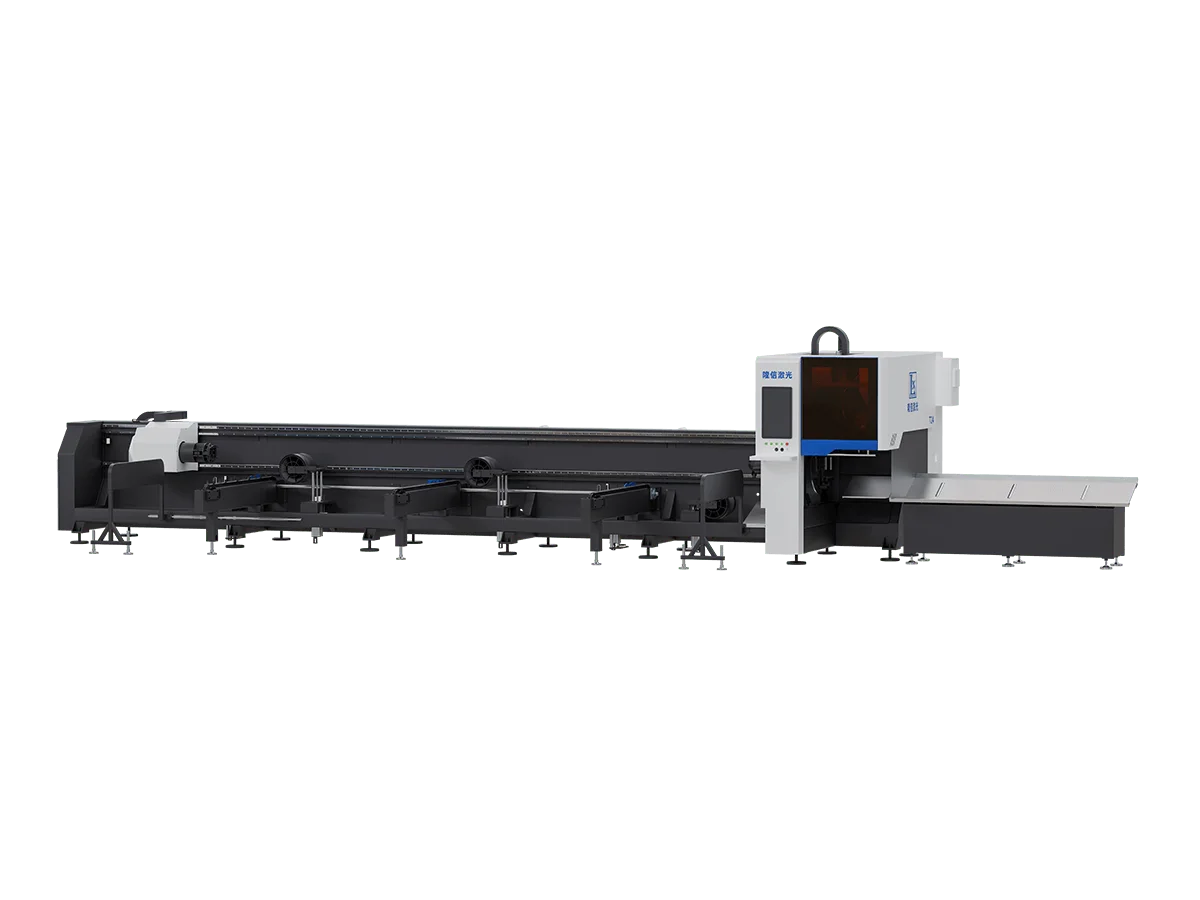
For industrial-grade processing of angle iron, square and round steel profiles, meet the Longxin Laser LX‑T24 Heavy‑Duty Bevel Tube Laser Cutting machine—designed for maximum precision, efficiency, and large-scale fabrication.

Key Highlights:
-
การตัดแบบเอียง ±45° — Perform multi‑angle chamfers and compound cuts on angle iron and structural steel profiles with ease.
-
Wide Profile Support — Handles round tubes Ø 15–240 mm and square/rectangular tubes 15×15 to 240×240 mm.
-
Heavy‑Duty Capacity — Front chuck feed, ultra‑short tailstock (within 120 mm), and floating support enable stable processing of long, heavy sections—up to 6.5 m in length and 300 kg per tube.
-
Powerful Laser Source — 1.5–6 kW fiber laser delivers clean cuts in stainless steel, carbon steel, aluminum, copper, and iron.
-
High Accuracy — ±0.15 mm processing precision
-
Cost‑Effective Side‑Mount Design — Optimized layout that reduces footprint without compromising performance.
-
ระบบให้อาหารแบบลอยตัว — Continuous lift and support during cutting ensure smooth handling of large or asymmetric profiles.
ติดต่อเรา today to equest a sample cutting video, or schedule an on-site demonstration tailored to your angle iron fabrication needs.