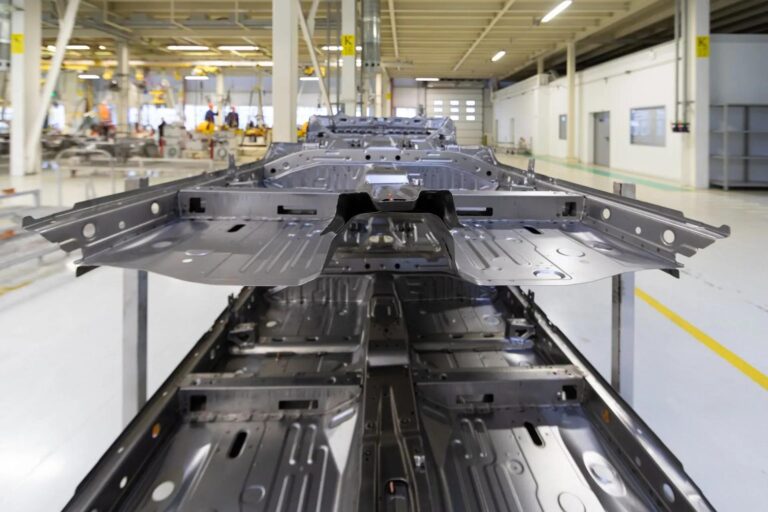
Automotive manufacturers and component suppliers must balance part quality, production cost, development time, and changing design requirements. From mounting brackets and protective covers to electronic equipment housings and selected electric vehicle components, sheet metal parts often need to fit precisely into larger assemblies.
One challenge is that not every automotive part follows the same production model. Established vehicle platforms may use high-volume stamping for repeat components, while prototype development, customized vehicles, replacement parts, and lower-volume production programs require greater flexibility.
Fiber laser cutting provides a programmable way to produce flat metal components with defined contours, holes, slots, and mounting features. It can reduce dependence on dedicated cutting dies for suitable parts and make design changes easier to accommodate.
The key is knowing where laser cutting fits into the production process. For automotive manufacturers, the best solution depends on part geometry, production volume, tooling investment, material requirements, and the processes needed to finish the component.
Automotive Production Challenges That Laser Cutting Can Help Address
1. New Designs Require Parts Before Production Tooling Is Ready
During vehicle development, engineers may revise brackets, mounting plates, protective covers, and enclosure components several times before a design is finalized.
If every revision requires dedicated stamping tooling, development costs and lead times can increase. This can become particularly challenging when the design is still evolving or when the expected production quantity does not justify a dedicated die.
How fiber laser cutting helps
A CNC fiber laser cutting machine can produce suitable flat parts directly from programmed cutting paths. When the design changes, the cutting file can be revised without manufacturing a new dedicated cutting die for every contour.
This makes laser cutting worth considering for prototype components, engineering validation, pilot production, and lower-volume parts.
It is not a universal replacement for automotive tooling. Once a design is stable and demand reaches a level that justifies dedicated tooling, stamping may provide a more economical route.
2. Multiple Part Variants Increase Setup and Tooling Complexity
Automotive suppliers may manufacture components for several vehicle models, trim levels, equipment configurations, or customer programs. Similar-looking parts can have different dimensions, mounting holes, and cutout positions.
Managing many dedicated tools can increase storage, maintenance, setup, and changeover requirements.
How fiber laser cutting helps
Programmed cutting allows suitable part variants to be produced by changing the cutting file rather than creating a separate cutting die for every design. This can simplify production planning when the product mix changes frequently.
Nesting software can also arrange different components on the same sheet, subject to material, geometry, and production constraints.
The practical benefit depends on batch size and machine utilization. For a very high-volume part with an unchanged design, a dedicated stamping process may still be preferable.
3. Hole Positions and Cutouts Must Match Assembly Requirements
Mounting brackets, support plates, equipment covers, and electronic housings may contain multiple holes, slots, and shaped openings. These features need to align with fasteners, adjoining parts, or installed components.
If holes are misplaced or dimensions vary, parts may require adjustment or become unsuitable for assembly.
How fiber laser cutting helps
A CNC cutting program defines the positions and geometry of the required features. Producing the contour and many internal openings in the same programmed operation can reduce the need for separate positioning and drilling steps.
However, the final result still depends on the machine, material, thickness, process parameters, and drawing quality. Critical mounting dimensions and assembly interfaces should be verified through sample production and inspection.
4. Design Changes Can Make Material Planning Less Predictable
When a vehicle program is still developing, the quantities and dimensions of components may change. Producing too many parts before a design is approved can create scrap or leave inventory that no longer matches the latest revision.
How fiber laser cutting helps
Because suitable parts can be produced from revised digital cutting files, manufacturers can adapt production more easily when designs change. Nesting software can also help organize approved components on available sheet material.
This flexibility may be useful during product development and pilot production. It does not eliminate material waste, and obsolete inventory still needs to be managed through appropriate drawing revision control and production planning.
5. Secondary Processing Adds Time to the Complete Part Cost
A cut component is rarely the finished product. Automotive sheet metal parts may require bending, welding, deburring, coating, hardware installation, or assembly.
A process that appears inexpensive at the cutting stage may still create extra work if the edge condition, geometry, or blank dimensions do not suit the subsequent operation.
How fiber laser cutting helps
Cutting programs can be planned around the final component design, including bend locations, fastening features, and assembly interfaces. This can help manufacturers prepare suitable blanks for subsequent forming and joining.
The objective should be to improve the complete manufacturing route rather than simply maximize cutting speed. Actual benefits need to be evaluated through representative parts and downstream process requirements.
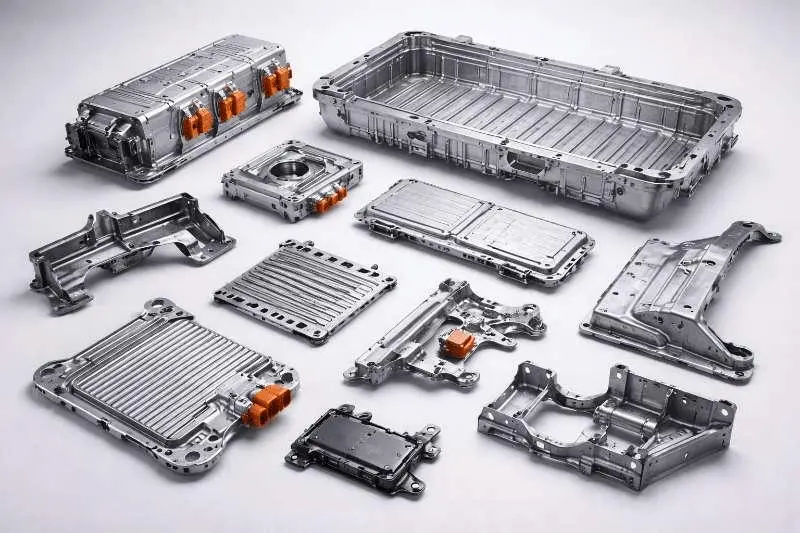
Automotive & EV Components That May Benefit From Laser Cutting
The most suitable applications are generally flat sheet metal components that require defined profiles or openings before forming, joining, or assembly.
Mounting Brackets and Support Plates
Automotive equipment and vehicle assemblies use brackets and plates to support components, connect assemblies, and provide mounting points.
These parts may require multiple holes, slots, and irregular contours. Laser cutting can produce suitable flat blanks from programmed drawings, making it useful for prototype parts, low-volume programs, and variants that do not justify dedicated cutting tooling.
Where brackets are safety-critical or subject to structural loads, cutting is only one part of the engineering process. Material specifications, forming, joining, fatigue performance, and validation must be addressed separately.
Battery Enclosure Panels and Related EV Components
Electric vehicles use metal components around battery systems and associated electrical equipment. Depending on the design, these may include enclosure covers, mounting brackets, protective panels, and other flat sheet metal parts.
Laser cutting can produce suitable blanks and openings before the parts undergo bending, joining, sealing, or assembly.
Battery enclosures have demanding structural, environmental, and safety requirements. A laser-cut panel alone does not establish the performance of the complete enclosure. Material selection, sealing interfaces, crash-related requirements, thermal considerations, and system-level validation must be addressed by the responsible engineering team.
Electronic Equipment Housings and Protective Covers
Vehicles and electric vehicle systems incorporate electronic control units, power electronics, and other equipment that may use metal housings, mounting plates, shields, and covers.
These parts can require openings, mounting features, and contours that align with installed components. Programmable laser cutting may be useful when layouts vary across equipment models or when design changes are frequent.
The appropriate process depends on material, thickness, shielding requirements, thermal conditions, and the final assembly design.
Prototype Panels and Custom Sheet Metal Parts
During vehicle development, manufacturers may need prototype panels, brackets, covers, or other parts before committing to production tooling.
Laser cutting can support this stage by producing suitable flat blanks from digital drawings without requiring a dedicated cutting die for each design.
The same approach may also be useful for specialty vehicles, customized vehicles, service parts, and other programs with lower or less predictable demand.
Battery-Related Equipment and Production Fixtures
Manufacturers involved in EV production may use sheet metal brackets, equipment covers, mounting plates, and custom components for production equipment or assembly fixtures.
These applications can involve frequent engineering changes and relatively small batches, making programmable cutting worth evaluating.
The manufacturing requirements for production equipment are different from those for parts installed in a road vehicle. The appropriate material, dimensional requirements, and validation process should be defined for each application.
Laser Cutting vs. Stamping: Which Is Better for Automotive Parts?
Laser cutting and stamping solve different manufacturing problems. Choosing between them requires comparing tooling investment, production volume, design stability, and the geometry of the part.
Laser cutting is worth evaluating when:
- The design is still changing or requires frequent revisions.
- Production involves prototypes, pilot batches, or lower-volume variants.
- Parts contain complex flat profiles or combinations of holes and slots.
- Avoiding dedicated cutting tooling is important to the project economics.
Stamping is worth evaluating when:
- Part geometry is stable and production volumes are predictable.
- Dedicated tooling can be amortized over repeated production.
- Very high throughput is required.
- The component requires formed features that can be incorporated efficiently into a die-based process.
There is no universal production-volume threshold at which one process becomes cheaper. Tooling costs, part geometry, material utilization, secondary operations, and expected lifetime demand all affect the result.
For some automotive programs, a mixed approach makes sense: laser cutting can support prototypes and early production, while stamping can be evaluated later for parts with stable designs and sufficiently high demand.
How to Evaluate Laser Cutting for Automotive Production
Before investing in a machine or changing an established manufacturing process, evaluate the components that create the greatest cost, lead-time, or flexibility challenges.
01. Identify the Parts and Production Stage
Determine whether the requirement involves prototypes, pilot production, replacement parts, customized vehicles, or established repeat production. The appropriate process may differ significantly between these situations.
02. Review Material and Thickness Requirements
Confirm the material grade, thickness, part dimensions, and required mechanical properties. For automotive components, the material specification must match the function and validation requirements of the finished part.
03. Define Critical Features and Tolerances
Identify the mounting holes, interfaces, contours, and dimensions that affect assembly or performance. Confirm the requirements using actual drawings and representative parts.
04. Test the Complete Manufacturing Route
Evaluate sample cutting and the subsequent bending, welding, finishing, or assembly operations. A successful flat blank does not automatically guarantee a suitable finished component.
05. Compare Total Production Economics
Include programming, tooling, machine time, material utilization, labor, secondary processing, inspection, and expected design changes. Compare the full route rather than judging the investment by cutting speed or unit cutting cost alone.
Is Fiber Laser Cutting the Right Choice for Your Automotive Parts?
Fiber laser cutting is worth considering when automotive sheet metal production involves changing designs, complex flat profiles, multiple part variants, or quantities that do not justify dedicated cutting tooling.
It may be less competitive for stable, very high-volume parts where stamping provides a lower overall cost per component.
The right decision depends on the part design, material, thickness, annual demand, expected design changes, and downstream manufacturing requirements.
If you are evaluating a new process, review the available sheet metal laser cutting machines against your actual component drawings and production goals.
Häufig gestellte Fragen
Can fiber laser cutting be used for electric vehicle components?
Yes. It can be used for suitable flat sheet metal components such as brackets, mounting plates, protective covers, and selected enclosure parts. The appropriate process depends on the component design, material, thickness, and engineering requirements.
Is laser cutting better than stamping for automotive parts?
Neither process is universally better. Laser cutting offers flexibility without dedicated cutting dies for every contour, while stamping can provide high productivity and lower unit costs for stable, high-volume production. The best choice depends on the complete manufacturing economics.
Can laser cutting reduce tooling costs during vehicle development?
It can reduce the need for dedicated cutting tooling for suitable flat parts, making it useful for prototypes and changing designs. Other tooling may still be required for forming, assembly, and subsequent production operations.
Can laser cutting produce automotive brackets with precise mounting holes?
It can produce programmed holes and contours, but the achievable dimensions depend on the machine configuration, material, thickness, cutting conditions, and inspection requirements. Critical features should be verified using representative production parts.