1. บทแนะนำ
1 ความเป็นมา
เทคโนโลยีเลเซอร์ได้พัฒนาอย่างรวดเร็วในช่วงหลายทศวรรษที่ผ่านมา โดยมีบทบาทสำคัญในการวิจัยทางวิทยาศาสตร์ การผลิตในอุตสาหกรรม การวินิจฉัยทางการแพทย์ การสื่อสาร และการป้องกันประเทศ ในบรรดาเลเซอร์ประเภทต่างๆ ท่อเลเซอร์—ซึ่งมีลักษณะเฉพาะด้วยการออกแบบเรโซเนเตอร์แบบท่อและการแปลงพลังงานอย่างมีประสิทธิภาพ—กำลังกลายเป็นโซลูชันที่ต้องการสำหรับการใช้งานที่ต้องการความแม่นยำสูงและความเสถียรสูง.
2 คำจำกัดความและความแตกต่าง
คู่มือนี้มุ่งเน้นไปที่ท่อเลเซอร์ที่ใช้ช่องแสงรูปทรงท่อเพื่อสร้างลำแสงเลเซอร์คุณภาพสูง สิ่งสำคัญที่ควรทราบคือ “ท่อเลเซอร์” ในที่นี้หมายถึงอุปกรณ์เลเซอร์ประเภทนี้โดยเฉพาะ ไม่ใช่เครื่องตัดท่อด้วยเลเซอร์ เราจะสำรวจหลักการทางฟิสิกส์ คุณลักษณะเชิงโครงสร้าง และข้อดีในการประยุกต์ใช้งานของท่อเลเซอร์.
3 วัตถุประสงค์และโครงสร้างของคู่มือ
คู่มือฉบับสมบูรณ์นี้จัดทำขึ้นสำหรับนักวิจัย วิศวกรอุตสาหกรรม และผู้ที่สนใจเทคโนโลยีเลเซอร์ โดยให้รายละเอียดเกี่ยวกับหลักการทำงาน เทคโนโลยีหลัก และพื้นที่การประยุกต์ใช้งานของท่อเลเซอร์ พร้อมทั้งอภิปรายนวัตกรรมล่าสุดและแนวโน้มตลาดในอนาคต บทความนี้จัดโครงสร้างดังนี้:
- พื้นฐานและหลักการ: แนวคิดพื้นฐานเกี่ยวกับเลเซอร์และการออกแบบท่อเลเซอร์.
- กลไกการทำงานของท่อเลเซอร์: การแปลงพลังงานและการควบคุมลำแสง.
- คุณลักษณะทางเทคนิคและข้อดีด้านประสิทธิภาพ: ประเด็นด้านประสิทธิภาพที่สำคัญ เช่น คุณภาพลำแสง ประสิทธิภาพ และการจัดการความร้อน.
- ประเภทของเลเซอร์และสาขาการประยุกต์ใช้งาน: บทนำเกี่ยวกับเลเซอร์ประเภทต่างๆ และการอภิปรายว่าท่อเลเซอร์ถูกนำไปใช้ที่ใด—รวมถึงบทบาทในอุปกรณ์ตัดด้วยเลเซอร์.
- ความก้าวหน้าทางเทคโนโลยีล่าสุดและแนวโน้มนวัตกรรม: ความก้าวหน้าในด้านวัสดุ เทคโนโลยีเลเซอร์พัลส์ และระบบควบคุมอัจฉริยะ.
- แนวทางด้านความปลอดภัย การบำรุงรักษา และการปฏิบัติงาน: แนวทางปฏิบัติที่ดีที่สุดสำหรับการปฏิบัติงานอย่างปลอดภัย การบำรุงรักษา และการแก้ไขปัญหา.
- สถานะตลาดและแนวโน้มในอนาคต: พลวัตของตลาดปัจจุบัน ความท้าทาย และแนวโน้ม.
- บทสรุปและมุมมองในอนาคต: สรุปประเด็นสำคัญและข้อเสนอแนะสำหรับอนาคต.
- ภาคผนวก: อภิธานศัพท์ของคำศัพท์ทางเทคนิคที่เกี่ยวข้อง.
พื้นฐานและหลักการ
1 แนวคิดพื้นฐานเกี่ยวกับเลเซอร์
การสร้างเลเซอร์ (Light Amplification by Stimulated Emission of Radiation) ขึ้นอยู่กับการเปลี่ยนระดับพลังงานของอะตอมหรือโมเลกุล โดยการปล่อยแสงแบบกระตุ้นจะขยายแสง องค์ประกอบหลักสามประการมีความจำเป็น:
- ตัวกลางขยายแสง (Gain Medium): วัสดุ (แก๊ส ของแข็ง เซมิคอนดักเตอร์ หรือของเหลว) ที่ทำให้เกิดการปล่อยแสงแบบกระตุ้น.
- แหล่งปั๊ม (Pumping Source): แหล่งพลังงาน (ไฟฟ้า แสง ฯลฯ) ที่กระตุ้นตัวกลางขยายแสง.
- ช่องเรโซแนนซ์ (Resonant Cavity): โดยทั่วไปประกอบด้วยกระจกคู่หนึ่ง ช่องนี้ทำให้แสงผ่านซ้ำและถูกขยาย ส่งผลให้ได้ลำแสงที่สอดคล้องกัน.
2 การออกแบบและโครงสร้างของท่อเลเซอร์
ท่อเลเซอร์มีความโดดเด่นด้วยการออกแบบเรโซเนเตอร์แบบท่อซึ่งให้ประโยชน์หลายประการ:
- การเชื่อมต่อทางแสงที่เพิ่มขึ้น: โครงสร้างท่อช่วยกระจายแสงปั๊มอย่างสม่ำเสมอ เพิ่มประสิทธิภาพการถ่ายโอนพลังงาน.
- การจัดการความร้อนที่ดีขึ้น: ท่อที่ยาวช่วยระบายความร้อน ลดการเพิ่มขึ้นของอุณหภูมิเฉพาะจุด และเพิ่มความเสถียร.
- โหมดลำแสงที่เสถียร: รูปทรงของท่อสนับสนุนการเลือกโหมดเลเซอร์เฉพาะ ทำให้มั่นใจได้ถึงความสอดคล้องและความสม่ำเสมอของลำแสงสูง.
ส่วนประกอบสำคัญ ได้แก่ กระจกคุณภาพสูง ระบบทำความเย็นที่มีประสิทธิภาพ ชุดปั๊มที่แม่นยำ และองค์ประกอบทางแสงที่ออกแบบมาเพื่อควบคุมคุณลักษณะของลำแสง.
กลไกการทำงานของท่อเลเซอร์
1 การแปลงพลังงานและการส่งออกเลเซอร์
ท่อเลเซอร์แปลงพลังงานจากแหล่งภายนอก (ไฟฟ้าหรือแสง) เป็นพลังงานกระตุ้นภายในตัวกลางเลเซอร์ เมื่ออนุภาคที่ถูกกระตุ้นกลับสู่สถานะพื้น พวกมันจะปล่อยโฟตอนที่สอดคล้องกันผ่านการปล่อยแสงแบบกระตุ้น โฟตอนเหล่านี้สะท้อนไปมาระหว่างกระจกในท่อ ผ่านการขยายจนกระทั่งเกิดลำแสงที่สอดคล้องกันและมีความเข้มสูง.
2 การสร้างและการควบคุมลำแสง
โครงสร้างท่อไม่เพียงแต่อำนวยความสะดวกในการกระจายพลังงานอย่างสม่ำเสมอ แต่ยังมีบทบาทสำคัญในการควบคุมโหมดเลเซอร์:
- การเลือกโหมด: ช่องแบบท่อช่วยให้สามารถขยายโหมดที่ต้องการ (โดยทั่วไปคือโหมด TEM00) เพื่อให้มั่นใจได้ถึงลำแสงเกาส์เซียนคุณภาพสูง.
- การปรับรูปร่างและการโฟกัสลำแสง: ส่วนประกอบทางแสงที่ปรับได้ภายในช่องช่วยให้สามารถควบคุมเส้นผ่านศูนย์กลางลำแสง การเบี่ยงเบน และคุณสมบัติการโฟกัสได้อย่างละเอียด.
- การชดเชยความร้อน: การจัดการความร้อนขั้นสูงช่วยให้ความยาวคลื่นและกำลังเอาต์พุตคงที่ระหว่างการทำงานเป็นเวลานาน.
คุณลักษณะทางเทคนิคและข้อดีด้านประสิทธิภาพ
1 คุณภาพและความเสถียรของลำแสง
การออกแบบท่อเลเซอร์ที่ปรับให้เหมาะสมให้คุณภาพลำแสงที่ยอดเยี่ยม โดยมีลักษณะเฉพาะคือความเข้มสม่ำเสมอ การเบี่ยงเบนต่ำ และความสอดคล้องสูง ความเสถียรนี้มีความสำคัญอย่างยิ่งสำหรับการใช้งานที่ต้องการประสิทธิภาพที่แม่นยำและทำซ้ำได้.
2 ประสิทธิภาพสูงและอายุการใช้งานยาวนาน
ด้วยการใช้ประโยชน์จากเทคโนโลยีปั๊มขั้นสูงและตัวกลางขยายแสงที่ปรับให้เหมาะสม ท่อเลเซอร์จึงบรรลุประสิทธิภาพการแปลงพลังงานสูง ระบบการจัดการความร้อนที่แข็งแกร่งยังช่วยยืดอายุการใช้งานในการปฏิบัติงาน ลดต้นทุนการบำรุงรักษา.
3 การจัดการความร้อนและความเสถียรของระบบ
การระบายความร้อนอย่างมีประสิทธิภาพเป็นสิ่งจำเป็นในระบบเลเซอร์กำลังสูง ท่อเลเซอร์ได้รับประโยชน์จากการออกแบบที่กระจายความร้อนตามความยาวของท่อ ลดความแตกต่างของอุณหภูมิ และรับประกันประสิทธิภาพที่สม่ำเสมอแม้ภายใต้การทำงานต่อเนื่อง.
ประเภทของเลเซอร์และสาขาการประยุกต์ใช้งาน
1 บทนำเกี่ยวกับประเภทต่างๆ ของเลเซอร์
ก่อนที่จะเจาะลึกการประยุกต์ใช้งานของท่อเลเซอร์ การทำความเข้าใจภาพรวมของเลเซอร์ในวงกว้างจะเป็นประโยชน์ ประเภทเลเซอร์ทั่วไป ได้แก่:
- เลเซอร์โซลิดสเตต: ใช้ตัวกลางขยายแสงที่เป็นของแข็ง (เช่น Nd:YAG) เลเซอร์เหล่านี้มีขนาดกะทัดรัดและบำรุงรักษาง่าย พบการใช้งานในอุตสาหกรรมและการแพทย์.
- เลเซอร์แก๊ส: ทำงานกับแก๊สเช่น CO₂ หรือฮีเลียมนีออน เลเซอร์เหล่านี้ให้ความยาวคลื่นที่เสถียรเหมาะสำหรับการตัด การแกะสลัก และการพิมพ์.
- เลเซอร์เซมิคอนดักเตอร์: มีขนาดกะทัดรัดและประหยัดพลังงาน ใช้กันอย่างแพร่หลายในโทรคมนาคม การพิมพ์ด้วยเลเซอร์ และอุปกรณ์อิเล็กทรอนิกส์สำหรับผู้บริโภค.
- เลเซอร์ไฟเบอร์: มีตัวกลางเกนเป็นใยแก้วนำแสง เลเซอร์ชนิดนี้ให้คุณภาพลำแสงที่ยอดเยี่ยมและประสิทธิภาพการระบายความร้อนสูง เหมาะสำหรับงานที่ต้องการความแม่นยำสูง.
- เลเซอร์แบบท่อ: ด้วยการออกแบบเรโซเนเตอร์แบบท่อ เลเซอร์แบบท่อผสานประสิทธิภาพการแปลงพลังงานสูงเข้ากับความเสถียรของลำแสงที่ยอดเยี่ยม ทำให้เหมาะสำหรับการใช้งานที่ต้องการความแม่นยำสูง.
5.2 Application Fields
Tube lasers are widely utilized due to their stable, high-quality output and efficient energy conversion. Key application areas include:
-
Industrial Manufacturing and Processing
- Precision Welding and Marking: Tube lasers enable high-quality welding of metals and alloys, and their precise beams are perfect for engraving minute markings on product surfaces.
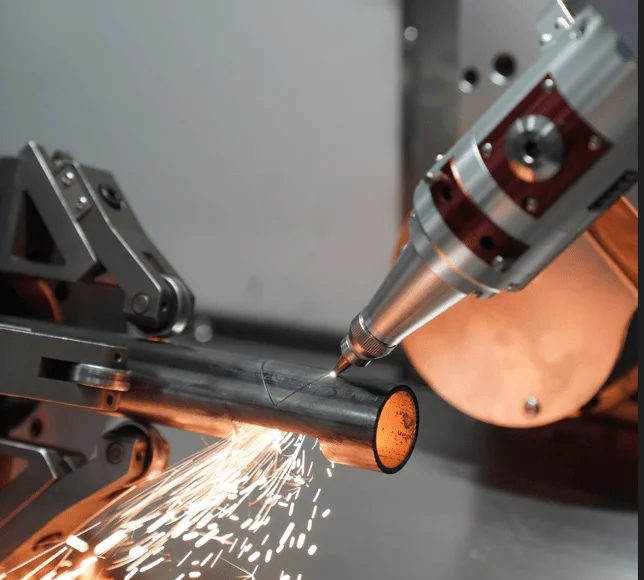
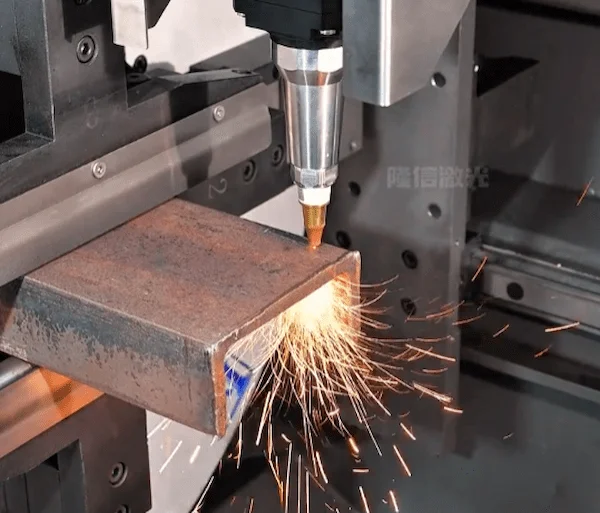
- Laser Cutting Equipment: With the capability to produce fine, precise cuts and minimal heat-affected zones, tube lasers are integral to advanced laser cutting systems used in diverse manufacturing processes.
-
Research and Precision Measurement
- Spectroscopy and Interferometry: The high coherence of tube lasers makes them ideal for detailed spectral analysis and interferometric measurements, capturing even minute displacements and vibrations.
- Laser Diagnostics: Used in environmental monitoring, fluid dynamics, and materials science, tube lasers facilitate high-precision measurements and imaging.
-
Medical and Biotechnology
- High-Resolution Imaging: Tube lasers serve as a stable light source in medical imaging equipment, such as endoscopes and microscopes.
- Minimally Invasive Surgery: Their precision allows for delicate surgical procedures, reducing damage to surrounding tissues and enabling therapies like photodynamic treatment.
-
Communication and Display
- Fiber-Optic Communication: Tube lasers provide the stable and coherent light necessary for high-speed data transmission over long distances.
- Laser Display Technologies: They are also used in holographic projection, laser televisions, and other advanced display systems to deliver high-brightness, high-contrast images.
6. Latest Technological Advances and Innovation Trends
6.1 New Materials and Processing Technologies
Emerging laser gain mediums and advanced optical coatings have significantly enhanced tube laser performance. Innovations in manufacturing techniques continue to improve damage thresholds and overall durability.
6.2 Pulsed Laser and Modulation Techniques
Advances in pulsed laser technology, including ultrafast pulses (in the nanosecond to picosecond range), enable tube lasers to meet the demands of precision micromachining and cutting-edge research.
6.3 Intelligent and Automated Control Systems
Integration of sensors, real-time monitoring, and automated feedback systems allows tube lasers to adjust parameters on the fly, ensuring optimal performance even in dynamic operating environments.
7. Safety, Maintenance, and Operation Guidelines
7.1 Safety Standards for Operation
Operating high-power laser systems necessitates strict adherence to safety standards (such as IEC 60825). Protective eyewear, proper shielding, and interlock systems are essential for safeguarding operators.
7.2 Regular Maintenance and Fault Diagnosis
Routine checks on output power, temperature, and beam quality help maintain performance. Regular cleaning of optical components and systematic diagnostics are key to minimizing downtime.
7.3 Troubleshooting and Emergency Procedures
Establishing clear emergency shutdown procedures and modular troubleshooting steps ensures rapid fault isolation and repair, minimizing risks and operational interruptions.
8. Market Status and Future Outlook
8.1 Market Scale and Competitive Landscape
The global tube laser market is experiencing steady growth, driven by increasing demand for high-precision manufacturing and advanced research applications. Leading manufacturers are continuously innovating to maintain competitive advantages.
8.2 Policy Environment and Standardization
Government initiatives and stringent safety regulations play a pivotal role in shaping the tube laser industry. Standardized certification processes ensure product quality and reliability, fostering broader market acceptance.
8.3 Future Trends and Technical Challenges
Looking ahead, tube lasers are expected to evolve towards even greater efficiency, smart control integration, and cross-disciplinary applications (such as quantum communications and biophotonics). Key challenges include managing higher power outputs, further improving thermal management, and reducing system complexity.
9. Conclusion and Outlook
9.1 Summary of Key Points
This guide has provided an in-depth exploration of tube lasers—from their fundamental operating principles and technical advantages to their diverse application fields. We examined how tube lasers compare with other laser types and highlighted their role in precision industrial processes, research, medical applications, and communication systems.
9.2 Future Development Recommendations
- Research & Innovation: Continued advancement in materials and laser design will enhance efficiency and longevity.
- Market Expansion: Standardization and cross-industry collaboration will drive broader adoption of tube lasers.
- Safety & Training: Ongoing emphasis on safety protocols and operator training remains critical for reliable and secure operation.
9.3 References and Further Reading
For a deeper understanding, readers are encouraged to consult specialized journals, technical white papers, and international standards on laser technology.
10. Appendix
10.1 Glossary of Terms
- Stimulated Emission: The process by which an excited particle, when stimulated by an external photon, emits a new photon that matches the stimulating photon in phase, frequency, and direction.
- Resonant Cavity: An optical cavity formed by reflective surfaces, essential for amplifying light within a laser system.
- TEM00 Mode: The fundamental transverse mode of a laser, characterized by a Gaussian beam profile with high beam quality and uniform intensity distribution.