Quick answer
Yes — glass can be laser cut, but success depends on the glass type, the laser (ultrafast pulsed—picosecond or femtosecond—or short-wavelength pulsed lasers), fixturing, and often auxiliary methods (e.g., water-assisted cutting or mechanical cleaving). Desktop CO₂ or CW lasers are generally limited to etching and engraving, not high-quality structural cutting.
1. Which laser types can cut glass — and why
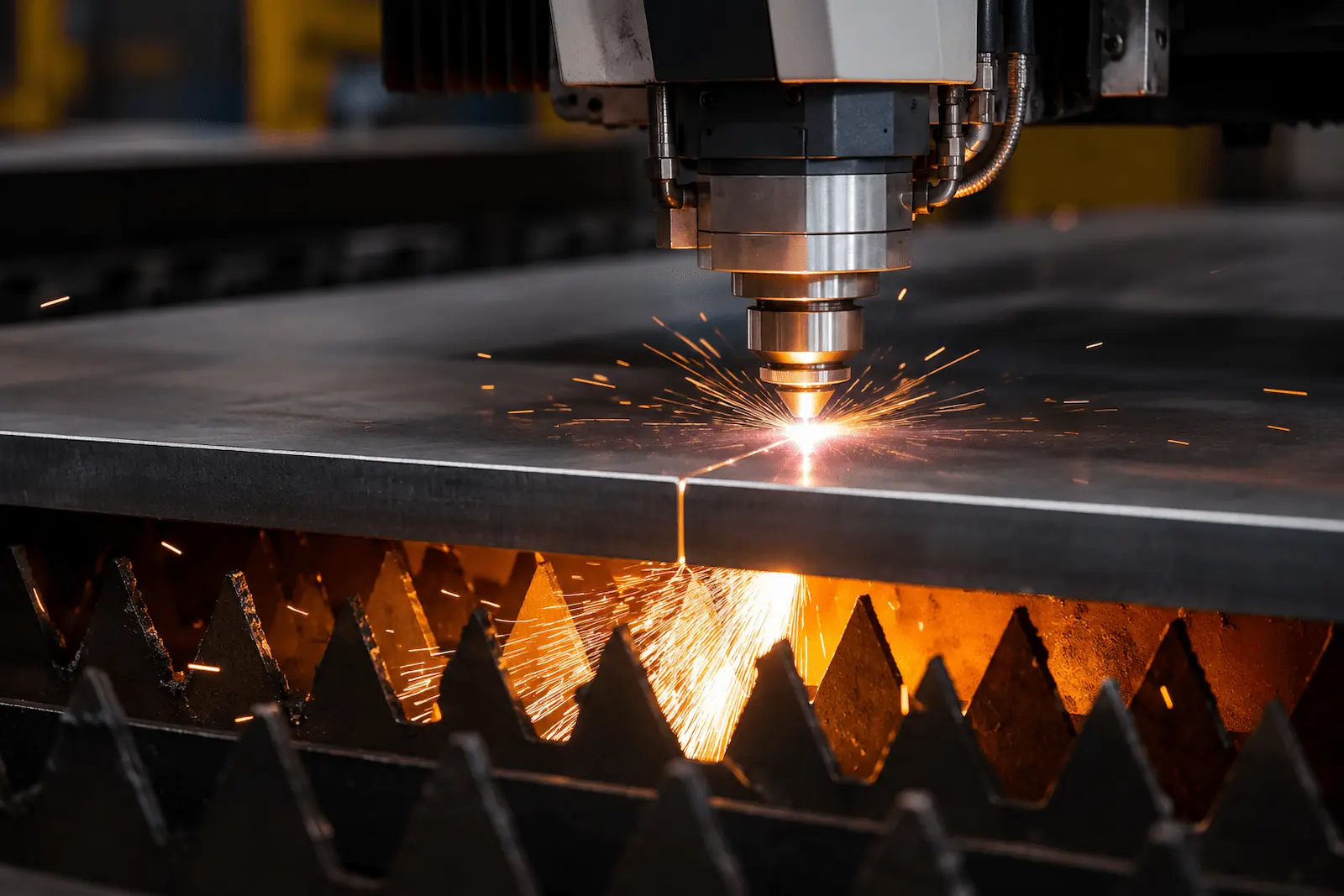
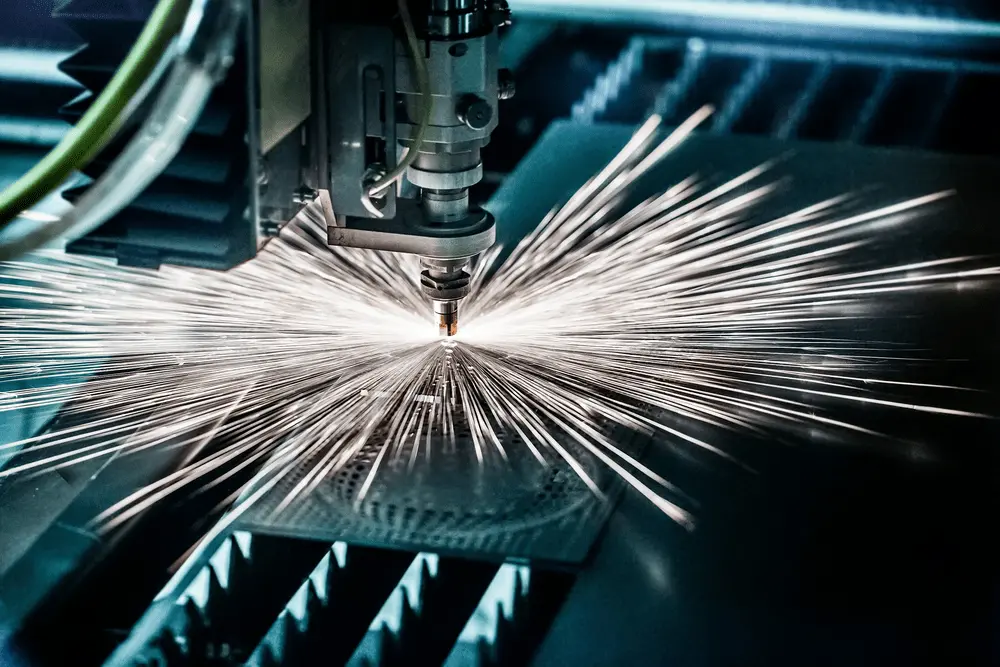
- Ultrafast pulsed lasers (ps / fs): The industry standard for high-quality glass separation. Extremely short pulses create high peak power that drives nonlinear absorption and localized micro-damage (microvoids or modified zones) with minimal heat-affected zone (HAZ). This enables precision separation with low edge roughness and preserved mechanical strength.
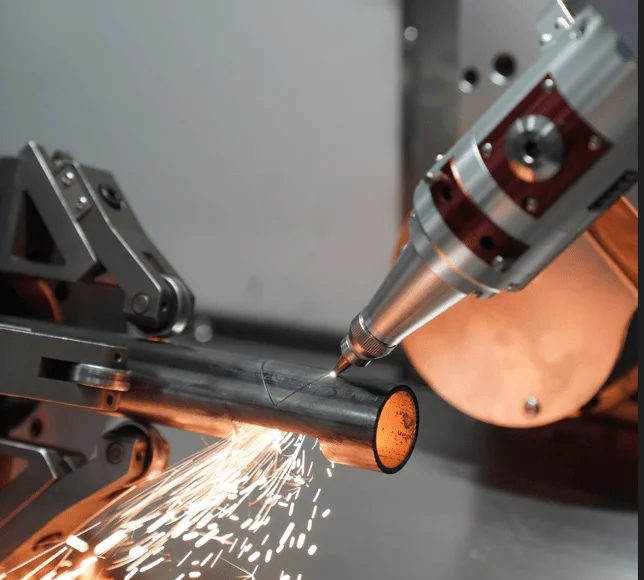
- Short-wavelength pulsed lasers (UV / green): Wavelengths such as 355 nm or 532 nm increase absorption in many glass types. They are commonly used for thin-sheet micro-cutting, high-precision holes, and decorative through-holes where controlled ablation is required.
- CO₂ / continuous-wave lasers: Useful for engraving, etching, and decorative removal of material on glass surfaces, but poor choice for structural cutting due to large thermal stress, micro-cracking, and melt/residue.
2. What machines to use (machine types)
- Industrial ultrafast pulsed laser platforms (ps / fs) with high-stability optics, power amplifiers, and precision motion stages or galvanometer scanners.
- UV/short-wavelength micro-machining systems (355 nm pulsed) with small focal spots and multi-pass control for thin-glass work.
- Water- or fluid-assisted laser platforms that combine laser optics with a thin liquid layer or immersion tank to reduce thermal stress and improve cut quality.
Note: These are industrial-class systems — not hobbyist desktop cutters. For production-grade, repeatable edge strength and yield, use an industrial partner or supplier.
3. Which types of glass can be laser cut
| Glass type | Can it be laser cut? | Ghi chú |
|---|---|---|
| Soda-lime (common window glass) | Yes | Thin to moderate thickness, typically with UV or ps/fs depending on finish requirements. |
| Borosilicate | Yes | More thermally stable; suitable for labware and some precision parts using ps/fs or water-assisted methods. |
| Aluminosilicate (e.g. some strengthened glasses) | Yes (with specific processes) | Display/cover glasses (e.g., chemically strengthened) can be cut with ultrafast lasers plus micro-perforation strategies. |
| Fused silica / quartz | Yes | High purity optical glass commonly processed with ultrafast or UV systems. |
| Tempered (heat-strengthened) glass | No (practically not recommended) | Internal residual stresses will cause catastrophic fracture if locally modified. Standard practice: cut before tempering. |
| Coated or stained glass | Conditional | Coatings change absorption and may require process validation. |
4. How thick can you laser cut glass?
- High-quality cuts are commonly demonstrated in the ~0.1–1.0 mm range (thin substrates and display glass). Many lab and industrial reports focus on 0.1–0.6 mm for best edge finish.
- With specialized setups (micro-perforation + mechanical separation or Bessel-beam strategies) some industrial systems can process 1–3 mm while maintaining acceptable edge quality, but this depends strongly on glass type, fixture, and processing environment.
5. Advantages and limitations
Ưu điểm
- Non-contact: no tool wear and minimal mechanical stress.
- High geometric freedom: inner holes, complex contours, and fine features without tooling.
- Ultrafast lasers can produce low-HAZ edges suitable for high-strength applications.
Hạn chế
- Capital and operating costs are high for ultrafast laser systems.
- Throughput for thick parts can be lower vs. waterjet or mechanical sawing for low-cost, high-volume needs.
- Tempered glass cannot be safely processed after tempering.
6. How to laser cut glass — practical steps
- Material identification: Confirm glass chemistry, thickness, whether tempered, and presence of coatings.
- Choose laser and optics: For structural cuts on strengthened glass, prioritize ps/fs systems; for thin or decorative work, UV/green pulsed lasers may suffice.
- Fixturing and support: Use uniform support (vacuum tables or soft supports) to avoid point-load stresses. Minimize clamping-induced stress.
- Auxiliary media: Consider water-film, immersion, or gas flows to control debris and thermal stress for improved edge quality.
- Process strategy: Commonly: micro-perforation (internal modification) → controlled mechanical separation (cleave) or multi-pass surface ablation depending on the application.
- Post-process inspection: Edge roughness measurement, crack inspection (e.g., dye-penetrant or visual), and mechanical strength tests (e.g., bending/edge-strength tests).
7. Methods compared (concise table)
| Method | Typical laser | Mechanism | Typical uses |
| Internal micro-perforation (stealth dicing) | ps / fs, Bessel/filament beams | Create subsurface voids or modified plane; external force separates the part | Display glass, high-precision optics |
| Surface ablation / multi-pass | UV / short-pulse | Layer-by-layer removal of material | Thin-sheet parts, decorative cuts |
| Thermal cracking propagation | High-energy pulses + mechanical | Laser induces crack path that is propagated by mechanical means | Research/limited industrial use for thicker plates |
8. Real-world examples and references
- Display glass manufacturing: Ultrafast laser-based methods are in use for cutting chemically strengthened cover glass (display industry). The approach reliably reduces edge damage compared with thermal methods.
- Research demonstrations: Laboratory studies show femtosecond filamentation and ps micro-perforation can cut Gorilla®-type glass and fused silica with good edge quality, often in combination with immersion or water-film techniques.
- Service providers: Some contract manufacturers and online quoting platforms list glass laser cutting in their capabilities — useful for prototyping and low-volume production where purchasing industrial equipment is not justified.
References & Further Reading
-
Corning — Laser glass cutting technologies & industrial applications
-
Edgaras Markauskas et al. — Efficient water-assisted glass cutting with 355 nm picosecond laser (Research article on water-assisted effects)
-
MDPI (2023) — Gorilla Glass cutting using femtosecond laser filamentation (Research on display glass with femtosecond technology)
-
Spectra-Physics (Technical White Paper) — UV 355 nm and short-pulse applications in practical glass processing