경영 요약: 전략적 빠른 참조
글로벌 제조업이 3D 프린팅의 “이유”에서 산업 통합의 “방법”으로 전환함에 따라, 올바른 레이저 엔진을 선택하는 것이 전체 생산 라인의 실현 가능성을 결정합니다. 이 가이드는 성능, 비용, 전략적 ROI의 관점에서 다섯 가지 주요 레이저 기술을 분석합니다.
| 레이저 유형 | 주요 응용 분야 | 핵심 장점 | 전략적 한계 |
|---|---|---|---|
| 섬유 | 금속 SLM | 최고 상대 밀도; 성숙한 생태계. | 높은 열 응력; 복잡한 후처리. |
| 이산화탄소 | 폴리머 SLS | 서포트 없는 형상; 재료 다양성. | UV보다 낮은 정밀도/표면 품질. |
| UV | 레진 SLA | 우수한 해상도와 표면 품질. | 제한된 재료 강도와 내열성. |
| Nd:YAG | 금속 클래딩/AM | 특정 금속 흡수; 고체 상태 안정성. | 최신 파이버 시스템보다 낮은 효율. |
| 다이오드/펄스 IR | 면적 프린팅 | 대규모; 비용/생산성 분리. | 고정 25 µm 층 두께; 신흥 기술. |
서론: 현대 산업에서 레이저의 전략적 역할
현재의 “Industry 4.0” 환경에서 레이저 기술은 전문 실험실 장비에서 고정밀 제조의 필수 기반으로 성숙했습니다. 레이저는 더 이상 단순한 절단 도구가 아닙니다. 전통적인 주조나 단조로는 재현할 수 없는 복잡한 형상을 생성할 수 있는 고에너지 설계자입니다.
이 가이드는 재료 과학과 포토닉스에 대한 깊은 전문성을 활용하여 다섯 가지 핵심 레이저 유형(파이버, CO₂, UV, Nd:YAG, 다이오드/펄스 IR)을 이해하기 쉽게 설명합니다. 전자빔 용융(EBM)과 같은 다른 에너지원은 진공 환경에서 고열, 취성 재료를 위한 주류 공정을 대표하지만, 레이저 기반 시스템은 다용성과 대기 유연성 덕분에 글로벌 AM 시장에서 지배적인 힘으로 남아 있습니다.
파이버 레이저: 고정밀 금속 전문가
파이버 레이저는 현재 금속 적층 제조(AM) 분야에서 전략적 우위를 점하고 있으며, 주로 선택적 레이저 용융(SLM)의 엔진으로 사용됩니다. 이들의 시장 위치는 상당한 소프트웨어 및 기계적 성숙도에 의해 뒷받침되어, 중요한 항공우주 및 의료 하드웨어의 “황금 표준”으로 자리 잡고 있습니다.
생성 원리
수정: 파이버 레이저는 약 1.06-1.07 µm(일반적으로 1040 nm 또는 1064 nm)의 파장에서 작동하며, 때때로 인용되는 1.09 µm가 아닙니다. AM에 사용되는 최신 파이버 레이저는 일반적으로 950-980 nm에서 다이오드 레이저로 펌핑되는 이테르븀 도핑(Yb) 파이버 레이저입니다. 이러한 시스템은 높은 전기-광 변환 효율(약 25%)과 기본 모드(TEM00)에 근접한 빔 모드로 높이 평가됩니다. SLM 구성에서 레이저는 빔 확장기와 F-θ 집속 렌즈를 포함한 정교한 광학 체인을 통해 유도되어 금속 분말 베드를 정밀하게 용융합니다.
“그래서 뭐?” 레이어: 전략적 가치
06-1.07 µm 파장은 티타늄, 스테인리스강, 니켈 합금과 같은 산업용 금속의 높은 흡수율에 특별히 최적화되어 있습니다. 이 에너지를 매우 미세한 스팟에 집중함으로써 파이버 레이저는 100%에 근접하는 상대 밀도를 달성합니다. 이러한 야금학적 무결성 덕분에 인쇄된 부품은 단조 부품에 필적하는 기계적 성능 수준에 도달할 수 있으며, 전통적인 주조를 훨씬 능가합니다.
산업 사용 및 응용 시나리오
- 항공우주: 고하중 구조 부품 및 터빈 구성 요소.
- 의료: 복잡한 다공성 구조를 가진 환자 맞춤형 정형외과 임플란트.
- 전자: 특수 방열판 및 전도성 하우징.
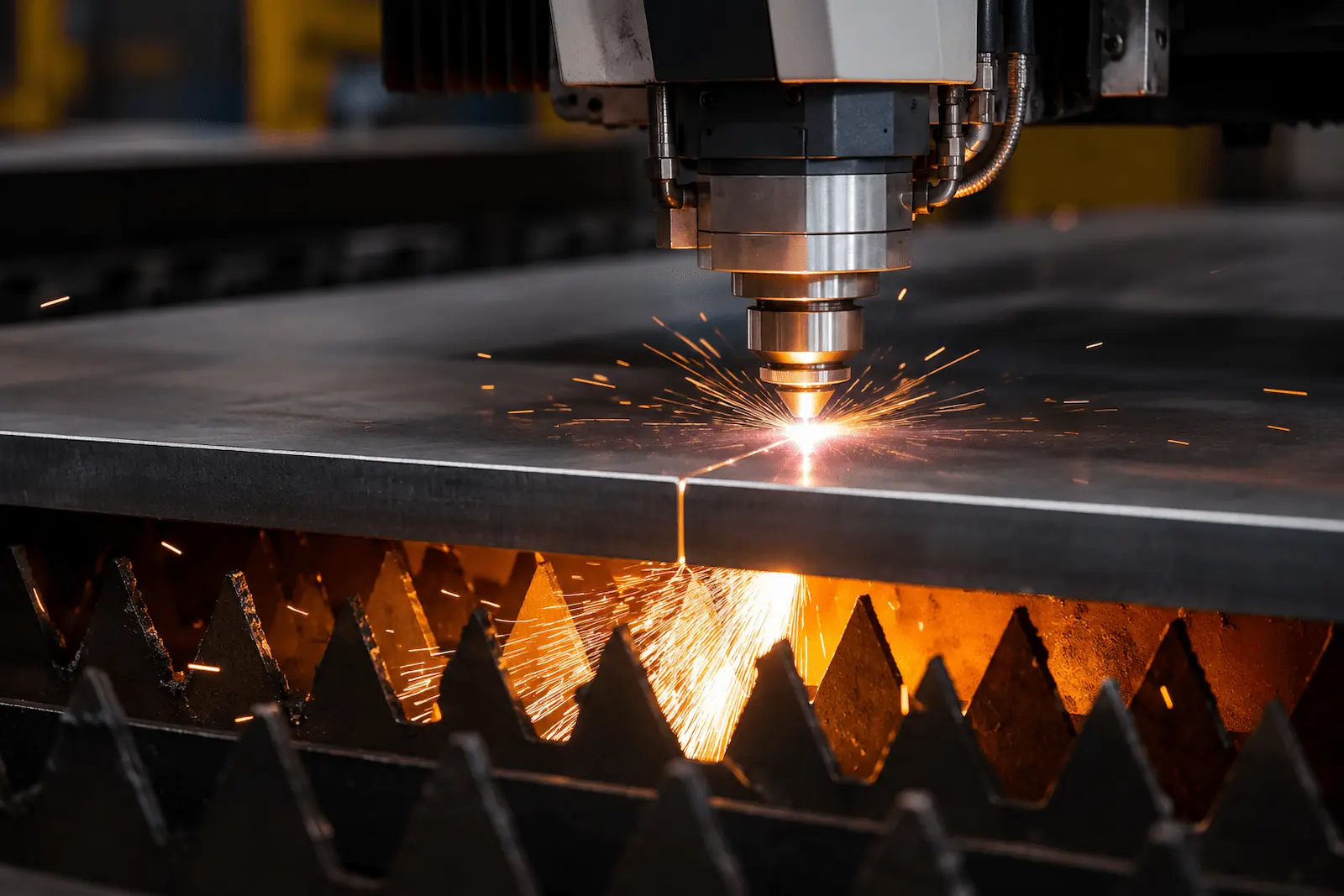
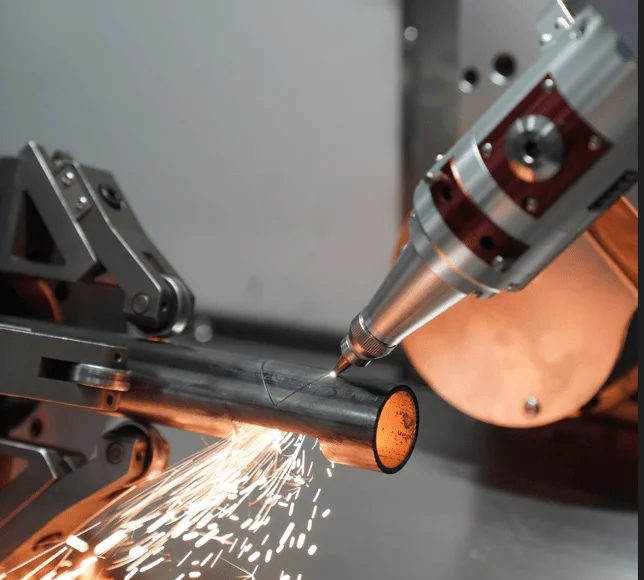
- 제조: 적층 제조 외에도 파이버 레이저는 고정밀 파이버 레이저 절단기 금속 판재 가공 및 산업 부품 생산을 위한.
선택적 레이저 용융(SLM)은 현재 가장 성숙한 금속 AM 공정입니다. 그 장점은 기능성 부품의 “직접 전달”에 있습니다. 그러나 컨설턴트는 후처리를 고려해야 합니다: 부품은 일반적으로 빌드 플레이트에 용접되며 제거를 위해 와이어 EDM 또는 CNC 밀링이 필요하여 총 소유 비용에 추가됩니다.
CO₂ 레이저: 비금속을 위한 다용도 설계자
파이버 레이저가 금속 분야를 차지하는 동안, CO₂ 레이저는 비금속 산업 가공, 특히 선택적 레이저 소결(SLS)의 기반으로 남아 있습니다.
생성 원리
CO₂ 레이저는 10.6 µm 파장에서 작동하는 가스 기반 시스템입니다(특정 재료에 대해 9.3 µm 및 9.6 µm의 대체 파장 사용 가능). 레이저는 예열된 분말 베드를 스캔합니다. 완전한 용융보다는 레이저가 정밀한 컴퓨터 제어 하에 폴리머와 세라믹을 “소결”하거나 분자적으로 결합하는 데 필요한 열 에너지를 제공합니다.
주요 차별화 요소: 경쟁 환경
CO₂ 레이저는 나일론(PA12) 및 특수 폴리머를 포함한 더 넓은 범위의 기능성 재료를 가능하게 합니다. 금속 기반 시스템과 달리 SLS는 소결되지 않은 분말 베드를 자연 서포트로 활용합니다. 이는 빌드 중 부품에 자연적인 부력과 안정화를 제공하여 “서포트 없는” 형상을 가능하게 합니다.
산업 사용 및 응용 시나리오
- 자동차: 덕팅, 매니폴드 및 고내구성 기능성 내부 구성 요소.
- 프로토타이핑: 서포트 제거 없이 복잡한 기하학적 모델의 빠른 반복.
- 소비재: 고강도, 환경 저항성 최종 사용 부품.
CO₂ SLS 공정에서 필요한 서포트 구조가 없다는 점은 후처리 인건비를 크게 줄이고 빌드 챔버 내 더 높은 “네스팅” 밀도를 허용하여 사이클당 처리량을 극대화합니다.
자외선(UV) 레이저: 고해상도 중합의 대가
UV 레이저는 표면 미학과 치수 정밀도가 주요 KPI인 응용 분야를 위한 전략적 선택이며, 광조형(SLA)의 에너지원으로 사용됩니다.
생성 원리
UV lasers utilize high-frequency ultraviolet light (typically 355 nm or 405 nm wavelengths) to trigger photopolymerization. As the laser scans the surface of a liquid photosensitive resin, it causes a localized chemical reaction that solidifies the liquid into a solid polymer layer-by-layer.
The “So What?” Layer: Precision vs. Strength
The short wavelength of UV light allows for a smaller focal point, making it the industry benchmark for resolution. While UV-cured resins typically lack the mechanical strength or heat resistance of metals or SLS polymers, they offer a surface finish that is often assembly-ready without aggressive sanding.
Strategic Comparison: SLA (UV) vs. SLM (Fiber)
| 기능 | SLA (UV Laser) | SLM (Fiber Laser) |
|---|---|---|
| Surface Quality | Superior / Smooth | Medium (Grainy) |
| 소재의 다용도성 | Limited (Photosensitive resins) | High (Various Metals/Alloys) |
| Part Size Capability | Small to Medium | Small to Large |
| 후처리 | Washing and UV Curing | Stress relief, EDM removal, Grinding |
| Mechanical Integrity | Brittle; low heat resistance | High; comparable to forged parts |
For dental models and high-precision injection molds, the UV laser’s ability to eliminate visible “layer lines” reduces secondary finishing costs, justifying the higher cost of resin consumables.
5. Nd:YAG Lasers: The Solid-State Foundation
The Nd:YAG (Neodymium-doped Yttrium Aluminum Garnet) laser is a traditional solid-state pillar that continues to play a role in specialized direct metal forming.
생성 원리
Nd:YAG lasers operate at a 1.064 µm wavelength (1064 nm). Although they share similar wavelengths with some Fiber lasers, the generation of the beam through a solid-state crystal provides a different stability profile and power delivery characteristic. The laser uses a neodymium-doped YAG crystal as the gain medium, pumped by flashlamps or diode lasers.
Evaluate the Impact
Historically, Nd:YAG was the primary heat source for early SLM systems. Today, while Fiber lasers have captured the majority of the AM market due to higher efficiency (fiber lasers achieve ~25% wall-plug efficiency vs. ~2% for lamp-pumped Nd:YAG), Nd:YAG remains relevant in Laser Cladding and heavy industrial repair applications where its specific absorption profile is preferred for building up material on existing large-scale components.
6. Diode & Pulsed IR Lasers: The Disruptor of Scaled Production
The emergence of “Area 3D Printing,” pioneered by companies like Seurat Technologies, represents a strategic pivot from single-point scanning to mass-scale production.
Generation Principle: The OALV Mechanism
This technology utilizes a modular pulsed infrared (IR) laser source combined with an Optically Addressable Light Valve (OALV). The system contains over 2.3 million individually addressable pixels. The process follows a specific four-step polarization sequence:
- Beam Shaping: The pulsed IR laser is shaped into a uniform square field (approximately 15×15 mm).
- Pattern Projection: A blue light projector overlays the part’s geometry (over 2.3 million pixels) onto the IR field.
- Polarization Control: The OALV changes the polarization of the IR beam: IR light overlapping with blue light pixels becomes horizontally polarized, while non-overlapping light becomes vertically polarized.
- Selective Melting: A polarizing mirror splits the beams, directing only the patterned (horizontally polarized) IR light to the powder bed to melt the entire area in one pulse.
The “So What?” Layer: Breaking the Cost Barrier
This “masking” approach allows for power levels 10-150x higher than a single laser system. Crucially, it decouples build rate from hardware cost. In traditional systems, doubling speed requires doubling the expensive laser heads; in Area Printing, speed is scaled by increasing the pulse frequency and energy density.
Scaling Roadmap & Milestones
NOTE: The following projections are company claims and should be viewed as targets rather than verified achievements:
- Current (Gen 1): Claimed manufacturing costs at lower rates than traditional AM.
- Future Generations: Company projections suggest significant cost reductions and speed improvements in coming years.
Unlike SLM, Area Printing introduces new constraints: pulse energy control, pattern size limitations, and a fixed layer thickness of 25 µm.
7. Conclusion: Choosing the Right Laser for the Future
The five types of lasers—Fiber, CO₂, UV, Nd:YAG, and Diode/Pulsed IR—constitute a complete toolkit for modern manufacturing. Strategic selection should be guided by key Selection Principles:
- Usage Requirements: Determine if the end-goal is a non-functional prototype (SLA/UV) or a high-load final component (SLM/Fiber).
- Material Quality: Assess the required relative density. Metals require Fiber or Nd:YAG; polymers utilize CO₂.
- Procurement & External Environment: Consider the total cost of ownership, including the specialized labor required for SLM vs. the simplified workflow of SLS.
- Post-Processing Costs: Factor in the “hidden” costs of support removal, thermal stress relief, and surface grinding, which can often exceed the cost of the print itself.
As the industry moves toward 2030, the shift to Area Printing and other emerging technologies suggests a future where additive manufacturing is no longer a niche prototyping tool, but potentially a primary mass-production technology.
For further technical standards on additive manufacturing processes, refer to the ISO/ASTM 52900 Standards.
자주 묻는 질문
1. What is the most widely used laser type in metal additive manufacturing?
Fiber lasers are currently the most widely used and mature laser technology for metal additive manufacturing, particularly in Laser Powder Bed Fusion for Metals (PBF-LB/M) systems.
They offer high energy efficiency, excellent beam quality, and stable melting behavior, enabling metal parts to achieve relative densities above 99.5% under optimized conditions.
2. Why are fiber lasers preferred over CO₂ lasers for metal 3D printing?
Fiber lasers operate at a wavelength (~1.07–1.09 μm) that is well absorbed by most industrial metals, such as steel, titanium, aluminum, and nickel alloys.
In contrast, CO₂ lasers (10.6 μm) are poorly absorbed by metals but highly effective for polymers, making them unsuitable for metal powder bed fusion.
3. Are CO₂ lasers still relevant in industrial additive manufacturing?
Yes. CO₂ lasers remain the industry standard for polymer powder bed fusion (PBF-LB/P).
They are widely used to process materials such as PA12 and PA11, offering support-free printing, high batch productivity, and stable performance for functional polymer parts.
4. What is the main advantage of CO₂-based SLS compared to metal PBF systems?
The key advantage is that no support structures are required.
Un-sintered powder naturally supports the part during printing, which reduces post-processing labor, lowers production costs, and allows higher nesting density within the build chamber.
5. Why do SLA systems use UV lasers instead of fiber or CO₂ lasers?
SLA and other vat photopolymerization processes rely on photopolymerization, which requires ultraviolet (UV) light to cure liquid resin.
UV lasers offer short wavelengths and small focal spots, enabling exceptional surface finish and dimensional accuracy that cannot be achieved with infrared lasers.
7. What is the difference between fiber lasers and Nd:YAG lasers in metal AM?
Both fiber and Nd:YAG lasers operate near a 1 μm wavelength and can process metals effectively.
However, fiber lasers offer higher efficiency, better beam quality, and lower maintenance, which is why they have largely replaced Nd:YAG lasers in modern metal powder bed fusion systems.
Nd:YAG lasers are now mainly used in directed energy deposition (DED) and repair applications.