مقدمة
أصبح القطع بالليزر حجر الزاوية في التصنيع الحديث، حيث يوفر الدقة والسرعة والمرونة لمجموعة واسعة من المواد. ومن بين الطرق الأكثر شيوعًا قطع أنبوب الليزر و القطع بالليزر المسطح, ، حيث تخدم كل منها أغراضًا مميزة في التطبيقات الصناعية. يتخصص القطع بالليزر للأنابيب في معالجة الأنابيب والمواسير والمقاطع بدقة عالية، بينما يتفوق القطع بالليزر المسطح في تشكيل مكونات الصفائح المعدنية.
تستكشف هذه المقالة الاختلافات الرئيسية بين هاتين التقنيتين، مما يساعدك على تحديد أيهما يناسب احتياجات الإنتاج لديك بشكل أفضل. سواء كنت تعمل مع الأنابيب الهيكلية أو الصفائح المعدنية المسطحة، فإن فهم نقاط القوة لديهما سيرشدك نحو الحل الصحيح.
ما هو القطع بالليزر للأنابيب؟
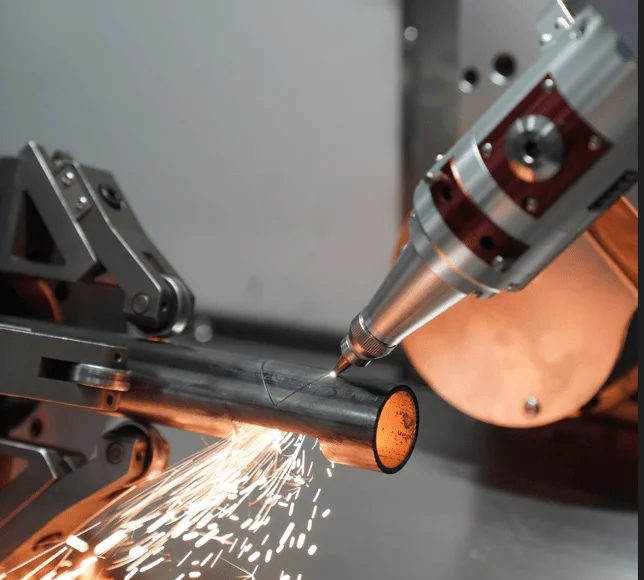
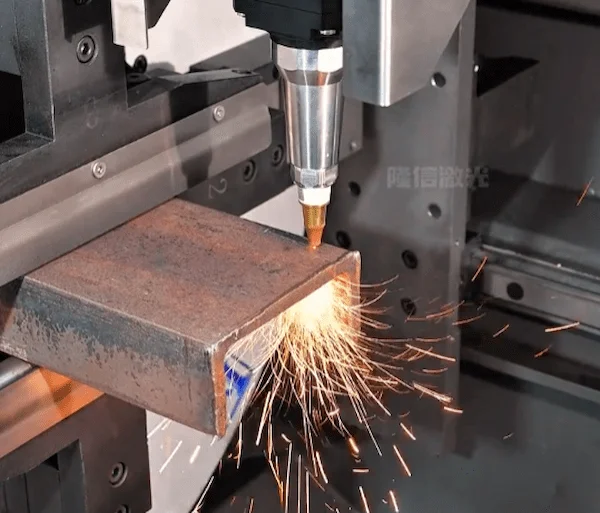
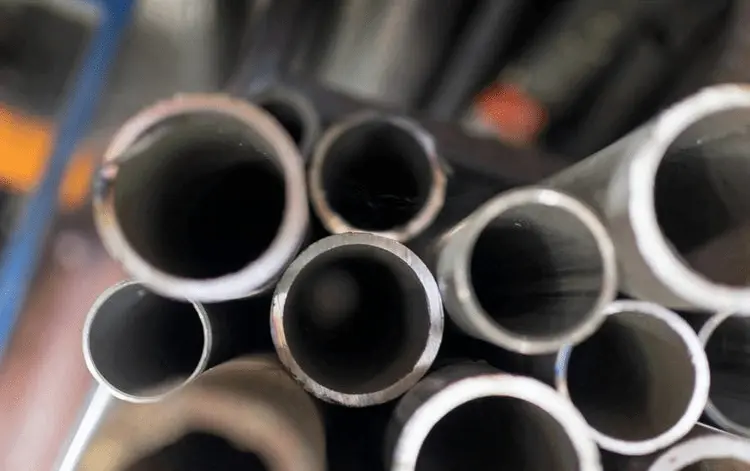
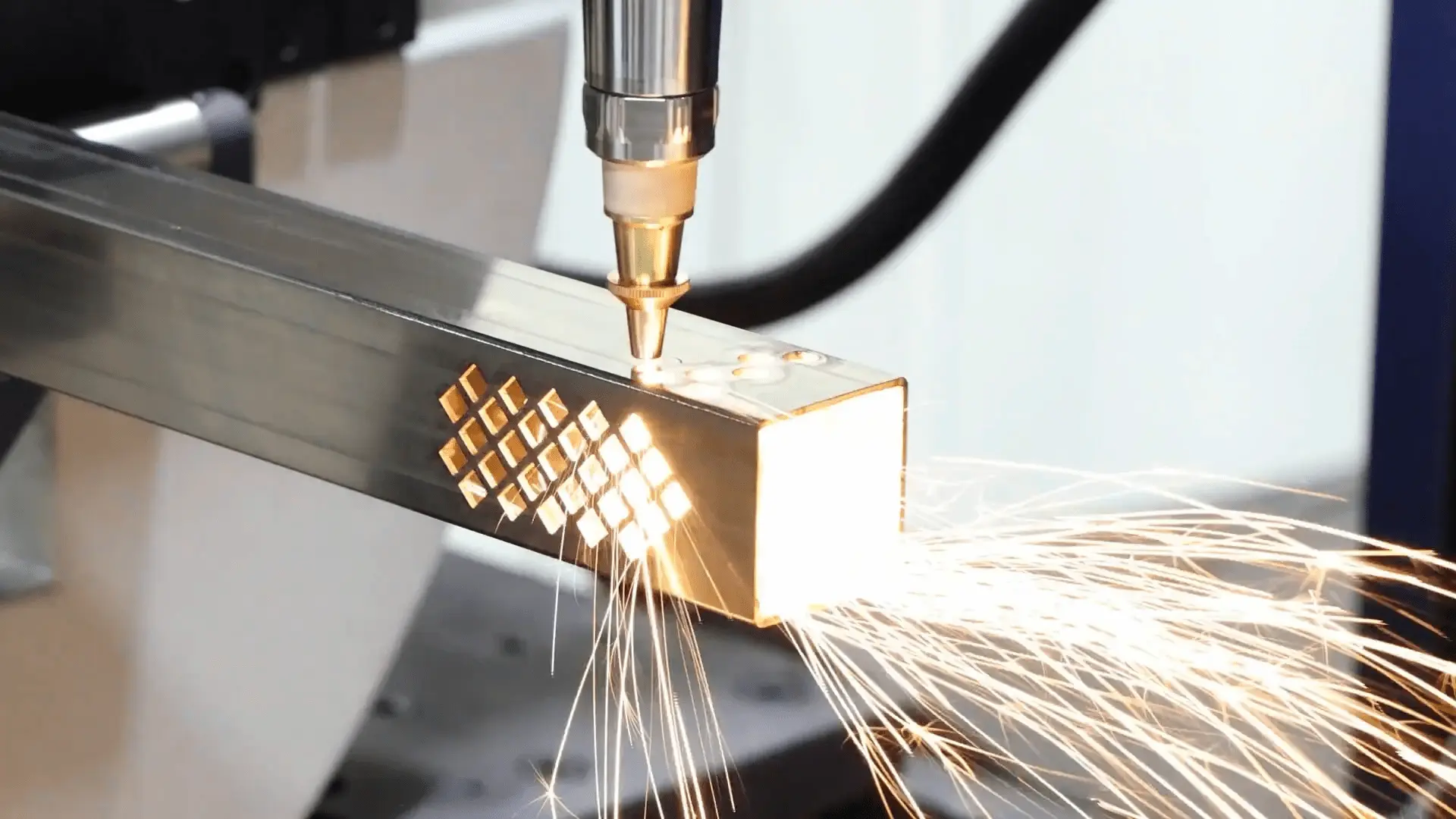
القطع بالليزر للأنابيب هو تقنية عالية الدقة تستخدم شعاع ليزر عالي الكثافة الطاقية لمعالجة الأنابيب المعدنية أو غير المعدنية. طُبق في الأصل في صناعات السيارات والفضاء، وقد توسع الآن ليشمل الهندسة المعمارية والأثاث وقطاعات أخرى.
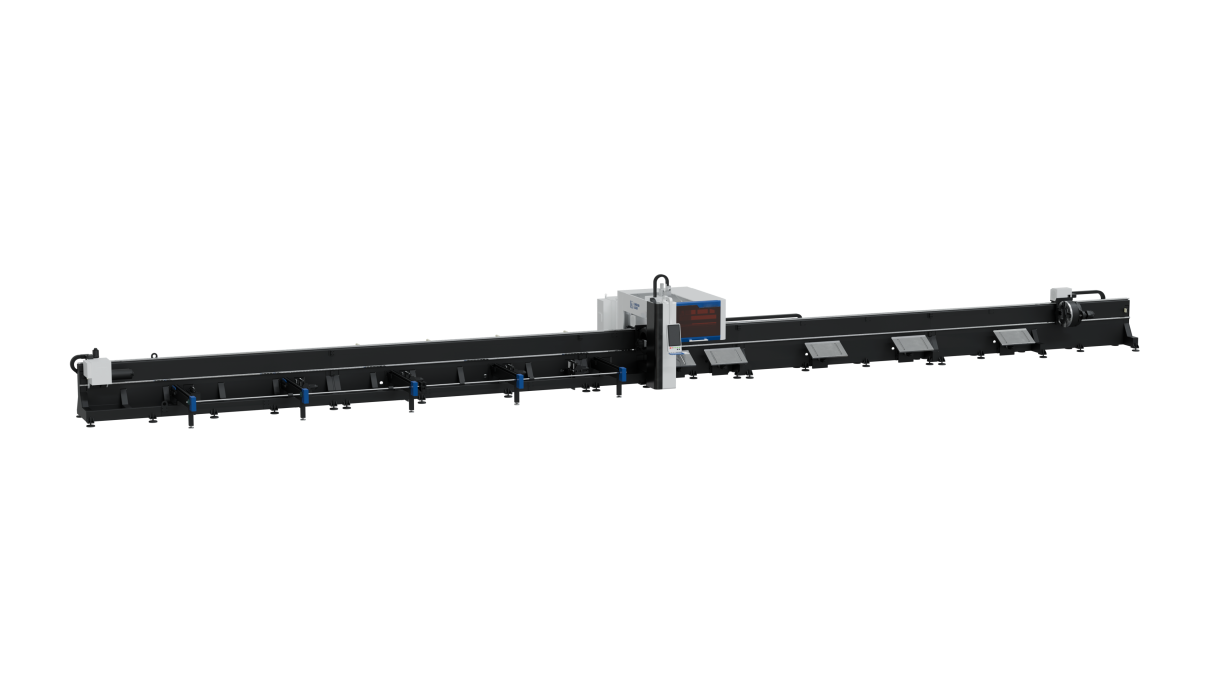
مع أنظمة التحكم الرقمي CNC التي تتحكم في حركة رأس الليزر على طول محور الأنبوب (المحور X)، والدوران (المحور A/B)، والاتجاه الرأسي (المحور Z)، يسمح القطع بالليزر للأنابيب بأشكال معقدة مثل الثقوب المشطوفة والحواف المائلة، ويدعم التحميل والتفريغ الآلي، مما يحسن كفاءة الإنتاج بشكل كبير.
(1) أنواع المواد التي يتعامل معها
- الأنابيب الدائرية والمربعة والمستطيلة (الفولاذ الكربوني، الفولاذ المقاوم للصدأ، سبائك الألومنيوم)
- المقاطع الخاصة (مثل المقاطع ذات الأشكال المخصصة، الأنابيب على شكل خصر)
- الأنابيب غير المعدنية (مثل PVC، الأنابيب البلاستيكية)
(2) الصناعات التي تستخدم عادة القطع بالليزر للأنابيب
- السيارات: المكونات الهيكلية، أنابيب العادم، أجزاء الهيكل
- الهندسة المعمارية والمنزل: الهياكل الفولاذية، الأبواب والنوافذ، إطارات الأثاث
- الآلات الهندسية: الأنابيب الهيدروليكية، معدات اللياقة البدنية
- الطاقة الجديدة والطب: مكونات الأنابيب الدقيقة
(3) الفوائد
- دقة عالية: دقة قطع تصل إلى ±0.05 مم، مناسبة للأشكال الهندسية المعقدة
- الأتمتة: أنظمة التحميل الآلي المتكاملة CNC والروبوتية تقلل العمليات اليدوية
- كفاءة عالية: أسرع من 8 إلى 20 مرة من الطرق التقليدية، مع توفير في المواد بنسبة 15% إلى 30%
- المرونة: قابلة للبرمجة للتبديل بين التصاميم بسرعة، مثالية للإنتاج المخصص بكميات صغيرة
ما هو القطع بالليزر المسطح؟
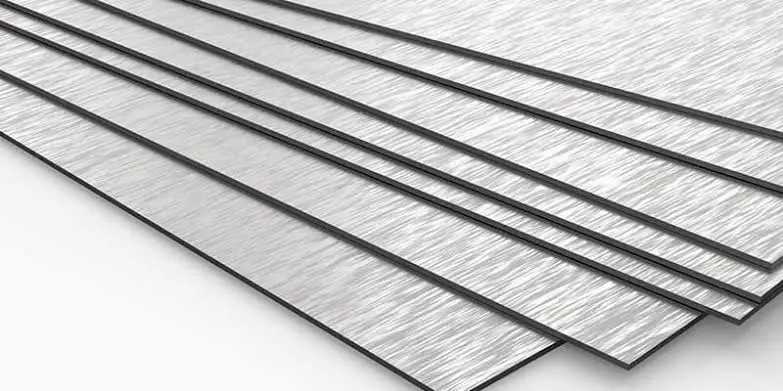
القطع بالليزر المسطح هو تقنية معالجة متقدمة تستخدم شعاع ليزر عالي الطاقة لقطع المواد المسطحة مثل الصفائح المعدنية بدقة. مع حركة مسار الليزر التي يتحكم فيها الكمبيوتر، يحقق نتائج عالية السرعة والدقة.
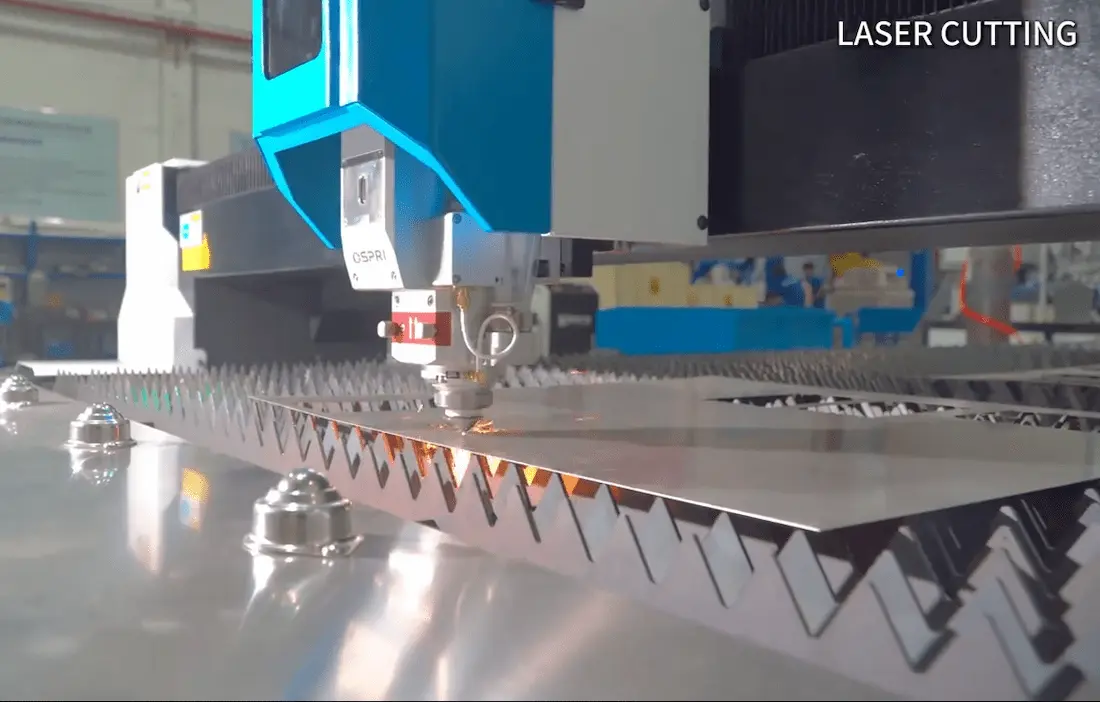
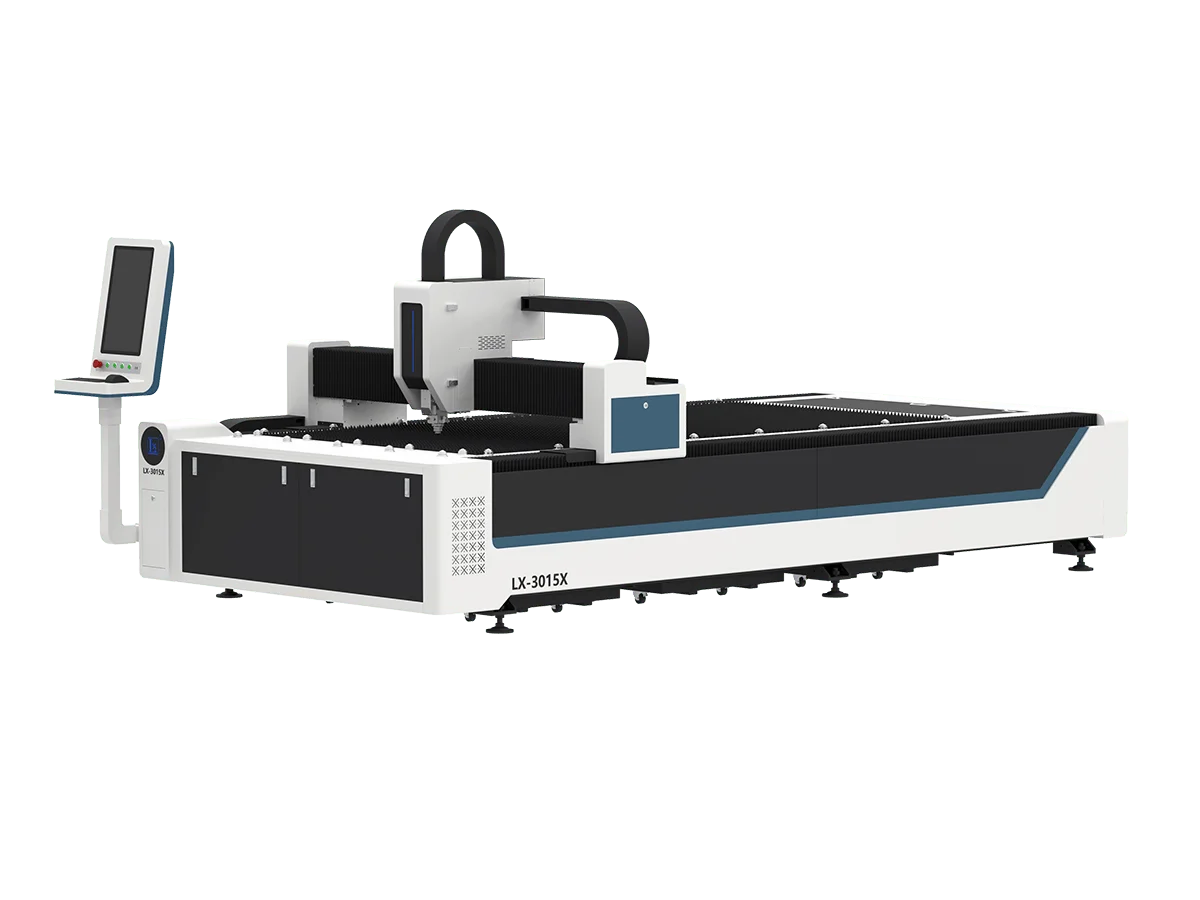
(1) المواد المناسبة
- المعادن: الفولاذ المقاوم للصدأ، الفولاذ الكربوني، الألومنيوم (حتى 50 مم مع ليزر الألياف)
- غير المعادن: الأكريليك، الخشب، البلاستيك، الزجاج، المواد المركبة (بشكل أساسي مع ليزر ثاني أكسيد الكربون)
- الصفائح الرقيقة: مثالية للإلكترونيات والاستخدامات الزخرفية بسبب عرض القطع الأدنى (عرض القطع ~0.15 مم)
(2) الصناعات المستخدمة على نطاق واسع
- السيارات: القطع الدقيق لألواح الهيكل، الهيكل السفلي، ومكونات العادم
- الأثاث والديكور: الألواح المخصصة للخزائن، اللافتات، والأنماط الفنية
- الإلكترونيات: لوحات الدوائر، الأغلفة، المشتتات الحرارية بدقة على مستوى الميكرون
(3) الفوائد
- معالجة سريعة: سرعات قطع تصل إلى 120 م/ساعة، أسرع بكثير من البلازما أو نفث الماء للصفائح الرقيقة
- دقة عالية: تفاوت ±0.05 مم، مثالي للأشكال المعقدة
- سهولة التداخل: يزيد من استخدام المواد، ويقلل النفايات بنسبة 15–30%
- متوافق مع الأتمتة: Integrates with CNC for lights-out production
Comparison Table: Tube Laser vs. Flat Laser Cutting
| الميزة | القطع بالليزر للأنابيب | Flat Laser Cutting |
|---|---|---|
| Suitable Workpiece | Round/square/rectangular/special-shaped tubes, profiles | Metal sheets, flat plates, non-metals like acrylic, wood |
| Processing Capability | 3D cuts (bevels, coped holes, slots), multi-angle operations | 2D cuts, nesting optimization |
| Material Flexibility | Diameter Ø20–300mm, thickness ≤25mm (carbon steel) | Thickness ≤50mm (fiber), CO₂ required for non-metals |
| الدقة | ±0.05–0.1mm, burr-free, minimal thermal deformation | ±0.05mm, narrow kerf (0.1–0.2mm), ideal for fine outlines |
| الأتمتة | Requires auto-feeding and rotating axes (A/B) | CNC tables, supports lights-out batch production |
| Equipment Cost | Higher (multi-axis movement, custom chucks), ~$32,000+ | Lower entry cost; high-power fiber models >$100,000 |
| Common Industries | Auto exhausts, construction steel, gym equipment | Appliances, signage, electronics |
When to Choose Tube Laser Cutting Over Flat Laser Cutting
The key distinction between tube and flat laser cutting lies in هندسة قطعة العمل و 3D processing capabilities. Choose tube laser cutting when:
(1) Project Requirements: Complex Geometry & Automation
- 3D Complex Cutting: Tube laser is ideal for cutting beveled ends, intersecting holes, and slots on tubes and profiles—useful for items like exhaust pipes or curved brackets on fitness equipment.
- Integrated Automation: Equipped with multi-axis systems (A/B axis + pneumatic chucks), tube laser machines support full automation from feeding to unloading.
- Use Cases: Construction node connections, bevel pipe repairs in oil & gas—traditionally requiring multiple steps now completed in one.
(2) ROI: Fewer Steps = Lower Costs
- Process Integration: Replaces sawing, drilling, and punching with a single machine—cutting labor and floor space by 75%.
- Material Savings: Smart nesting reduces waste by 15–30%, such as in scaffold tube production.
- Long-term ROI: Entry-level machines (~$32,000) can break even in 6–12 months due to 8–20× productivity gains.
(3) Product Examples
- Bicycle Frames: Precision cut joints and lightweight designs depend on tube laser’s surface cutting capabilities
- معدات اللياقة البدنية: Dumbbell rods, elliptical frames need angled cuts and slotting
- Scaffolding: Coping of square tubes for multi-angle connections
- الآخرين: Exhaust manifolds, stretcher frames, hydraulic pipes
Can One Machine Do Both? Hybrid Laser Cutting Solutions
Hybrid laser cutters (aka “ماكينات القطع بالليزر للصفائح والأنابيب“) combine flat and tube cutting functionality using high-power fiber lasers and multi-axis CNC systems (X/Y/Z + A/B rotation). These machines can clamp pipes or fix plates for versatile processing.
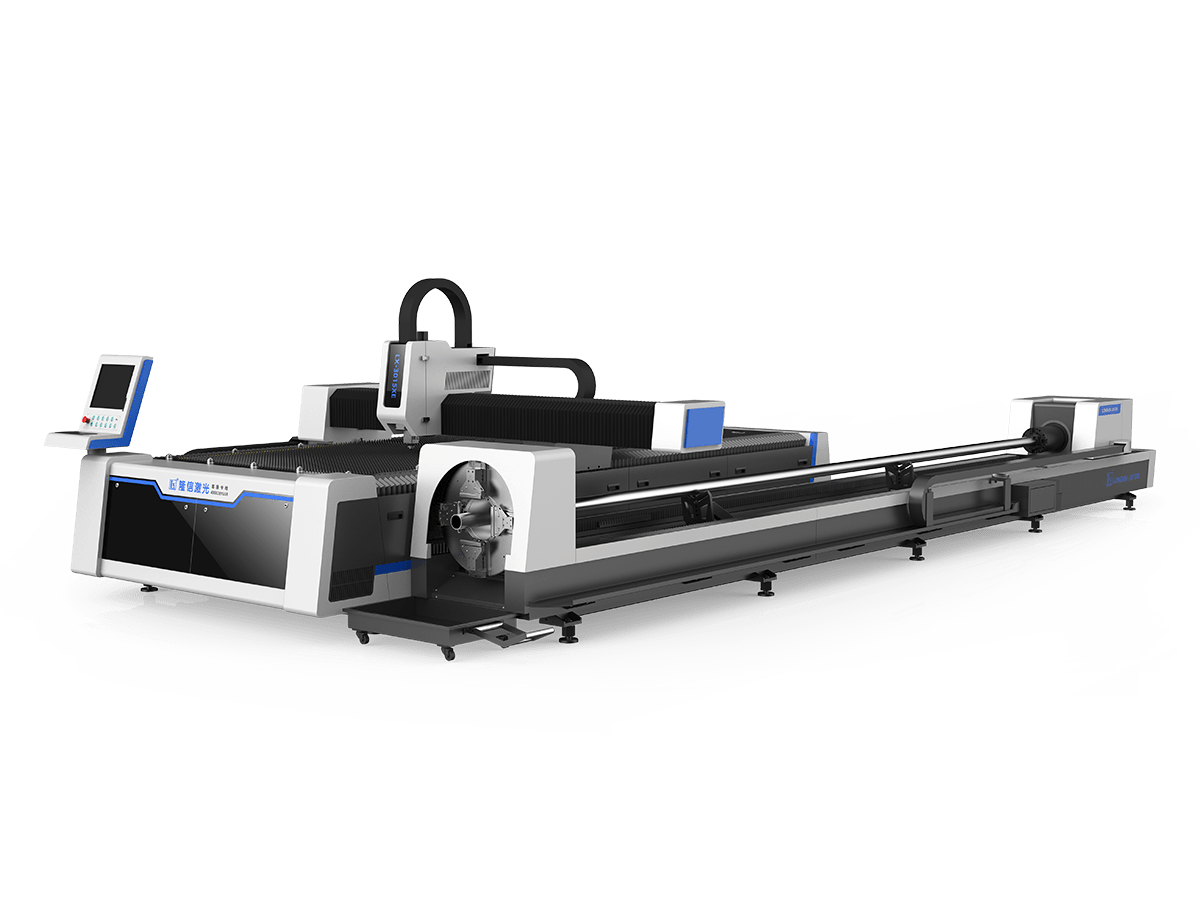
I. Advantages vs. Limitations
| البعد | المزايا | القيود |
|---|---|---|
| Functionality | Cuts sheets (carbon/stainless) and tubes (round/square/special) | Tube dia. limited (typically φ20–220mm); weak on thick sheets (>16mm steel) |
| Productivity | Dual-table auto-switching, seamless task shift | Requires manual fixture/parameter switch; slower than dedicated machines |
| Space & Cost | Saves 50% floor space; avoids dual equipment costs | High unit cost ($50K entry, >$100K high-end) |
| الدقة | ±0.05mm (sheets), ±0.1mm (tubes); smooth, burr-free cuts | Long tubes (>6m) sag, needing extra support |
Typical Use Cases:
- Best fit: Gym equipment (tubes + plates), custom furniture, auto parts
- Not ideal: Ultra-thick sheets (>20mm), large tubes (>300mm dia), micron-level electronics
II. Suitability for SMEs: Balancing Cost & Flexibility
Cost Efficiency:
- One hybrid = one tube cutter + one mid-power flatbed, but only ~60–70% of their combined cost
- Example: A sheet metal shop making casings + tubular frames can avoid outsourcing loss
Lower OPEX:
- Power usage is 20–30% of CO₂ machines
- Modular design simplifies maintenance; ~30% less cost than dedicated tools
Custom Orders:
- Switch jobs via software, no molds needed
- Intelligent nesting for both tubes and sheets = up to 85% material utilization
Caution: If >70% of your orders are tube- or sheet-only, dedicated machines offer better efficiency.
III. Cost Comparison: Hybrid vs. Dedicated Machines
| Cost Item | Hybrid Laser Machine | Tube + Flatbed (Separate) | Savings |
|---|---|---|---|
| Equipment | $50,000–$120,000 | $80,000 (tube) + $70,000 (flat) | 20–40% |
| Space | 15–20 m² | 25–35 m² | 40–50% |
| Operators | 1 person | 1 person each | 50% |
| Monthly Power | 800–1200 kWh | 1500–2000 kWh | 35–45% |
| Annual Maintenance | ~$5,000 | ~$8,000 | ~37.5% |
IV. When to Choose a Hybrid Machine
Scenario A: Both Sheets & Tubes in Custom Orders
- For furniture or medical equipment using mixed materials, hybrids save outsourcing cost and boost yield.
Scenario B: Large Volume or Specialized Production
- If you’re cutting >200 parts/day or >70% are sheet/tube only, dedicated machines work better.
Scenario C: Budget & Space Constraints
- Budget ≥ $50K, factory space ≥ 15㎡; hybrids save 40–50% space compared to two machines.
Scenario D: Return on Investment
- If you produce ≤5000 parts/year and orders are 30–70% tubes vs. sheets, ROI in 1–1.5 years via 50% labor savings.
Conclusion: How to Choose the Right Laser Cutting Method
The core difference lies in material type و geometric complexity. Use this quick-reference guide:
| Requirement | Recommended Method | Common Industry Examples |
|---|---|---|
| Tubes/profiles (round/square/etc) | القطع بالليزر للأنابيب | Auto exhausts, bicycle frames, steel joints |
| Complex 3D cutting (bevels, copes) | القطع بالليزر للأنابيب | Fitness brackets, hydraulic piping |
| Mass sheet cutting (flat parts) | Flat Laser Cutting | Appliance enclosures, signage |
| High-precision 2D cutting | Flat Laser Cutting | Electronics, metal decor |
| Mixed orders (tubes + plates) | Hybrid Laser Machine | Furniture, medical instruments |
Choose Tube Laser Cutting If:
- You process hollow tubes (metal/non-metal), esp. <300mm diameter
- You need complex bevels, intersecting holes, 3D geometries
- You need automation for >100 parts/day
Choose Flat Laser Cutting If:
- You primarily handle flat sheet metal, ≤20mm thick
- You prioritize speed and budget for thin materials
- You do not need tube-processing features
Choose Hybrid Machines If:
- You accept mixed-material orders (small to medium batches)
- You want to reduce space and maximize machine use
- You accept lower extreme-performance but want high flexibility
FAQs: Tube Laser Cutting
1. What materials can a tube laser cut?
- المعادن: Carbon steel, stainless steel (≤25mm wall), aluminum alloys, copper (requires fiber laser)
- غير المعادن: PVC, plastic (requires CO₂ laser)
- Profiles: I-beams, angles, elliptical tubes
- ⚠️ High-reflectivity materials (e.g., pure copper) need specific laser wavelengths
2. What precision is achievable with tube laser cutting?
- Standard: ±0.05–0.1mm, burr-free
- High-end: ±0.02mm for medical applications (with ultrashort pulse lasers)
- 💡 Tip: Larger diameters and uneven wall thickness reduce accuracy
3. Is tube laser cutting better than sawing?
| Factor | القطع بالليزر للأنابيب | Traditional Sawing |
|---|---|---|
| الكفاءة | 6m pipe in 2 min; 8–20× faster | Slow, manually fed |
| الدقة | ±0.1mm, no secondary finishing | ±1mm, requires grinding |
| Material Yield | Smart nesting saves 15–30% | Fixed spacing = higher waste |
| المرونة | Cuts, slots, bevels in one machine | Cutting only; drilling needs extras |
الختام: Laser cutting wins in nearly all but ultra-thick or low-cost scenarios.
4. Are maintenance costs high?
- Fiber models: ~$5,000/year
- Energy use: 25% of CO₂ laser
- Main consumables: lenses (6–12 mo), nozzles (1–3 mo)
5. Can it cut non-round tubes?
- Yes: square, rectangular, elliptical, and irregular profiles
- Requires adaptive chucks and multi-axis rotation systems