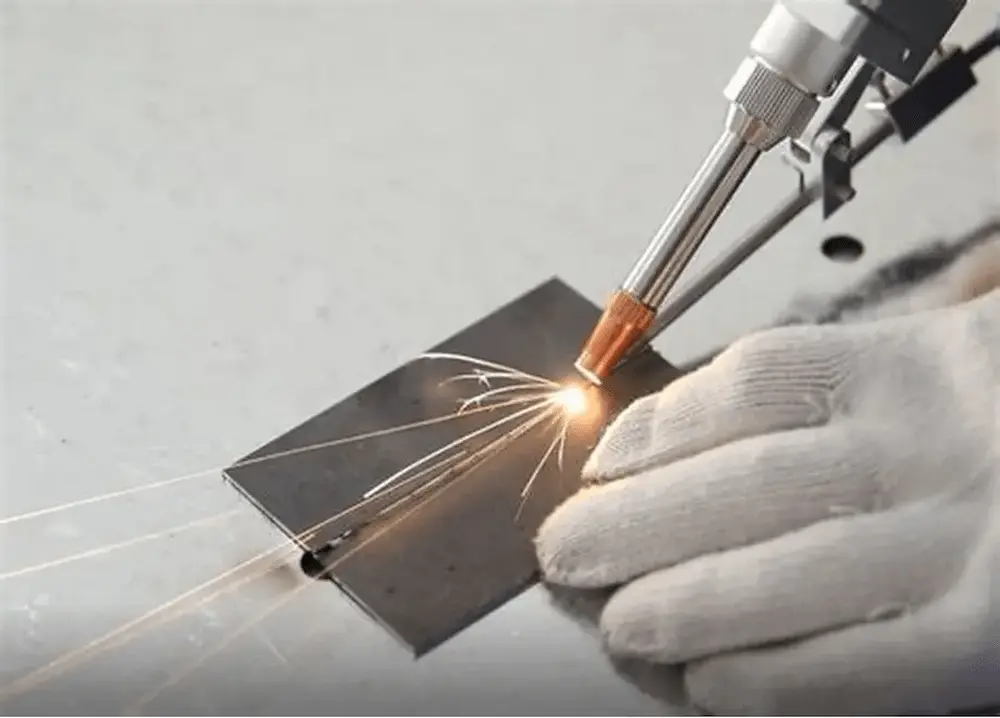
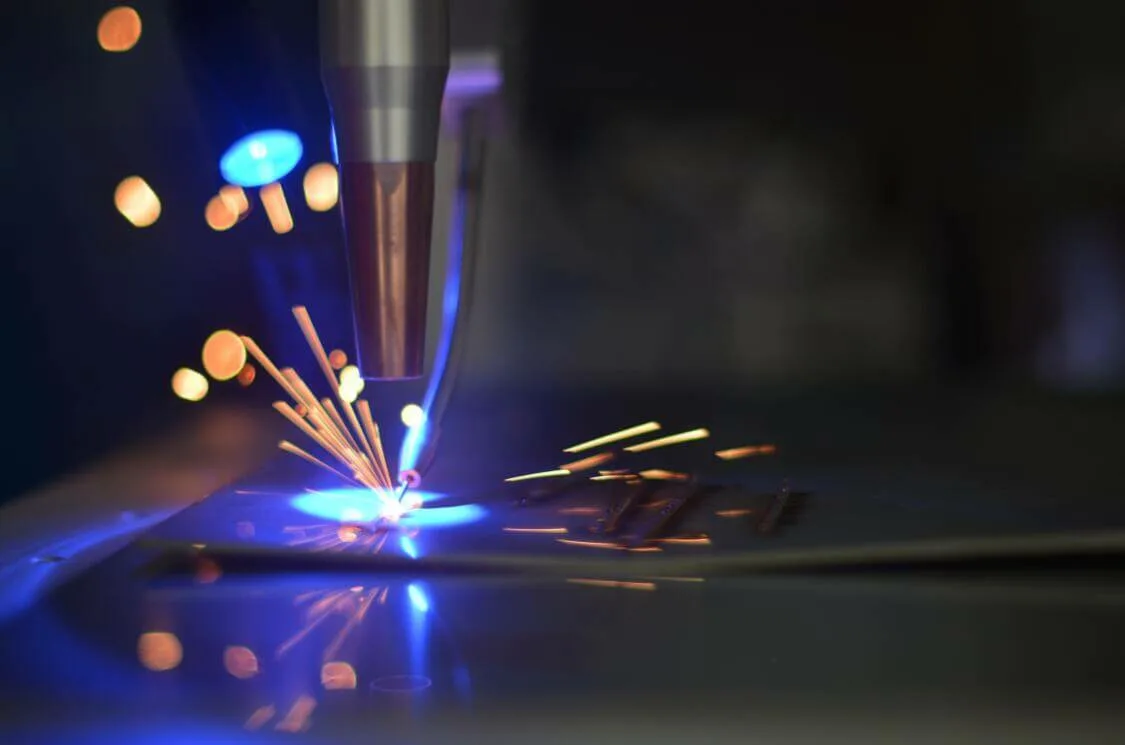
A laser welding machine can cost anywhere from around $3,000 for a basic handheld system to more than $150,000 for a fully integrated robotic welding system. The final price depends on laser power, machine type, laser source, cooling system, welding head, automation, and the overall configuration.
For standard handheld fiber laser welding machines, publicly listed 2026 prices commonly fall in the $3,500–$8,000 range for 1500W–2000W systems, while higher-power and higher-specification machines can cost more. Automatic systems generally start in the tens of thousands of dollars, and fully integrated robotic welding cells can reach well above $100,000.
The table below provides a practical 2026 price reference based on publicly available manufacturer and B2B supplier listings.
| Laser Welding Machine Type | Indicative 2026 Price | Typical Positioning |
|---|---|---|
| 1000W Handheld Laser Welder | $3,000–$5,000 | Entry-level / light-duty fabrication |
| 1500W Handheld Laser Welder | $3,500–$8,000 | General-purpose fabrication |
| 2000W Handheld Laser Welder | $3,500–$8,000 | Higher-speed and thicker-material welding |
| 3000W Handheld Laser Welder | $5,000–$12,000+ | Higher-power industrial applications |
| Automatic Laser Welding System | $10,000–$50,000+ | Repetitive or application-specific production |
| Robotic Laser Welding System | $30,000–$150,000+ | Automated industrial production |
| Fully Integrated Welding Line | $100,000–$300,000+ | Large-scale automated manufacturing |
These are indicative market ranges, not fixed quotations. Public listings vary significantly because machines with the same laser power can have very different laser sources, welding heads, cooling systems, automation, fixtures, and service packages.
How We Estimate Laser Welding Machine Prices
Laser welding machine prices vary too much to be represented accurately by a single average price.
For this guide, the 2026 price ranges are based on publicly available listings from manufacturers, B2B industrial equipment suppliers, and industry price guides. Machines are compared primarily by laser power, machine type, and overall configuration.
We do not treat every published price as equally representative. In particular, very low “starting from” prices may represent a basic configuration, a limited-time promotion, a different power specification, or a listing where the included equipment is unclear.
For example, current Alibaba listings show handheld laser welding machines around $1,900–$3,000, while clearly specified 1500W systems from established suppliers can be listed at around $4,400–$4,800. Other manufacturers publish prices above that level for higher-specification systems.
For this reason, the ranges in this article are intended to represent practical market reference ranges rather than the lowest advertised prices available online.
Prices may also vary according to shipping terms, taxes, installation, local service, warranty, and application-specific accessories.
Laser Welding Machine Price by Power
Laser power is one of the most visible factors affecting the price of a fiber laser welding machine, but it is not the only one. Two machines with the same rated power can have substantially different prices because of differences in the laser source, welding head, cooling system, wire feeder, and overall configuration.
1000W Laser Welding Machine Price
A 1000W handheld laser welding machine typically costs around $3,000–$5,000 for a standard configuration.
Public market data supports this general range. iGOLDEN lists 1000W handheld systems at approximately $2,500–$4,500, while other supplier listings extend into the $4,000–$5,000 range.
Lower-priced listings can be found online, but they should not automatically be treated as representative of the market because advertised prices may exclude accessories or correspond to simplified configurations.
1000W systems are commonly considered for lighter-duty applications involving materials such as stainless steel, carbon steel, and aluminum.
1500W Laser Welding Machine Price
A 1500W handheld laser welding machine typically costs about $3,500–$8,000.
This is one of the better-supported price ranges in the current market.
For example, Jinan Senfeng lists a 1500W air-cooled handheld system at $4,800 for 1–4 sets, decreasing to $4,400 at higher quantities. Another Alibaba listing for a 1500W air-cooled system with Raycus source is listed at $5,500 for 1–2 sets and $4,800 for larger quantities.
Other B2B listings fall below this level, including machines around $2,000–$3,500, while higher-specification systems can cost more.
For general-purpose metal fabrication, 1500W is a common configuration because it provides a balance between equipment cost, welding speed, and material capability.
2000W Laser Welding Machine Price
A 2000W handheld laser welding machine generally costs about $3,500–$8,000 for standard configurations.
Current public listings include 2000W handheld machines in the approximately $2,300–$5,000 range, while higher-specification systems are priced above that level. iGOLDEN’s market guide places 2000W handheld systems around $4,500–$7,500.
A separate supplier listing for a 1500W–3000W handheld laser welding system is priced at $2,290 for a single unit, demonstrating the large variation between factory-direct listings and more fully specified machines.
The right price comparison therefore requires checking not just power, but also the included components and configuration.
3000W Laser Welding Machine Price
A 3000W handheld laser welding machine commonly falls around $5,000–$12,000, with higher-specification systems exceeding this range.
The current market is particularly broad at this power level. Alibaba listings include 3000W systems around $3,000–$13,900, while other 1500W–3000W systems are listed around $5,000–$7,500. LaserWelderX’s January 2026 market guide gives a factory-direct range of $5,500–$7,500 for a 3000W water-cooled handheld system, while local-dealer pricing can exceed $15,000.
This makes 3000W a good example of why published machine prices should be treated as ranges rather than fixed market values.
4000W and Higher Laser Welding Machines
At 4000W and above, the machine should generally be evaluated as an industrial welding system rather than simply as a more powerful handheld welder.
Higher-power systems may require:
- Larger cooling capacity
- Higher-specification welding heads
- More powerful electrical components
- Additional safety systems
- Automated positioning
- Specialized fixtures
- Production-line integration
As a result, there is no single representative market price for 4000W+ systems. The complete equipment configuration and application become increasingly important.
Laser Welding Machine Price by Type
Machine type can have a larger impact on total investment than laser power alone.
Handheld Laser Welding Machine
Handheld laser welding machines are generally the lowest-cost category.
For common 1000W–2000W configurations, a practical 2026 reference range is around $3,000–$8,000, although factory-direct listings can be lower and premium configurations can cost more.
The main advantages are flexibility, relatively low initial investment, and the ability to weld different workpieces without a dedicated production cell.

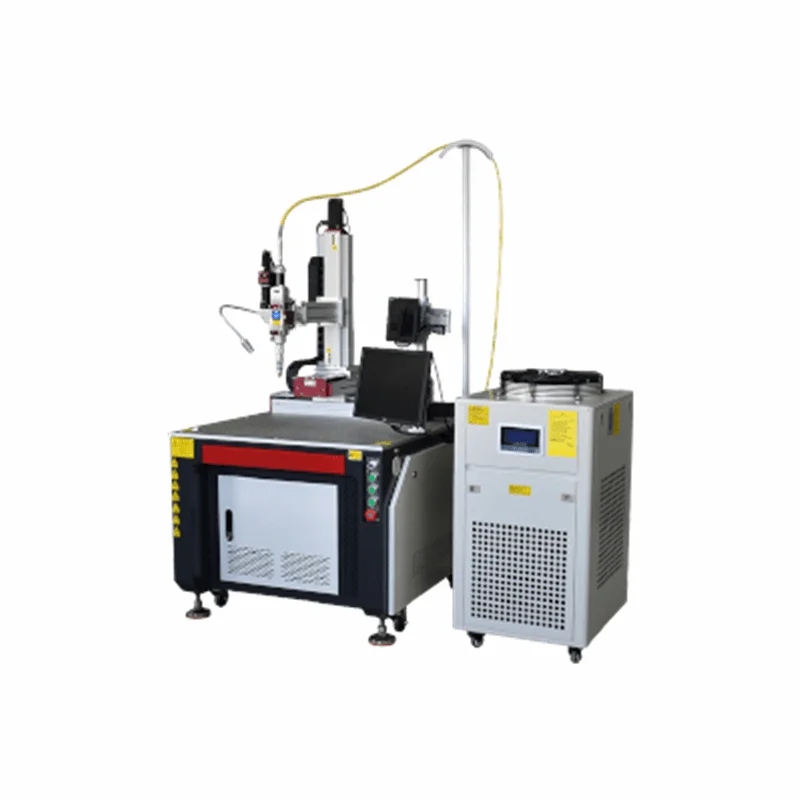
Automatic Laser Welding Machine
Automatic laser welding machines use a motion system, fixtures, or other automation to reduce manual operation and improve repeatability.
A practical reference range is approximately $10,000–$50,000+, but the actual price depends heavily on the production application.
For example, DPLaser places automatic fiber laser welding systems at approximately $10,000–$30,000, while current B2B listings include automatic systems around $30,000 and above for more specialized applications.
An automatic system may include:
- Motorized positioning
- Workholding fixtures
- Rotary axes
- Automatic feeding
- Sensors or vision systems
- Safety enclosure
- PLC and HMI control
Because these systems are often application-specific, the machine’s laser power alone is not enough to estimate its price.
Robotic Laser Welding System
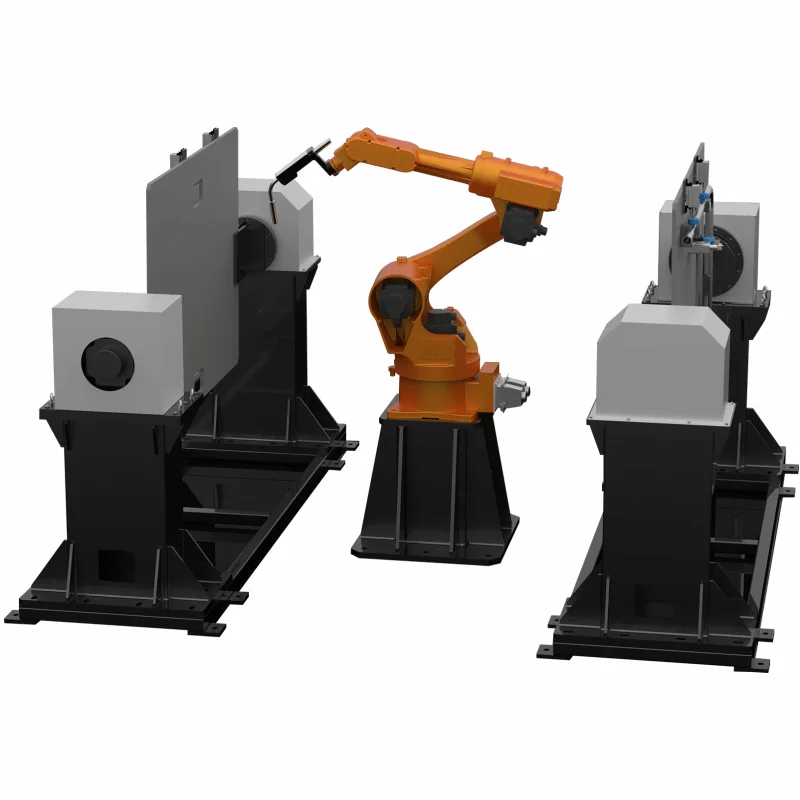
Robotic laser welding systems require a substantially larger investment than handheld machines.
Basic robotic welding systems can start around $30,000, while more complete systems commonly move into the $50,000–$150,000+ range. Highly integrated production cells can exceed $150,000 and reach several hundred thousand dollars depending on the robot, laser source, positioners, safety systems, inspection, and material handling.
For example, iGOLDEN-CNC lists a laser welding robot with a ground rail at $30,000–$35,000, while industry purchasing guides place more sophisticated robotic systems at substantially higher prices.
A robotic system should therefore be priced as a complete production cell, not simply as a laser source mounted on a robot.
What Affects Laser Welding Machine Price?
Two laser welding machines with the same power rating can have very different prices. The main reasons are differences in the components and functions included in the complete system.
Laser Power
Higher laser power generally increases the cost of the laser source and supporting equipment.
However, the highest available power is not necessarily the most economical choice. Power should be selected according to material type, thickness, joint design, required welding speed, and production volume.
Laser Source
The laser source is one of the core components of a fiber laser welding machine.
The choice of source can affect:
- Initial equipment cost
- Beam quality
- Reliability
- Warranty
- Service availability
- Long-term operating performance
When comparing quotations, buyers should check the exact laser source manufacturer and model rather than comparing machines only by wattage.
Cooling System
Cooling configuration also affects price.
Lower-power systems may use air cooling, while higher-power or continuously operated machines often use industrial water chillers.
Public 2026 pricing data shows a measurable difference between air-cooled and water-cooled systems, even when their overall machine configuration is otherwise similar. For example, a 1500W air-cooled Senfeng model is listed at $4,800, while other water-cooled systems and higher-power configurations are listed at higher prices.
Welding Head
The welding head affects the operating characteristics and configuration of the machine.
Different welding heads may support different beam oscillation patterns, spot sizes, and operating functions.
When comparing quotations, the welding-head model and included functions should therefore be part of the comparison.
Wire Feeder
A wire feeder may be included as standard equipment or offered separately.
For applications that require filler wire, buyers should verify whether the quotation includes:
- Wire feeder
- Wire-feeding controls
- Appropriate welding nozzles
- Supporting accessories
A base machine price does not necessarily represent the cost of a complete welding setup.
Automation Level
Automation is one of the largest factors affecting total equipment cost.
A handheld machine mainly requires an operator to guide the welding head. An automatic or robotic system can add:
- Motion axes
- Fixtures
- Positioners
- Robots
- Sensors
- Material handling
- Safety systems
- Production-line integration
This is why a 2000W handheld welder costing several thousand dollars and a 2000W robotic welding cell costing tens of thousands of dollars are not directly comparable machines.
Machine Configuration and Accessories
The final quotation may also depend on whether the following are included:
- Chiller
- Welding head
- Wire feeder
- Protective lenses
- Nozzles
- Worktable
- Fixtures
- Fume extraction
- Safety equipment
- Control system
When comparing two advertised prices, always check whether the configurations are equivalent.
How Much Does a Laser Welding Machine Cost to Operate?
The purchase price is only one part of the overall cost of owning a laser welding machine.
Operating expenses can include:
- Electricity
- Shielding gas
- Welding wire
- Protective lenses
- Nozzles
- Maintenance
- Replacement parts
Electricity
Electricity consumption depends on laser power, operating hours, cooling requirements, and auxiliary equipment.
For a production environment, actual machine utilization is more useful for calculating electricity costs than the laser’s rated power alone.
In some regions or setups, the local power supply voltage may not match the machine’s requirements. For example, a facility with a 220V grid may need a machine configured for 380V. In such cases, a stable voltage converter or transformer may be required to ensure consistent machine performance, adding a one-time equipment cost.
Shielding Gas
Shielding gas is an ongoing operating expense.
The total cost depends on gas type, flow rate, welding time, production volume, and local gas prices.
Welding Wire and Consumables
Applications that require filler wire create additional consumable costs.
Other consumables can include protective lenses and welding nozzles.
These costs may appear relatively small compared with the initial machine investment but become more significant over long operating periods.
Maintenance
Maintenance requirements vary according to machine configuration and operating conditions.
Typical maintenance can include:
- Cleaning optical components
- Checking the cooling system
- Replacing protective lenses
- Inspecting the welding head
- Checking electrical components
- Replacing worn consumables
A realistic operating budget should account for routine maintenance as well as occasional replacement of components.
Laser Welding Machine Total Cost of Ownership
The purchase price should not be considered separately from the costs required to operate and maintain the machine.
A simple way to estimate total cost of ownership is:
Total Cost of Ownership = Purchase Price + Shipping + Installation + Energy + Consumables + Maintenance + Labor
For example, a lower-priced machine can have a higher long-term cost if it requires more manual labor or additional equipment that was not included in the original quotation.
An automated system may require a larger initial investment but can reduce manual labor requirements and improve production consistency.
For this reason, the most economical laser welding machine is not necessarily the one with the lowest purchase price.
Is a Laser Welding Machine Worth the Investment?
Whether a laser welding machine is worth the investment depends on the application, production volume, required welding speed, labor requirements, and expected machine utilization.
Potential advantages include:
- High welding speed
- Low heat input
- Reduced distortion
- Consistent weld quality
- Reduced post-welding finishing
- Improved production efficiency
- Easier operation for repetitive applications
For a high-volume manufacturer, these benefits may justify a larger capital investment.
For a lower-volume workshop, a standard handheld system may be more appropriate than a fully automated welding cell.
Before comparing machine prices, consider:
- Material type and thickness
- Required welding speed
- Production volume
- Manual versus automated operation
- Required weld quality
- Consumable costs
- Labor requirements
- Expected machine utilization
The right machine is therefore the one that provides the best balance between initial investment, operating cost, production requirements, and expected return.
Conclusion
Laser welding machine prices in 2026 vary significantly depending on machine type and configuration.
For common handheld fiber laser welding machines, practical market reference ranges are approximately:
- 1000W: $3,000–$5,000
- 1500W: $3,500–$8,000
- 2000W: $3,500–$8,000
- 3000W: $5,000–$12,000+
Automatic laser welding systems generally move into the $10,000–$50,000+ range, while robotic systems can start around $30,000 and rise above $150,000 as automation and production integration become more sophisticated.
These numbers should be treated as indicative 2026 market ranges rather than fixed prices. Public listings show significant variation even between machines with identical laser power because of differences in laser source, cooling, welding head, wire feeder, automation, accessories, and service.
When comparing laser welding machine prices, the most useful approach is therefore to compare the complete configuration and total cost of ownership, rather than simply choosing the machine with the lowest advertised price.
Price Sources Reviewed
The following sources were reviewed when developing the 2026 price ranges in this guide. Prices are subject to change and should be treated as market references rather than fixed quotations.
-
- LaserWelderX — 2026 Laser Welder Price Guide
- StyleCNC — Laser Welding Machine Prices
- Alibaba — Handheld Laser Welding Machine Market Listings
- Alibaba — Senfeng 1500W Air-Cooled Laser Welder
- Alibaba — Kepuni 1500W Laser Welding Machine
- Alibaba — DMK 1500W Handheld Laser Welder
- Made-in-China — Automatic and Robotic Laser Welding Equipment